- All
- Product Name
- Product Keyword
- Product Model
- Product Summary
- Product Description
- Multi Field Search
Views: 0 Author: Site Editor Publish Time: 2025-09-04 Origin: Site


If you want to master the radial drilling machine, begin by learning each step slowly. Take your time and be careful. Build your confidence and always think about safety. This machine can lift heavy workpieces. It is very versatile. You should know its main parts. Learn how each part works. Always follow safe operating rules.
Tip: Try small tasks first before doing bigger projects. This helps you get better control and skill.
Begin with easy jobs to help you learn and feel confident when using a radial drilling machine. Always put safety first by wearing safety gear and making sure all safety tools work before you use the machine. Take care of the machine; clean it every day and look for problems each week to keep it working well. Learn about the machine parts, like the radial arm and drill head, so you can use its features for different drilling jobs. Keep learning and get better by using books, videos, and online classes about radial drilling.
A radial drilling machine helps you make holes in big or heavy things. This machine is easy to spot in a workshop. It can do hard jobs without trouble. The radial arm can turn all the way around. You can drill in many places on your workpiece. You do not have to move the workpiece. The strong build keeps the machine steady and helps you drill straight. Many factories and metal shops like this machine. It lasts a long time and works well even when used a lot.
Note: Radial drill machines are metal cutting tools. You see them where people need strong and careful work.
Here is a table that shows the main types of radial drill machines you might find:
Type of Radial Drilling Machine | Description |
|---|---|
Semi-universal drilling machine | Good for many different drilling jobs. |
Universal drilling machine | Can do lots of drilling tasks. |
Plain drilling machine | Made for simple drilling jobs only. |
Radial drilling machines have special parts that help you work better. The radial arm moves, so you can drill at many angles. You do not need to pick up the workpiece. The machine can hold heavy things. You can drill big metal parts. The controls help you make holes in the right spot every time.
Feature | Description |
|---|---|
Adjustable Radial Arm | Lets you drill at different angles and spots. |
Capacity | Works with big and heavy workpieces. Great for factories. |
Precision | Helps you drill straight without moving the workpiece. |
There are many good things about using a radial drilling machine. The thick column, about 350mm wide, keeps it steady. You can make holes up to 50mm wide. This is enough for most jobs in factories. The strong parts let you drill at many angles and get the same results each time. The controls help you work safely and easily.
Feature | Description |
|---|---|
Robust Build | Strong column and base keep the machine steady and accurate. |
Consistent Performance | Tough build helps the machine work well every time. |
Heavy-Duty Components | Let you drill straight holes at different angles. |
Precise Controls | Make it easier to drill in the right spot. |
If you want a portable universal radial drill machine, you can move it around your shop. This makes it easy to work on many projects.
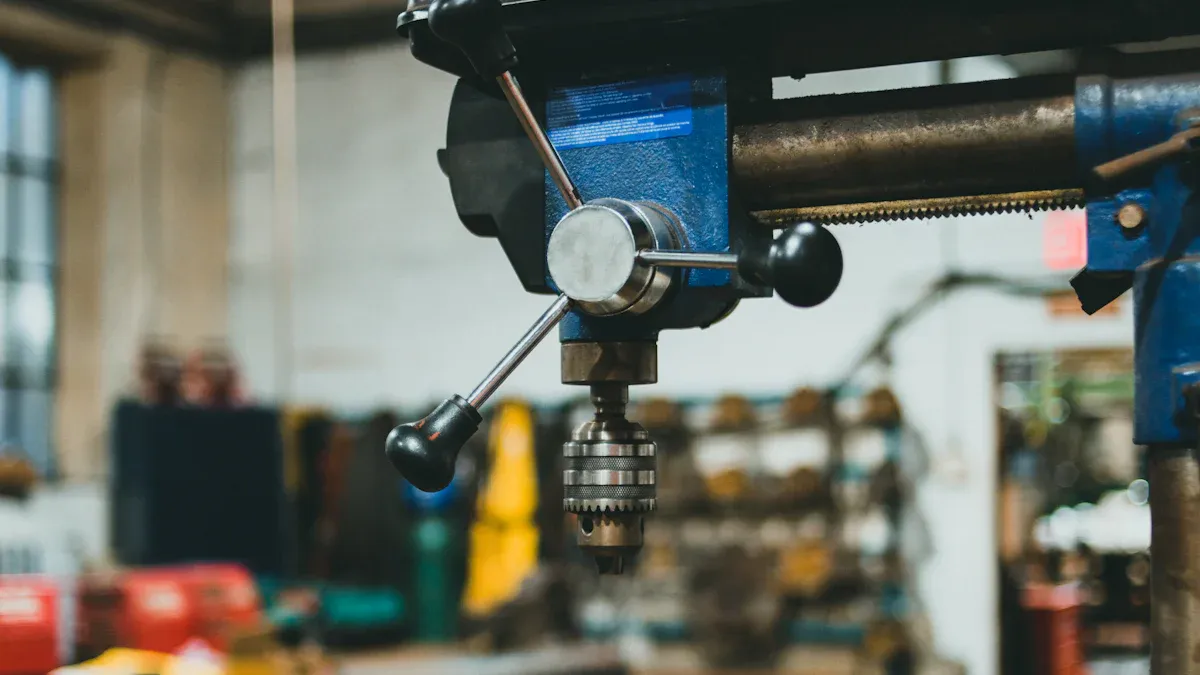
The base and column are very important parts. The base is heavy and strong. It helps stop the machine from shaking. The column stands up straight and holds the radial arm. Hydraulic clamps keep the arm tight on the column. This makes the machine steady and accurate. The base is made from cast iron, so it is tough. The column has a hard surface. This helps the machine last longer and drill better.
A strong base keeps the machine from moving.
Hydraulic clamps help hold things steady.
The column’s hard build keeps drilling accurate.
Tip: Make sure the base and column are clean and not broken before you start.
The radial arm lets you reach many spots. You can move the spindle along the arm. This helps you drill in different places on big or odd-shaped pieces. You do not have to move your workpiece. The arm can go up and down on the column. It can also turn around the column. This helps you put the spindle where you need it. The rocker arm is good for drilling, reaming, spot facing, and tapping on bigger metal parts.
Move the spindle left, right, up, or down.
Turn the arm to reach more places.
Drill at different angles without moving your work.
The drill head holds the spindle and moves it. You can slide the spindle box on the arm’s guide rail. This lets you turn and push the spindle into your work. The spindle speed can be set to 16 different levels. It goes from 25 to 2000 revolutions per minute. You can change the speed for different materials. The spindle’s impact system helps make straight holes. You get smooth holes, so you have fewer problems later.
Advantage | Description |
|---|---|
Straight holes | The spindle makes holes with little shaking. |
Smooth surfaces | The spindle cuts clean, smooth holes. |
You need a strong table and clamps to hold your work. Most machines use a box table with T-slots on top and sides. This makes it easy to clamp many shapes. Some machines have a big T-slotted base for more ways to hold things. Others have an extra box table for more support. These tables help you put your work in the right place for drilling.
Type of Table/Clamping System | Description |
|---|---|
Box Table | T-slots on top and sides for easy clamping. |
Large T-slotted Base | Gives more ways to hold your work. |
Auxiliary Box Table | Adds support and more clamping for special jobs. |
You use levers, buttons, and switches to control the machine. Safety features help keep you safe. Always watch out for mechanical risks. Lock the rocker arm before you drill so it does not move. Wear goggles and do not wear loose clothes. Machines have limit devices and overload protection. Emergency brakes help you stop the spindle fast if needed. Sound and light alarms warn you about danger. Automatic protection devices keep you safe by blocking risks.
Safety Feature | Description |
|---|---|
Rocker Arm Locking | Stops the arm from moving when you drill. |
Protective Gear | Goggles and tight clothes keep you safe from the spindle. |
Emergency Braking Devices | Stop the spindle quickly in emergencies. |
Sound and Light Alarms | Warn you about dangers when using the spindle. |
Automatic Protection Devices | Block risks during spindle use. |
Note: Always check that all safety devices work before you start the spindle.
Radial drilling machines help with many metalworking jobs. You see these machines in car factories, building sites, and mines. One machine can do many tasks. This saves time and makes work easier.
Radial drilling machines drill holes in big or heavy parts. You do not need to move the part. This makes work faster. You set up the part once and drill in many places. This saves time and helps you work quickly. Some machines have CNC systems. You can program them for drilling. This gives you accurate holes every time. You can drill straight, angled, or deep holes. The machine is flexible. It helps with special drilling jobs in metalworking and building.
Tip: Always clamp your part tightly before drilling. This keeps your work safe and correct.
Tapping means making threads inside a hole. You use the radial drilling machine for tapping after drilling. Here are the steps for tapping:
Pick the right tap size for your part.
Set the drill speed for your metal.
Use oil to lower friction.
Line up the tap with the hole and turn the spindle forward.
Push the tap gently to make threads.
Turn the spindle backward sometimes to break chips.
Take out the tap slowly when you reach the right depth.
Check the threads with a gauge or bolt.
You can tap holes in car parts, machine frames, or packing equipment. This makes your work faster and more dependable.
Reaming makes holes smoother and more exact after drilling. You use a sharp reamer to finish the hole. Reaming uses mostly straight forces, which are less than drilling forces. This is good for thin or soft parts. You must clamp the part tightly and use a strong chuck for the reamer. Drill the hole a little smaller before reaming. Use slow speeds and faster feed rates for best results. Oil helps keep the reamer cool and makes the work better.
Note: Reamers follow the hole you drilled, so make sure your hole is straight before you start reaming.
Boring makes holes bigger or more exact after drilling. You move the boring tool by hand, so you need care and skill. Radial drilling machines are good for boring big, heavy parts. You do not need to move the part, which saves time. You can bore holes at different angles or spots. Shipbuilders and builders use boring for big holes. The machine is flexible and helps with hard boring jobs.
Operation | Main Purpose | Typical Application |
|---|---|---|
Drilling | Make holes | Cars, buildings |
Tapping | Make threads in holes | Machine repair, packing |
Reaming | Smooth and size holes | Metalwork, soft parts |
Boring | Make holes bigger | Ships, heavy machines |
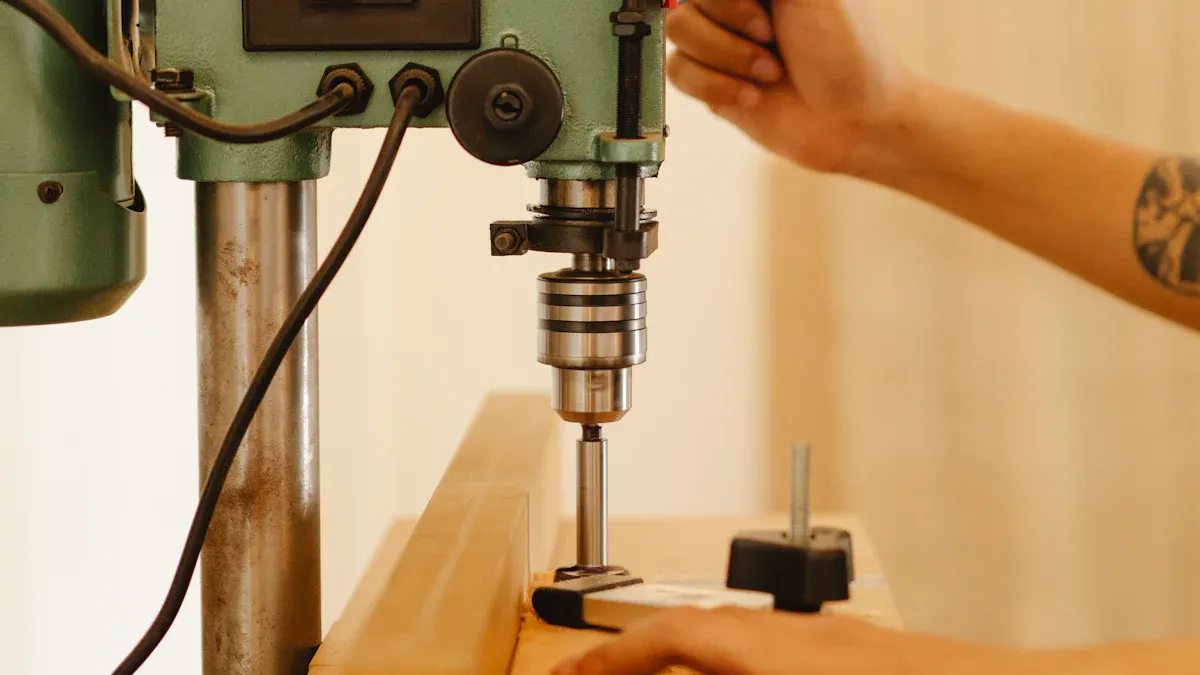
You must prepare the radial drilling machine before you start any drilling work. Follow these steps to set up the machine safely and correctly:
Place the base on a stable, level surface. Secure it with bolts using a wrench.
Attach the radial arm to the base. Make sure it is tight and aligned as the manufacturer suggests.
Connect the spindle to the radial arm. Check that it lines up and is firmly attached.
Mount the control panel where you can reach it easily during drilling.
Install the software for CNC models. Use the CD or download it from the manufacturer’s website. Follow the instructions on the screen.
Add the driver for CNC communication. This usually comes with the software.
Connect the machine to power and your computer. Make sure all wires are secure.
Calibrate the machine. Use a calibration tool to align the spindle so it stands straight over the work table.
Test the machine. Program a simple drilling job to check that the spindle moves smoothly and responds to commands.
Do a final check. Run the machine without a drill bit to make sure all safety devices work.
Tip: Always check the spindle alignment before you start drilling. This helps you avoid mistakes and keeps your work accurate.
The radial arm gives you flexibility when drilling. You can move the arm up, down, left, or right. This helps you position the spindle over the exact spot you want to drill. To adjust the arm:
Unlock the clamps on the column.
Move the arm to the height you need for your workpiece.
Swing the arm to the left or right to reach the drilling spot.
Lock the clamps again to keep the arm steady.
The rocker arm lets you drill at different angles. You do not need to move the workpiece. This saves time and helps you work on large or odd-shaped items.
Note: Always lock the arm before you start drilling. A loose arm can cause the spindle to shake and ruin your work.
You need to install the drill bit correctly for safe and accurate drilling. First, clean the taper hole of the spindle. Dirt or oil can make the drill bit slip. Use special tools to remove or insert the drill bit. Do not use too much force. Gently push the drill bit into the spindle and make sure it fits tightly. If you use a chuck, check that it holds the drill bit firmly.
Tip: Always use the right drill bit for your material. A sharp drill bit makes drilling easier and keeps the spindle from overheating.
You control the radial drilling machine with levers, buttons, and switches. Before you start drilling, check every part of the machine. Make sure all screws are tight and the lubricating oil is at the correct level. Inspect the spindle and drill bit for damage. Look at the supporting frame for cracks. Check that spray facilities work to cool the drill bit during drilling.
Step | Description |
|---|---|
1 | Check all parts of the drilling machine for completeness. |
2 | Ensure screws are not loose. |
3 | Verify lubricating oil is at the required level. |
4 | Confirm control buttons are flexible and reliable. |
5 | Inspect drill pipe and bit for damage. |
6 | Check supporting hole frame for breaks. |
7 | Ensure spray facilities are properly installed. |
8 | Run the machine idling for 1-2 minutes to listen for abnormal noises. |
9 | Start drilling at low speed and adjust based on conditions. |
Wear safety goggles to protect your eyes from flying debris.
Use ear protection if the drilling noise is loud.
Wear gloves when handling materials, but keep them away from moving parts.
Avoid loose clothing, jewelry, or long hair near the spindle.
Safety Alert: Always test the controls before you begin drilling. If you hear strange noises from the spindle, stop and check the machine.
You must watch several indicators during drilling to prevent mistakes or accidents. Pay attention to the spindle and the drill bit. If you see the spindle wobble or the drill bit bend, stop drilling and check the setup. Watch for signs of overheating, such as smoke or a burning smell. Listen for loud or unusual noises from the spindle. These can mean something is wrong.
Indicator Type | Description |
|---|---|
Major Hazard Indicators | Watch for problems with the drilling setup or machine parts. |
Number of Kicks | Notice any sudden movements or jumps in the spindle during drilling. |
Operations Close to Precursor Zone | Stay alert when drilling in unknown or tricky spots. |
Leading and Lagging Indicators | Check the condition of the spindle and drill bit before and after drilling. |
Safety Critical Equipment Status | Make sure you do not miss scheduled maintenance for the spindle and other key parts. |
Tip: Always stop drilling if you notice any hazard indicators. Check the spindle and drill bit before you continue.
You need to follow safety rules every time you use the radial drilling machine. These rules help keep you safe and your work area safe.
Never hold workpieces with your hands. Always use a clamp or holding device to keep things tight when drilling.
Do not try to fix or adjust anything while the machine is on.
Use a brush to clean away metal chips. Never use your hands for this.
Keep loose clothes away from spinning tools and the spindle.
Make sure cutting tools are straight before you start drilling.
Do not put tools on the drilling tables.
Always keep all guards in place when you use the machine.
Slow down the feed when the drill bit is almost through the workpiece.
Take out all chuck keys and wrenches before you turn on the spindle.
Always wear eye protection when you drill.
Tip: Check all safety guards and wear your protective gear before you start any drilling job.
Many beginners make mistakes that can cause accidents or bad results.
You might forget to wear safety glasses, ear protection, or gloves.
Sometimes, you may not clamp the workpiece tight enough, so it moves during drilling.
Using dull or wrong drill bits can make the spindle work too hard and get hot.
If you skip checks before starting, you might miss loose parts or an unstable machine.
Keeping your hands near moving parts or not taking tools out of the spindle area is dangerous.
Not using safety guards can let metal pieces fly out during drilling.
Stopping the machine before it finishes can hurt you or damage the machine.
Starting the machine without checking for damage can break the spindle.
If you do not lock the arm before drilling, it might move by accident.
Working on a shaky surface can make your drilling less accurate.
Note: Always lock the arm and check the spindle before you start drilling or working.
Doing regular care keeps your radial drilling machine working well.
Maintenance Frequency | Tasks |
|---|---|
Daily | Clean the machine, check lights, look for oil leaks, and check if tools are in good shape. |
Weekly | Check oil, look for broken parts, and make sure wires are tight. |
Monthly | Look at drive belts, check motors, and see if coolant is clean. |
Semi-Annual | Check guideways, test limit switches, and change hydraulic filters. |
Yearly | Check if the spindle is straight, change wipers, and look at bearings. |
You should put oil on moving parts to stop them from rubbing too much. Check wires to make sure they are tight. Make sure clamps and the spindle work right. Clean and check the machine as planned to stop problems before they start.
If your radial drilling machine stops working right, you need to find the problem and fix it fast.
Fault Description | Analysis | Solution |
|---|---|---|
Main motor does not turn | Main power switch is off, start button is not working, contactor is not on | Turn on the power, check the start button, check the contactor wires |
Oil leaks on main shaft | Too much oil, oil leaks from the bearing area | Do not fill oil past the mark |
Spindle box clamp is loose | Too much space, clamping block is not in the right spot | Adjust the screw, tighten the clamping block screw |
Always check the spindle and clamps before you start drilling. If you see oil leaking or hear strange sounds from the spindle, stop and check the machine. Fix problems right away to keep your drilling safe and correct.
You get better at using the radial drilling machine by practicing a lot. Begin with simple drilling jobs. Use scrap metal to try out your skills. Try using different drill bits and materials. Watch how the spindle moves each time. See how the drill bit goes through the metal. You learn more when you do the steps again and check your work.
Set up the machine every time you practice.
Drill straight holes before you try angled ones.
Try different speeds and feeds to see what works.
Write down what you learn in a notebook.
Tip: Try new tasks each week to get better. This helps you feel more sure and makes your drilling more accurate.
There are many ways to learn about radial drilling machines. Books, videos, and online classes can teach you a lot. You can join groups or forums where people share tips. Some companies give free guides and charts to help you fix problems.
Resource Type | Example | How It Helps |
|---|---|---|
Books | "Metalworking Basics" | Tells you how the machine works |
Videos | YouTube tutorials | Shows you each step |
Online Courses | Udemy, Coursera | Gives you lessons to follow |
Forums | Practical Machinist | Lets you ask questions |
Manufacturer Guides | PDF manuals | Shares safety tips |
Note: Make sure the resource matches your machine model. You get the best help when you use the right information.
You keep learning by following news about metalworking. Sign up for emails from machine tool companies. Go to workshops or trade shows in your area. Read blogs and articles about new ways to drill. You can talk to people who have used the machine for a long time.
Get email updates from brands you trust.
Go to trade shows to see new machines.
Join online groups to get tips and news.
Read blogs about radial drilling machines.
️ Learning new things helps you use the best methods and keeps your skills strong.
When you use a radial drilling machine, you need to think about its size. These machines are often large and heavy. You will need a lot of floor space in your workshop. If you have a small shop, fitting a big machine can be hard. The cost is also high because the machine is expensive. Moving or installing it takes time and effort. Here are some main limitations you should know:
Radial drilling machines are large and expensive.
They require significant floor space, making them unsuitable for smaller workshops.
You may find it hard to move the machine once you set it up.
The weight can damage weak floors or old buildings.
Note: Always measure your workshop before you buy a radial drilling machine. Make sure you have enough space for safe processing.
The size of your radial drilling machine affects how well it fits in your workshop. Larger machines work best in big factories or heavy machinery shops. You can use them for processing large workpieces and tough materials. Smaller machines fit better in tool rooms, schools, or light manufacturing spaces. You can use them for lighter processing tasks and training. If you plan to do heavy processing, you need a strong floor and enough room for safe movement. For smaller processing jobs, a compact machine saves space and still gives good results.
Tip: Choose a machine that matches your processing needs and the size of your workshop. This helps you work safely and get the best results.
You get better at using the radial drilling machine by doing each step carefully. Always check your setup before you start. Practice a lot and wear safety gear every time. Ask for help from people who know more. Learn from them in your workshop. Read guides and watch videos to learn new ways. This helps you improve your skills.
When you master this machine, you can finish jobs faster. You also feel more confident with each project you do.
You can drill metals like steel, aluminum, and cast iron. You can also drill plastics and wood. Always choose the right drill bit for your material.
Check the material and drill bit size. Use slower speeds for hard metals. Use faster speeds for soft materials. Most machines have a speed chart for easy reference.
A drill bit can get stuck if you use too much force or the bit is dull. Always use sharp bits. Apply steady pressure. Use cutting oil to reduce friction.
You should clean and check the machine every day. Oil moving parts weekly. Inspect belts and wires monthly. Follow the maintenance schedule in your manual.
Yes, you can use this machine for tapping and reaming. Change the tool to a tap or reamer. Set the right speed. Clamp your workpiece tightly for best results.