- All
- Product Name
- Product Keyword
- Product Model
- Product Summary
- Product Description
- Multi Field Search
Views: 0 Author: Site Editor Publish Time: 2025-08-12 Origin: Site


As CNC machining evolves, many ask: can you mount a CNC vertically? This setup helps save floor space and suits specific tasks. Though traditional machines are horizontal, vertical configurations are gaining interest. This guide explores the pros, cons, and practical uses of vertical CNC machines. You'll learn when it's effective, when it's not, and how "CNC vertical" fits into modern, efficient workflows.
The idea of mounting a CNC machine vertically, while seemingly unconventional, offers a unique set of advantages that can be particularly appealing in certain contexts. However, it also introduces a distinct array of challenges that demand careful consideration and often, innovative engineering solutions. Understanding both sides of this coin is crucial before embarking on a vertical CNC setup.
One of the most compelling reasons to consider a CNC vertical mounting is space-saving. In workshops where floor space is at a premium, such as small garages, home workshops, or compact manufacturing units, a vertically oriented machine can free up valuable horizontal real estate. This can be a significant advantage for hobbyists with limited space or for businesses looking to maximize their operational footprint without expanding their physical premises. By utilizing wall space, a vertical setup allows for a more efficient layout, potentially enabling the accommodation of more machinery or providing greater working room around existing equipment.
Another notable benefit often cited for vertical CNC machines is improved chip evacuation. Gravity becomes an ally in this configuration. As cutting operations proceed, chips and debris naturally fall away from the cutting area and the workpiece. This can lead to a cleaner cutting environment, reducing the likelihood of chips being recut, which can dull tools and degrade surface finish. Enhanced chip evacuation can also contribute to longer tool life and more consistent machining results, as the cutting edge remains clear of obstructions. This is a stark contrast to horizontal setups where chips can accumulate in pockets or on the workpiece, requiring more active chip management systems.
Furthermore, a vertical CNC orientation can lead to reduced dust accumulation on rails. Linear rails and other motion components are critical for the precision of a CNC machine. In a horizontal setup, dust and fine debris can settle on these surfaces, potentially leading to wear and tear over time, and compromising accuracy. With a vertical mounting, gravity helps to pull airborne particles downwards, away from these sensitive components, thereby potentially extending their lifespan and maintaining the machine's precision for longer periods. This passive cleaning mechanism can reduce maintenance requirements and improve the overall longevity of the machine.
Finally, for some users, a vertical CNC setup can offer ergonomic benefits. Depending on the height at which the machine is mounted and the specific operations being performed, a vertical orientation might allow for a more comfortable working posture. This can reduce strain on the operator, especially during tasks that require frequent interaction with the workpiece or tool changes. The ability to work at a more natural standing height can enhance productivity and reduce fatigue over long machining sessions.
Despite the attractive advantages, the CNC vertical mounting comes with a significant set of challenges that must be addressed. Perhaps the most critical concern is material bowing or deformation. When a workpiece is clamped vertically, especially if it is thin, long, or has a low stiffness-to-weight ratio, it can bow or deform under its own weight due to gravity. This deformation directly impacts machining accuracy and can lead to inconsistent cuts, warped parts, and ultimately, scrap. This issue is particularly pronounced with materials like thin sheets of plywood, plastics, or even some metals, where the material's inherent flexibility becomes a major impediment to precision.
Closely related to material deformation is the problem of parts falling down. As parts are cut free from the main stock, they are susceptible to falling due to gravity. This necessitates extremely robust workholding and fixturing strategies to ensure that cut parts remain securely in place until the machining process is complete. Without adequate support, finished or partially finished components could drop, leading to damage, injury, or machine crashes. This often requires custom-designed clamps, vacuum tables, or sacrificial support structures, adding complexity and setup time to each job.
Another major technical hurdle for a vertical CNC is the increased stress on the Z-axis. In a traditional horizontal machine, the Z-axis (which controls the depth of cut) primarily moves the spindle up and down against relatively minor gravitational forces. In a vertical setup, the entire Z-axis mechanism, including the spindle and often a portion of the gantry, must be actively pulled against gravity during upward movements. This significantly increases the load on the Z-axis motor, lead screw, or ball screw, potentially requiring a stronger motor, more robust drive components, or, most commonly, a counterbalance system. Without proper counterbalancing, the motor can overheat, lose steps, or wear out prematurely, leading to poor performance and costly repairs.
Vibration issues are also a common concern with vertical CNC machines. The inherent rigidity of a machine is crucial for achieving high precision and good surface finish. In a vertical orientation, the distribution of forces and the potential for resonant frequencies can lead to increased vibrations, especially if the machine frame or mounting structure is not sufficiently robust. These vibrations can manifest as chatter marks on the workpiece, reduced accuracy, and accelerated wear on machine components. Mitigating vibrations often requires heavier construction, additional bracing, and careful tuning of machine parameters.
The limited material size and weight is another practical disadvantage. While a vertical setup saves horizontal space, it inherently restricts the size and weight of the workpieces that can be effectively machined. Very large or heavy materials may be difficult to mount securely and are more prone to bowing or requiring excessive support. This limits the versatility of a vertical machine compared to its horizontal counterparts, which can often accommodate a wider range of material dimensions.
Lubrication challenges can also arise. Many CNC machines rely on gravity to assist in the distribution of lubricants to moving parts like linear bearings and lead screws. In a vertical orientation, gravity can work against this, potentially leading to inadequate lubrication in certain areas. This can increase friction, wear, and heat generation, necessitating more frequent manual lubrication or the implementation of specialized lubrication systems.
Finally, it's important to note that not all CNC machines are designed for vertical operation. Many off-the-shelf hobbyist and even some professional machines are engineered with the assumption of horizontal operation. Attempting to mount such a machine vertically without significant modifications can lead to performance issues, premature component failure, and even safety hazards. For instance, belt-drive CNC machines are generally not recommended for vertical mounting due to the increased strain on the belts and the potential for slippage or premature wear under gravitational load. Machines designed for vertical operation often feature reinforced Z-axes, integrated counterbalance systems, and specialized workholding solutions.
Successfully implementing a CNC vertical setup requires a deep understanding of several technical considerations and often, custom engineering. Addressing these aspects is paramount to achieving reliable performance and accurate results.
Counterbalance systems are arguably the most critical component for any vertical CNC machine. As mentioned, the Z-axis motor faces a constant battle against gravity. A counterbalance system, typically involving weights, springs, or pneumatic cylinders, offsets the weight of the Z-axis assembly, reducing the load on the motor. This allows the motor to operate more efficiently, reduces wear, improves positional accuracy, and prevents the Z-axis from crashing downwards when power is removed. Proper sizing and tuning of the counterbalance are essential to ensure smooth and precise Z-axis movement.
Workholding and fixturing become even more critical in a vertical orientation. Traditional clamping methods may not be sufficient to prevent workpiece movement or falling. Solutions often include:
Vacuum tables: These are highly effective for holding flat sheet materials securely against a vertical surface. The vacuum creates a strong, even clamping force across the entire workpiece.
T-slot tables with specialized clamps: Custom clamps designed to exert strong downward and inward pressure can be used. These might incorporate additional support points along the bottom edge of the workpiece.
Sacrificial support structures: For complex or delicate parts, a sacrificial material can be machined alongside the workpiece to provide continuous support as features are cut. This material is then removed after the primary machining is complete.
Magnetic chucks: For ferrous materials, powerful magnetic chucks can provide excellent holding force on a vertical plane.
Machine rigidity is non-negotiable for a vertical setup. Any flex or vibration in the machine frame or mounting structure will be amplified by the gravitational forces and dynamic loads of machining. The frame must be exceptionally stiff, often requiring thicker materials, more robust joints, and additional bracing. If mounting to a wall, the wall itself must be capable of supporting the machine's weight and resisting machining forces without deflection. This often means anchoring to structural studs or using a heavy-duty mounting plate.
As highlighted earlier, the Z-axis motor strength needs to be carefully evaluated. Even with a counterbalance, the motor must be capable of handling the dynamic loads of acceleration and deceleration, as well as any residual unbalanced weight. Upgrading to a higher torque stepper motor or a servo motor system might be necessary to ensure reliable and precise Z-axis control.
Lubrication systems may require modification. Instead of relying on gravity, a vertical machine might benefit from a forced lubrication system, such as a pump that actively delivers oil or grease to linear bearings and lead screws. Alternatively, self-lubricating bearing materials or specialized lubricants designed for vertical applications could be considered to ensure adequate lubrication and prevent premature wear.
Effective chip management remains vital. While gravity assists, a well-designed chip collection system is still necessary to prevent chips from accumulating at the bottom of the machine or interfering with moving parts. This could involve angled surfaces to direct chips towards a collection bin, or even a vacuum system integrated into the cutting area.
Finally, material support beyond basic fixturing is often required to prevent bowing. This might involve:
Roller supports: For long, flexible materials, rollers positioned along the length of the workpiece can provide continuous support.
Adjustable outriggers: These can be extended to support the edges or underside of the workpiece, preventing sag.
Backer boards: Mounting the workpiece to a rigid backer board can distribute clamping forces and prevent bowing, especially for thin sheets.
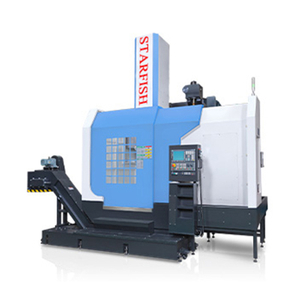
The question of whether you can mount a CNC vertically is not a simple yes or no. It's a nuanced discussion that depends heavily on your specific needs, available space, budget, and technical expertise. While the allure of space-saving and improved chip evacuation is strong, the challenges associated with material deformation, Z-axis stress, vibration, and specialized workholding are significant. For hobbyists with limited space and a willingness to innovate, a vertical CNC setup can be a rewarding project, especially for lighter materials and less demanding applications. For industrial settings, purpose-built Vertical Machining Centers (VMCs) are designed to handle these challenges, offering robust solutions for high-precision vertical machining.
Ultimately, successful CNC vertical mounting requires careful planning, robust engineering, and a deep understanding of the forces at play. It's not a plug-and-play solution for most standard CNC machines. However, with the right modifications, such as effective counterbalance systems, specialized workholding, and a highly rigid frame, the benefits of a vertical orientation can be realized. Before committing to a vertical setup, thoroughly assess your machining requirements, the type of materials you'll be working with, and your capacity to implement the necessary technical solutions. By doing so, you can determine if the vertical frontier of CNC machining is a viable and advantageous path for your operations. If you need other solutions, welcome to see our products.
A1: The primary advantages of mounting a CNC machine vertically include significant space-saving, especially in smaller workshops, and improved chip evacuation due to gravity, which helps keep the cutting area clean and can extend tool life. Additionally, it can lead to reduced dust accumulation on linear rails and potentially offer better ergonomics for certain operations.
A2: The biggest challenges involve material bowing or deformation due to gravity, the risk of cut parts falling, increased stress on the Z-axis motor requiring counterbalancing, and potential issues with vibrations affecting machining quality. Not all CNC machines are designed for vertical operation, and adapting them often requires significant modifications.
A3: While some industrial machines (Vertical Machining Centers or VMCs) are designed for vertical operation, most hobbyist or standard CNC machines are not. Attempting to mount a machine designed for horizontal use vertically without significant modifications (like adding a counterbalance system, reinforcing the frame, and implementing specialized workholding) can lead to performance issues, reduced accuracy, and premature wear. Belt-drive CNC machines are generally not recommended for vertical mounting.
A4: Preventing material bowing and parts from falling requires robust workholding and fixturing. This can include using vacuum tables for flat sheet materials, specialized clamps on T-slot tables, sacrificial support structures that are machined alongside the workpiece, or magnetic chucks for ferrous materials. For flexible materials, additional supports like rollers or adjustable outriggers may be necessary.
A5: Generally, a vertical CNC setup is less suitable for very heavy or large materials. The increased gravitational forces on the workpiece and the machine's components make it challenging to maintain accuracy and prevent deformation. While it saves horizontal space, it inherently limits the size and weight of materials that can be effectively machined, often requiring more complex and robust support systems than a horizontal setup.