- All
- Product Name
- Product Keyword
- Product Model
- Product Summary
- Product Description
- Multi Field Search
Views: 0 Author: Site Editor Publish Time: 2025-08-11 Origin: Site


Ever wondered why machinists choose a vertical lathe over a horizontal one?
Lathes shape metal with precision, powering industries from aerospace to automotive.
Knowing the difference between vertical and horizontal lathes helps match tools to tasks.
In this post, you’ll learn how each design affects capacity, accuracy, and overall efficiency.
A lathe is a machine tool that holds and rotates a workpiece so tools can cut, shape, or drill it. It’s made up of main parts like the headstock, bed, spindle, chuck, carriage, and tailstock. Each part plays a role in holding, supporting, and shaping the material. Operators use lathes for turning, facing, drilling, threading, and even grooving, depending on the setup. The machine spins the material while the cutting tool moves into position, removing metal to create precise dimensions. They’ve been around for centuries and remain a backbone in manufacturing because they handle a variety of shapes and sizes.
Manual lathes rely on the operator’s skill to position tools and control the cut. They’re great for one-off jobs or repairs. CNC lathes, on the other hand, use programmed instructions to control every movement. This automation boosts accuracy, repeatability, and production speed. In modern shops, vertical CNC lathes excel when handling large, heavy parts because gravity helps hold the workpiece steady. Horizontal CNC lathes work best for long, slender parts where support from a tailstock is needed. Both types can produce high-quality parts, but choosing between them depends on the shape, size, and weight of what you need to machine.
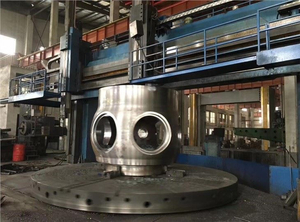
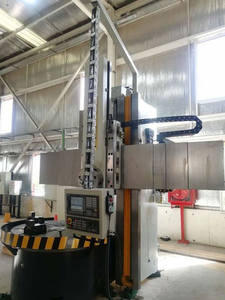
A vertical lathe positions its spindle perpendicular to the shop floor. The workpiece sits on a horizontal rotary table that spins during machining. This setup uses gravity to keep parts stable without complicated clamping. It allows the spindle and tool to work in a vertical plane, which helps handle weight more effectively.
It relies on gravity-assisted clamping to secure heavy workpieces. The table supports the full load, so there’s less strain on bearings. Operators can position tools precisely while the workpiece rotates smoothly. This makes it ideal for handling large, short parts that would sag or deform on a horizontal machine.
You’ll see vertical lathes in industries like aerospace, automotive, and heavy machinery manufacturing. They’re often used to create turbine discs, gear blanks, wheel hubs, and similar large-diameter parts. The machine’s design helps maintain accuracy even with heavy cuts.
It offers superior rigidity, which is crucial for deep or heavy cuts. The vertical layout can save floor space compared to some horizontal setups. Loading is simpler because cranes or hoists can drop parts directly onto the table.
It’s less effective for machining long shafts because the vertical orientation limits length capacity. Chips can collect inside concave workpieces, which sometimes requires extra cleaning or guarding to prevent damage.
A horizontal lathe has its spindle running parallel to the shop floor. The workpiece is clamped between centers or held firmly in a chuck. This orientation supports parts along their length, which helps when machining slender or extended shapes. It allows the cutting tool to work side to side while the part spins.
It’s designed for producing long, cylindrical parts without losing stability. Operators can add bar feeders for continuous material supply, which boosts production efficiency. Tailstocks provide extra support at the far end of the workpiece, reducing vibration during cutting and helping maintain precision over long spans.
They’re often used to create shafts, pins, threads, and various cylindrical parts. Many shops rely on them for high-volume production of identical pieces. This makes them popular in automotive, manufacturing, and metalworking sectors where consistency is critical.
It handles long workpieces with ease, especially when using tailstocks or rests. The setup is versatile, supporting many operations from threading to grooving. It also benefits from a large base of industry knowledge and proven technology, making training and maintenance straightforward.
A model fitted with a bar feeder can take up significant floor space. Handling very heavy workpieces is more difficult because the weight must be supported horizontally, which can strain both the operator and the machine.
A vertical lathe positions its spindle upright so the workpiece sits flat on a rotating table. A horizontal lathe places the spindle parallel to the floor, holding the part along its axis. This difference changes how the machine supports weight and applies cutting forces.
Vertical lathes handle large, heavy parts easily because the table bears the full load. They excel with wide but short components. Horizontal lathes suit long pieces like shafts, although they can struggle when workpieces become extremely heavy.
Vertical lathes often occupy less width but more depth. In some layouts, you can fit two vertical machines in the space of one bar-fed horizontal. Horizontal lathes with feeders or long beds need more floor area.
A vertical design makes loading simpler since cranes or hoists can drop parts straight onto the table. Horizontal setups may require side loading or manual lifting, which is less efficient for bulky parts.
Horizontal lathes allow chips to fall away more naturally. Vertical machines can trap chips in concave surfaces or around the spindle area, so extra guarding or cleaning may be necessary.
The rigid structure of vertical lathes resists vibration during heavy cuts. Horizontal lathes can maintain high precision too, but long parts may need added supports to control deflection.
Inverted spindle vertical lathes can integrate automation, picking up parts without external robots. Horizontal lathes can be automated as well, especially with bar feeders, but the systems differ in complexity and cost.
When deciding between these two machines, the type of parts matters first. If most workpieces have large diameters but short lengths, a vertical lathe handles them better. Long, slender parts fit naturally into a horizontal design.
The weight of the workpieces is another factor. Heavy components rest securely on a vertical table, while horizontal lathes must support the weight along their axis. This affects both stability and the need for extra supports.
Floor space can influence the decision more than expected. A vertical lathe often fits in a narrower footprint, while a horizontal lathe with a bar feeder may require much more room. Shops with limited space may find vertical models easier to place.
Production volume also plays a role. High-volume work with repetitive parts may benefit from a horizontal setup and bar feeding. Complex, heavy parts in smaller batches may favor the vertical style.
Automation requirements differ between designs. Inverted spindle vertical lathes can automate part handling without extra robots. Horizontal machines can integrate bar feeders and gantry systems, though they require more planning.
Lastly, operator familiarity and training can shape the choice. Many machinists have more experience with horizontal setups, while vertical machines may require specialized skills to reach their full potential.
Initial purchase cost can vary widely between vertical and horizontal lathes. A vertical model with advanced CNC features may cost more upfront, especially if it includes automation like an inverted spindle. Horizontal machines can be less expensive to start with, but long-bed versions and bar-feeding systems raise the price.
Maintenance and tooling costs depend on the machine’s complexity and workload. Vertical lathes might require more robust tooling to handle heavy cuts. Horizontal machines could need additional supports or steady rests for long parts, which adds to the budget. In both cases, parts availability and service support affect ongoing expenses.
Productivity versus downtime is another balancing point. A vertical lathe can reduce setup time for heavy workpieces, which boosts output. Horizontal machines may achieve higher throughput for long-part production. Downtime costs can grow quickly if a single machine handles critical jobs, so investing in reliability often pays off.
Proper clamping and alignment keep the workpiece stable during cutting. On a vertical lathe, the table surface supports the weight, but the part still needs secure fixtures to prevent shifting. On a horizontal lathe, the workpiece is held between centers or in a chuck, so accurate alignment is critical for precision and safety.
Chip management and guarding protect both the machine and the operator. Vertical lathes can trap chips in concave parts, which may require extra shielding or air blasts to clear. Horizontal lathes let chips fall away more naturally, but guards are still essential to block flying debris during heavy cuts.
Operator training builds safe and efficient habits. It’s important they know how to handle setup, tool changes, and emergency stops for each type of machine. Experienced operators also recognize early signs of vibration, misalignment, or tool wear, helping prevent accidents and costly downtime.
CNC integration and automation continue to push both vertical and horizontal lathes toward higher efficiency. Many new models include built-in probing, automatic tool changers, and real-time monitoring systems. These features reduce operator intervention while maintaining consistent part quality.
Multi-axis capabilities are becoming more common, allowing complex shapes to be machined in fewer setups. Vertical lathes with tilting tables or horizontal models equipped with Y-axis functions give shops more flexibility. It means less downtime moving parts between machines.
Material innovations influence machine design and tooling. Stronger alloys, composites, and heat-resistant metals demand better rigidity and cooling systems. Both vertical and horizontal machines are evolving to cut these materials faster without sacrificing accuracy.
Energy efficiency and compact designs are also shaping the market. Manufacturers are building smaller, more power-conscious lathes that still deliver high performance. Space-saving layouts help shops fit more capacity into existing floors, whether they choose a vertical or horizontal style.
Vertical lathes excel at handling large, heavy, short parts with gravity-assisted stability. Horizontal lathes suit long, slender workpieces and bar-fed production. Choosing between them means considering size, weight, floor space, automation, and operator experience. Match the machine to your part requirements and shop layout for the best results.
A: The main difference lies in spindle orientation. A vertical lathe has a spindle perpendicular to the floor, while a horizontal lathe has a spindle parallel to it.
A: Vertical lathes handle heavy parts better because gravity helps secure the workpiece and reduces strain on bearings.
A: It can, but vertical lathes are generally better for large diameters, especially when parts are short and heavy.
A: Vertical lathes often have a smaller footprint in terms of width, making them more space-efficient in many shop layouts.
A: Both can be automated, but vertical lathes with inverted spindles allow integrated part handling without external robots.