- All
- Product Name
- Product Keyword
- Product Model
- Product Summary
- Product Description
- Multi Field Search
Views: 0 Author: Site Editor Publish Time: 2026-08-06 Origin: Site


We get asked "Fanuc or Siemens?" at least twice a week. Sometimes it's a first-time buyer who read conflicting forum posts. Sometimes it's an experienced machinist switching suppliers for the first time. And sometimes it's a procurement manager who's been told by headquarters to justify why we quote with Fanuc by default.
After 15 years of building and exporting CNC lathes with both control systems — we've shipped to over 40 countries — I've learned that the real answer is never as simple as "pick X." The right choice depends on things most comparison articles completely ignore: your operators' experience, your local service infrastructure, and what you're actually machining day to day.
So instead of another spec-sheet breakdown that tells you both are "industry-leading solutions," here's what we've actually learned from the field.
If I had to reduce it to one sentence: Fanuc is the safe default; Siemens is the power user's choice.
But that's misleading, so let me explain.
Fanuc controls — especially the 0i-TF and 31i-B series — dominate the global CNC lathe market. Roughly 60% of the machines we ship go out with Fanuc. It's not because Siemens is worse. It's because Fanuc is everywhere. Parts are available in almost any country, technicians know how to service it, and operators who've used one Fanuc machine can jump on another without retraining.
Siemens — particularly the 828D and 840D sl — tends to show up in shops that do complex multi-axis work or have European engineering standards baked into their processes. We see it favored in Germany, Turkey, and parts of Eastern Europe, where Siemens service infrastructure is strong and operators are trained on it from technical school.
The real question isn't "which is better?" It's "which is better for your situation?"
Here's something that might surprise you — in our experience, both systems are remarkably reliable when properly maintained. The failures we've seen have almost nothing to do with the control brand and everything to do with environment and maintenance habits.
That said, there are differences worth knowing about.
Fanuc units tend to fail less catastrophically but can be cryptic when they do. A Fanuc alarm code might send your maintenance team on a 2-hour goose chase through the manual. The hardware itself — especially the 0i series — is almost indestructible. We have CK6163 horizontal lathes with Fanuc 0i-TF controls running three shifts a day in a Vietnamese factory for over 6 years now, with zero control-related downtime. That's not a typo. Six years.
Siemens diagnostics are genuinely better. When something goes wrong, the 828D will often tell you exactly what's happening in language your maintenance team can understand. But we've noticed that Siemens drives and modules are more sensitive to power quality. In areas with unstable electricity — and we ship to plenty of places like this — you absolutely need a line conditioner or UPS. We learned that the hard way after replacing three Siemens 828D power modules in an Indonesian workshop within the first year. Unstable grid voltage fried them one by one.
The lesson? If your power supply is clean and stable, Siemens is equally reliable. If it's not — which is common in developing manufacturing hubs — Fanuc's tolerance for dirty power gives it an edge.
This is where the rubber meets the road, and it's the factor most buyers underestimate until it's too late.
Fanuc has a reputation for being "simple," and that's mostly true. The interface hasn't changed dramatically in 20 years — which sounds like a criticism, but it's actually a strength. Operators who trained on a Fanuc 10 years ago can sit down at a new 0i-TF and be productive within hours. The manual guide i conversational programming is intuitive for shop-floor machinists who aren't full-time CAM programmers.
Siemens has a steeper learning curve but a higher ceiling. The SHOP Turn interface on the 828D is genuinely excellent once your team learns it. The graphical programming support is more advanced than anything Fanuc offers at a similar price point. But "steeper learning curve" means 2 to 3 weeks of reduced productivity while your operators get comfortable.
We've had customers switch from one system to the other. The ones who moved to Siemens always said the same thing: "The first month was painful. Now I don't want to go back." The ones who moved to Fanuc said: "It just works. I don't love it, but it works."
Both are valid. The question is what matters more to your shop — speed of adoption or long-term capability.
Let's talk about real costs, because this is where the difference gets tangible.
Cost Factor | Fanuc (0i-TF) | Siemens (828D) |
|---|---|---|
Control unit purchase | $8,000–$12,000 | $10,000–$15,000 |
Annual maintenance (average) | $500–$1,500 | $800–$2,500 |
Common spare (servo amplifier) | $800–$2,000 | $1,200–$3,500 |
Battery replacement | ~$50, every 2–3 years | ~$80, every 2 years |
Service tech availability | High (globally) | Medium (strong in EU/Turkey) |
The Fanuc ecosystem is cheaper to maintain for one straightforward reason: there are more third-party suppliers making compatible parts. You can find replacement Fanuc servo amps from Japanese, Chinese, and even Indian manufacturers. Siemens parts tend to be more proprietary, and you'll often need to go through official channels — which means longer lead times and higher prices, especially outside Europe.
Over a 10-year ownership period, we estimate the total cost of control system ownership (purchase + maintenance + spare parts + downtime) runs about 15–25% less for Fanuc in most markets. The exception is Western Europe, where Siemens service is so readily available that the gap narrows significantly.
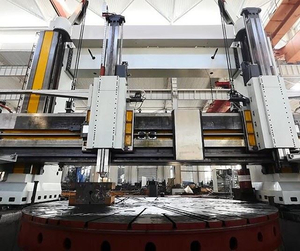
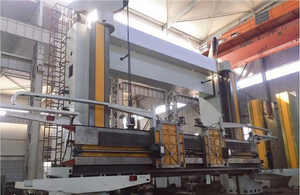
For our CK5 series vertical lathes, Fanuc 0i-TF is the default choice for about 80% of orders. For the CK6 series horizontal lathes, it's closer to 65% Fanuc — the Siemens share is higher because horizontal lathe buyers tend to do more complex turning work where Siemens' advanced features come into play.
I've heard some people claim that Fanuc is better suited for vertical lathes and Siemens for horizontal ones. Let me be clear: there is no technical basis for this. Both control systems handle any lathe configuration equally well. The servo architecture, interpolation algorithms, and PMC/PLC capabilities work identically regardless of spindle orientation.
What actually happens is regional preference masquerading as technical necessity. In Southeast Asia and South America, vertical lathe buyers tend to specify Fanuc because that's what their operators already know. In Eastern Europe and the Middle East, horizontal lathe buyers often request Siemens because that's what local technicians can service.
Don't let someone talk you into a specific control brand based on your lathe type. Choose based on your ecosystem, not the machine configuration.
After years of watching customers succeed — and occasionally struggle — with both systems, here's how we frame the decision when someone asks us directly.
Choose Fanuc if:
Your operators have prior Fanuc experience (this alone saves you weeks of lost productivity)
You're in a region where Fanuc service technicians are easy to find — most of Asia, Americas, and Africa
You do standard turning work and don't need advanced graphical programming
Budget is a significant factor — the 15–25% lifetime cost savings adds up fast
Choose Siemens if:
You're doing complex contouring, multi-axis turning, or synchronized operations
Your engineering team prefers Siemens' programming environment and diagnostics
You're in Central/Eastern Europe or Turkey where Siemens support is excellent
You're integrating into a larger Siemens-ecosystem shop alongside Siemens mills or machining centers
The "it doesn't matter" zone: If you're running a standard 2-axis lathe doing OD/ID turning, facing, and threading — honestly, either system will serve you well. In this case, just go with whatever your operators already know. Productivity on day one matters more than features you'll never use.
The "get a second opinion" zone: If you're buying a large vertical turning center (CK5-3200 or bigger) for heavy interrupted cuts in aerospace or energy — talk to both Fanuc and Siemens application engineers before deciding. At that level, the servo tuning and thermal compensation algorithms differ meaningfully, and the right choice depends on your specific materials and tolerance requirements.
At the end of the day, both Fanuc and Siemens make excellent CNC control systems. The "wrong" choice is almost never the control brand — it's buying without considering your operators, your service network, and your actual machining needs. Get those three things right, and you'll be happy with either one.