- All
- Product Name
- Product Keyword
- Product Model
- Product Summary
- Product Description
- Multi Field Search
Views: 0 Author: Site Editor Publish Time: 2026-07-14 Origin: Site


Every CNC lathe owner knows this reality: sooner or later, something wears out, breaks, or needs replacement. A worn spindle bearing causes vibration marks on your workpiece. A cracked way cover lets chips into the carriage. A degraded ballscrew introduces positioning errors that scrap expensive parts. The question is never whether you will need spare parts—it is how quickly you can source them, how much they will cost, and whether the replacement meets OEM standards.
This procurement guide covers every critical spare part category for CK5 series vertical lathes and CK6 series horizontal lathes. You will learn which components wear fastest, how to identify correct part numbers, what to expect from Chinese manufacturers in terms of pricing and lead times, and how to build a spare parts strategy that minimizes downtime without overstocking your maintenance budget. Whether you run a single CK5116 or an entire fleet of CK6630s, this guide gives you the framework to buy smarter.
Many machine shop managers treat spare parts purchasing as reactive—order something when it breaks. This approach carries hidden costs that often exceed the price of a planned inventory program.
Consider these industry data points from a survey of 200 mid-size manufacturing facilities:
Maintenance Approach | Avg. Downtime Cost/Year | Spare Parts Cost/Year |
|---|---|---|
Reactive only | $45,000–$120,000 | $3,000–$8,000 |
Planned preventive | $8,000–$25,000 | $12,000–$22,000 |
Hybrid (critical spares + preventive) | $15,000–$35,000 | $8,000–$15,000 |
The hybrid approach consistently delivers the lowest total cost of ownership. The key insight: stocking high-failure-rate components costs far less than a single unplanned production stoppage. A spindle bearing replacement for a CK5123 costs $800–$1,500. A day of downtime for a wind energy flange turning operation can cost $10,000–$30,000 in lost revenue and late delivery penalties.
Your procurement strategy should address three categories:
Consumable items (replaced on schedule regardless of condition): filters, seals, way wipers
Wear parts (replaced when degradation is detected): bearings, ballscrews, chuck jaws
Insurance spares (kept for catastrophic failure): spindle assemblies, servo motors, ballnut assemblies
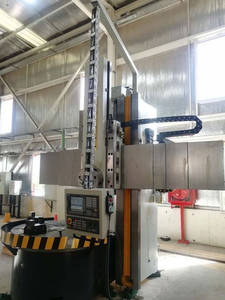
CK5 series vertical lathes (including CK5112, CK5116, CK5123, and CK5132) share common wear patterns due to their vertical spindle orientation and table-based workholding. Here are the components most frequently requiring replacement:
The spindle is the heart of your vertical lathe. CK5 machines typically use a combination of:
Front bearing: Double-row cylindrical roller bearing (e.g., SKF NN3024 or equivalent)
Rear bearing: Angular contact ball bearing pair (e.g., SKF 7024 CD/P4A)
Thrust bearing: Axial cylindrical roller bearing for heavy workpiece loads
Bearing Position | Common Spec | Replacement Interval | Price Range (OEM) |
|---|---|---|---|
Front (radial) | NN3024-AS-K-M-SP | 3–5 years | $600–$1,200 |
Rear (angular) | 7024 CD/P4A pair | 4–6 years | $400–$900 |
Thrust (axial) | YRT580 or equivalent | 5–8 years | $800–$2,000 |
Procurement tip: Always purchase matched pairs from a single manufacturer. Mixing bearing brands or precision grades creates uneven load distribution and dramatically shortens service life.
Vertical lathe chucks experience asymmetric wear because the workpiece weight creates uneven clamping forces. For CK5 machines with 4-jaw independent chucks:
Top jaws (soft jaws): Replace every 500–2,000 workpieces depending on material hardness
Master jaws (hard jaws): Replace every 2–5 years under normal use
Jaw screws and T-nuts: Inspect every 6 months; replace if thread play exceeds 0.05 mm
Vertical lathes are particularly vulnerable to chip accumulation on horizontal surfaces. The way covers protect precision guideways from contamination:
Telescopic steel covers: Replace when dents or deformation cause contact with moving components (typically 5–8 years)
Bellows-type covers (rubber/leather): Replace when cracks or tears appear (typically 2–4 years)
Wiper blades: Replace every 6–12 months as preventive maintenance
CK5 vertical lathes use ballscrews for X-axis (crossrail) and Z-axis (ram) movement. The Z-axis ballscrew bears additional stress from gravity and the ram's weight:
Axis | Typical Ball Screw Diameter | Replacement Interval | Price Range |
|---|---|---|---|
X-axis (crossrail) | 40–50 mm | 5–8 years | $1,500–$3,500 |
Z-axis (ram) | 50–63 mm | 4–7 years | $2,000–$4,500 |
Ball nut backlash exceeding 0.02 mm indicates replacement is needed. Chinese manufacturers offering precision ground ballscrews (C3 grade or better) can supply direct replacements at 40–60% of OEM pricing.
CK6 series horizontal lathes (CK6132 through CK61125 and larger) have different wear patterns due to horizontal spindle orientation and between-centers workholding:
CK6 horizontal lathes typically feature a spindle headstock with:
Front bearing: Tapered roller bearing (e.g., 30218 or equivalent)
Rear bearing: Cylindrical roller bearing with angular contact
High-speed models: May use angular contact ball bearings (7214-7218 series)
Bearing Configuration | Common Application | Price Range |
|---|---|---|
Tapered roller pair | CK6132–CK6163 | $300–$700 |
Cylindrical + angular set | CK6180–CK61125 | $500–$1,500 |
Precision angular contact | High-speed spindles | $800–$2,200 |
The tailstock is unique to horizontal lathes and requires its own spare parts inventory:
Tailstock quill: Replace if bore wear causes quill runout exceeding 0.01 mm
Center (live/dead): Replace every 1–3 years; high-speed applications require more frequent replacement
Tailstock body bearings: Inspect annually; replace every 3–5 years
Handwheel and lead screw: Inspect threads; replace if backlash is unacceptable for your tolerance requirements
CK6 horizontal lathes frequently use 4-station or 6-station electric tool posts, or servo-driven turrets:
Tool post indexing mechanism: Hirth coupling teeth wear; replace indexing pins every 1–2 years
Tool clamping bolts and springs: Replace when clamping force drops below specification
Turret servo motor: Inspect brushes (DC types) or encoder connections; expect 5–8 year service life
Coolant-through tool holders: Replace seals every 12–18 months
Modern CNC lathes—both CK5 vertical and CK6 horizontal—rely heavily on electronic components. These parts have the highest cost per unit but are essential for machine operation:
Component | Typical Replacement Interval | Price Range | Lead Time (China) |
|---|---|---|---|
X-axis servo motor | 7–10 years | $400–$1,200 | 2–4 weeks |
Z-axis servo motor | 7–10 years | $400–$1,200 | 2–4 weeks |
Servo drive unit | 8–12 years | $600–$2,000 | 3–6 weeks |
Spindle motor | 10–15 years | $1,500–$5,000 | 4–8 weeks |
Critical procurement note: Servo motors are model-specific. Record the complete part number, serial number, and parameter settings before failure occurs. Chinese servo manufacturers (such as Estun, KND, and GS) offer compatible replacements for Fanuc and Siemens systems at 50–70% cost savings.
Absolute and incremental encoders are susceptible to contamination and vibration damage:
Spindle encoder: Replace if speed readout becomes erratic or position synchronization fails
Axis linear scales: Clean monthly; replace every 5–8 years if positioning accuracy degrades
Battery backup (for absolute encoders): Replace annually to prevent position loss
Fanuc and Siemens control systems use modular I/O that can fail independently:
Digital input/output modules: $150–$500 per module
Analog output modules (spindle speed control): $200–$600
Communication interfaces (EtherNet/IP, PROFINET): $300–$800
Always source these from authorized distributors or verified China suppliers who provide warranty documentation.
CK5 vertical lathes and CK6 horizontal lathes both rely on hydraulic and pneumatic systems for clamping, counterbalancing, and auxiliary functions:
Hydraulic pump: Vane pump or gear pump; replace every 5–8 years ($500–$1,500)
Hydraulic valves (solenoid type): Replace individual solenoids every 3–5 years; complete valve bodies every 8–12 years ($80–$400 each)
Hydraulic seals and O-rings: Replace during every major service; full seal kit $50–$150
Hydraulic oil filters: Replace every 2,000–4,000 operating hours ($15–$50 each)
Hydraulic hoses: Inspect annually; replace every 5–7 years or at first sign of cracking
Pneumatic systems on CNC lathes typically control chuck clamping, tailstock quill extension, and tool post indexing:
Air cylinder seals: Replace every 2–3 years ($20–$80 per cylinder)
Solenoid valves: Replace every 3–5 years ($30–$120 each)
Pressure regulators and FRL units: Clean monthly; replace every 5–7 years ($50–$150)
Air treatment filters: Replace every 1,000–2,000 hours ($10–$30)
Oil pump motor: Replace every 8–12 years ($200–$500)
Metering units (progressive distributors): Clean or replace every 3–5 years ($50–$200 each)
Lubrication lines and fittings: Replace cracked or clogged lines immediately; full system relining $100–$300
Every CNC lathe owner faces the OEM-versus-aftermarket decision. Here is a structured comparison:
Factor | OEM Parts | Quality Aftermarket (China) | Low-Cost Aftermarket |
|---|---|---|---|
Dimensional accuracy | 100% match | 95–99% match | 85–95% match |
Material quality | Original spec | Equivalent or better | Variable, often lower |
Warranty | 6–12 months | 3–6 months | Rarely offered |
Price premium | Baseline (highest) | 40–60% less | 70–85% less |
Availability | From machine builder | 1–4 weeks | In stock (often) |
Documentation | Complete | Partial to complete | Rarely provided |
Recommendation by component type:
Spindle bearings: Always OEM or premium aftermarket (SKF, FAG, NSK, Timken). The consequences of bearing failure justify the cost.
Way covers, bellows, wipers: Quality aftermarket is perfectly acceptable and dramatically cheaper.
Ballscrews and ballnuts: Premium aftermarket from specialized Chinese manufacturers (e.g., Nanjing Gude, Shandong Sgr) offers excellent value with C3/C5 precision grades.
Hydraulic seals and O-rings: Aftermarket is standard practice. Use Parker or NOK equivalent materials.
Electronic components (servo, encoders): OEM preferred for compatibility; quality aftermarket acceptable if supplier provides testing certificates.
Belts and filters: Aftermarket is standard; just match specifications.
China has developed a mature ecosystem of CNC lathe spare parts suppliers. Here is how to evaluate and select the right partner:
Supplier Type | Price Level | Quality Consistency | Best For |
|---|---|---|---|
Original machine builder (OEM) | Highest | Guaranteed | Warranty-period parts, complex assemblies |
Specialized parts manufacturer | Mid-range | High | Bearings, ballscrews, hydraulic components |
Trading company / distributor | Low to mid | Variable | Commodity parts, filters, seals, belts |
Machine tool cluster factories | Low to mid | Moderate to high | CK5/CK6-specific structural parts, covers |
Before placing an order, verify each of these items:
Business license and operating scope — Confirm the supplier is authorized to sell machinery parts
Quality certifications — ISO 9001 minimum; IATF 16949 preferred for automotive-grade suppliers
Testing capabilities — Do they have CMM, hardness testers, roundness testers, or do they outsource inspection?
Sample availability — Request samples before bulk orders; critical for bearings, ballscrews, and custom parts
Reference customers — Ask for 3–5 current customers in your region or industry
Export experience — Familiarity with export packaging, documentation (commercial invoice, packing list, certificate of origin), and Incoterms
Prices 50%+ below market average without explanation (likely rejects or wrong material)
No testing documentation or certificates provided
Refusal to provide samples for critical components
Generic product photos (not actual inventory)
Unwillingness to provide business license or factory audit access
Here is a representative pricing comparison for common CNC lathe spare parts sourced from China manufacturers:
Component | OEM Price (USD) | China Quality Aftermarket | Savings vs. OEM |
|---|---|---|---|
Spindle bearing set (CK5116) | $2,000–$3,500 | $800–$1,800 | 50–60% |
Ball screw assembly, Z-axis (CK5123) | $3,500–$5,000 | $1,800–$3,000 | 40–50% |
Way cover set (telescopic, CK6163) | $1,200–$2,000 | $500–$900 | 50–60% |
Servo motor (Fanuc equivalent) | $1,200–$2,500 | $500–$1,000 | 55–65% |
Hydraulic pump assembly | $800–$1,500 | $350–$700 | 50–60% |
Chuck jaw set (4-jaw, 500mm) | $300–$500 | $120–$250 | 55–65% |
Complete seal kit (CK5 series) | $200–$400 | $60–$150 | 60–70% |
Tool post (4-station electric) | $600–$1,200 | $300–$600 | 45–55% |
Important notes on pricing:
FOB China prices shown; add freight, insurance, and import duties
Minimum order quantities may apply for custom or made-to-order parts
Bulk orders (multiple parts in one shipment) reduce per-unit shipping costs by 30–50%
Prices valid for mid-2026; raw material fluctuations may cause 5–15% variance
Based on failure frequency analysis and cost-of-downtime calculations, here is a recommended spare parts inventory for a typical machine shop running 3–5 CNC lathes:
These items cause the most frequent production stoppages when unavailable:
Complete seal and O-ring kits for each machine model
Way wiper blades and bellows (at least 2 sets per machine)
Hydraulic and pneumatic filters (6-month supply)
Chuck jaw sets (1 complete set per machine)
Belt sets (spindle drive, coolant pump)
Fuse sets and circuit breaker spares
Lubrication oil and grease (6-month supply)
Spindle bearing sets
Ballscrew assemblies
Servo motors and drives
Hydraulic pumps and valve blocks
Way cover assemblies
Encoder and feedback devices
Spindle assemblies (complete)
Crossrail and column way surfaces (refurbishment)
Gearbox internal components
Custom machined structural parts
Inventory cost example: For a shop running two CK5116 vertical lathes and three CK6163 horizontal lathes, maintaining the immediate stock list costs approximately $3,000–$5,000 in parts. This investment typically prevents $15,000–$40,000 in annual unplanned downtime costs.
Many spare parts procurement problems stem from incorrect specification rather than quality issues. Follow this ordering protocol:
Locate the machine's parts manual (not the operator's manual)
Record the complete part number, revision letter, and serial number range
For bearing replacements, note the exact bearing designation (not just size)
Photograph the existing part and any identification markings
When requesting quotation, include:
Machine model and year of manufacture
Serial number (some parts vary by production batch)
Complete OEM part number (if known)
Application details (workpiece material, cutting parameters, duty cycle)
Quantity required
Required precision grade (e.g., P4 for bearings, C3 for ballscrews)
Request dimensional drawings from the supplier
Compare critical dimensions with OEM specifications
For electronic components, confirm firmware/software compatibility
For hydraulic components, confirm port sizes, pressure ratings, and flow rates
Maintain a spare parts log with installation dates and expected life
Store bearings in original packaging in climate-controlled environment
Label and organize parts by machine model for rapid retrieval
Rotate stock (FIFO) for items with shelf life (rubber seals, lubricants)
Method | Transit Time | Cost (per kg) | Best For |
|---|---|---|---|
Express courier (DHL/FedEx) | 3–7 days | $8–$15 | Small urgent parts (<30 kg) |
Air freight | 7–14 days | $4–$8 | Medium urgency, 30–300 kg |
Sea freight (LCL) | 25–40 days | $1–$3 | Non-urgent, >100 kg |
Sea freight (FCL) | 20–35 days | $0.50–$1.50 | Full container loads |
Commercial invoice (with HS codes)
Packing list
Certificate of origin (Form A for preferential tariff treatment if applicable)
Inspection certificates (for precision parts: material certs, dimensional reports)
Import licenses (if required by your country's machinery import regulations)
Request that your China supplier follow these packaging guidelines:
Bearings: VCI (volatile corrosion inhibitor) paper + sealed plastic bag + cardboard box
Ballscrews: Anti-rust coating + foam sleeve + wooden crate (prevent bending during transit)
Electronic components: Anti-static bags + foam insert + sturdy carton
Hydraulic components: Sealed plastic wrap + shock-absorbing packaging
Way covers: Cardboard wrapping + wooden pallet (prevent denting)
Under normal operating conditions with proper lubrication and load management, spindle bearings in CK5 vertical lathes last 3–5 years of continuous use (approximately 15,000–25,000 operating hours). CK6 horizontal lathes typically see 4–6 years. Premature failure (under 2 years) usually indicates lubrication issues, excessive load, or contamination.
Standard bearings may fit dimensionally but typically lack the precision grade (P4/P2), preload specifications, and internal geometry optimized for machine tool spindles. Using standard bearings in a spindle application can reduce accuracy, increase vibration, and shorten bearing life by 50–70%. Always match or exceed the original bearing specification.
The three most effective strategies are: (1) source consumable and wear parts from quality Chinese aftermarket suppliers instead of OEM; (2) negotiate annual supply agreements with volume discounts; (3) invest in condition monitoring (vibration analysis, temperature sensors) to plan replacements at optimal intervals rather than running parts to catastrophic failure.
Monitor these indicators: positioning accuracy degradation (backlash exceeding 0.02 mm), audible noise or vibration during rapid traverse, increased servo motor current draw, and visible wear on the ballnut recirculation tubes. Laser interferometer measurement provides the most accurate assessment of ballscrew performance.
For certain components—particularly large castings, crossrail assemblies, and gearbox housings—professional refurbishment can restore original specifications at 30–50% of new part cost. However, never use refurbished bearings, ballscrews, or electronic components. These precision items must be new to ensure reliability.
CNC lathe spare parts procurement is not glamorous work, but it directly determines your machine uptime, part quality, and operational profitability. The operators and maintenance teams who maintain detailed parts inventories, establish relationships with reliable China suppliers, and follow systematic replacement schedules consistently outperform those who react to every breakdown.
Start by auditing your current spare parts inventory against the frameworks in this guide. Identify gaps in your immediate stock. Request quotations from two or three verified Chinese suppliers for your planned procurement items. Calculate your potential savings: most shops discover they can reduce spare parts costs by 40–60% while improving availability.
Your CK5 vertical lathes and CK6 horizontal lathes represent significant capital investment. Protecting that investment with a smart spare parts strategy is one of the highest-ROI decisions you can make.
Need help sourcing specific CNC lathe spare parts? Our team connects buyers with verified China manufacturers offering competitive pricing on bearings, ballscrews, hydraulic components, electronic parts, and complete overhaul kits for CK5 vertical and CK6 horizontal lathes. Share your machine model, serial number, and parts requirements, and receive detailed quotations within 48 hours.