- All
- Product Name
- Product Keyword
- Product Model
- Product Summary
- Product Description
- Multi Field Search
Views: 0 Author: Site Editor Publish Time: 2025-12-30 Origin: Site


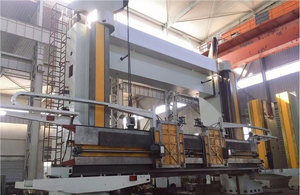
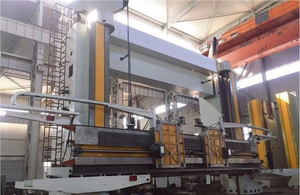
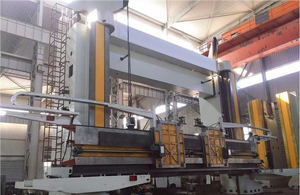
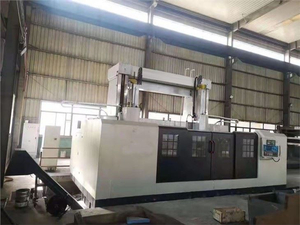
The spindle is installed horizontally, and the workpiece is clamped horizontally by a chuck or center, driven to rotate by the spindle, and the tool performs longitudinal/transverse feeding along the bed guideway.
The bed is mostly made of integral high-strength cast iron, with the guideway subjected to medium-frequency quenching and precision grinding, ensuring strong rigidity and precision retention. The tailstock and steady rest can support slender workpieces to prevent deformation.
The headstock is equipped with a three-bearing spindle, the feed box has metric and inch thread conversion functions, and the carriage box is provided with overload protection, making operation and maintenance convenient.
It excels in processing small and medium-sized rotating parts such as shafts, sleeves, slender rods/tubes, and can complete multiple processes including cylindrical turning, boring, grooving, thread turning, and knurling.
Workpiece loading and unloading is convenient, suitable for mass production and repetitive tasks. It can be equipped with a multi-tool turret, power tools, and sub-spindle to realize multiple processes in one clamping, reducing work turnover.
CNC models can adopt a slant-bed design, which features smooth chip removal, low center of gravity, and small vibration, suitable for automated integration (such as robot loading and unloading).
Advantages: Mature structure, easy to operate, compact footprint, high cost-performance ratio, suitable for small and medium-batch and general processing.
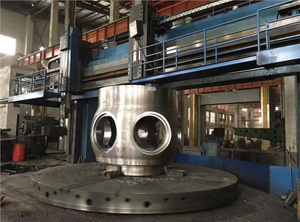
Disadvantages: Limited by spindle stroke and load-bearing capacity, it is not as good as vertical lathes for extra-large/overweight workpieces; additional support is required to prevent vibration when the aspect ratio of slender workpieces is too large.
General Machinery: Shafts, gear blanks, flanges, etc.
Instrumentation: Small precision parts.
Automobile/Agricultural Machinery: Drive shafts, wheel hubs, etc.
Maintenance Workshops: Small-batch repair of various types of parts.
Ordinary horizontal lathes are suitable for general processing of small and medium-sized workpieces; CNC horizontal lathes (such as slant-bed type) are suitable for batch high-precision production; heavy-duty horizontal lathes can process large-diameter/heavy-weight workpieces.