- All
- Product Name
- Product Keyword
- Product Model
- Product Summary
- Product Description
- Multi Field Search
Views: 0 Author: Site Editor Publish Time: 2026-01-02 Origin: Site


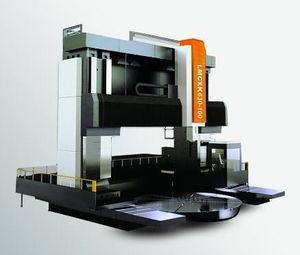
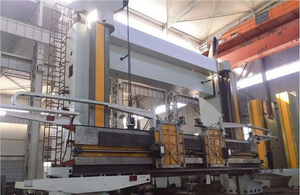
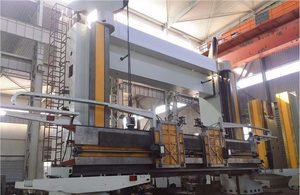
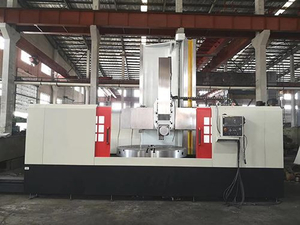
Vertical Spindle Orientation: Spindle is perpendicular to the horizontal plane, with the workpiece clamped on a horizontal rotary table. Workpiece weight acts vertically on the machine base, reducing spindle bending and enhancing rigidity.
Horizontal Worktable: Provides a stable platform for heavy workpieces, simplifying loading, positioning, and alignment, often with large diameter capacity (from under 1m to over 20m).
Rigid Machine Base: Typically made of high-grade cast iron or mineral casting for vibration damping, ensuring stable cutting under heavy loads.
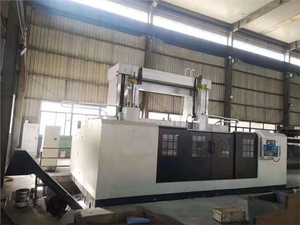
Dual/Twin Ram Design: Optional dual rams enable simultaneous machining of multiple features, boosting productivity.
Enclosed Protection & Chip Removal: Fully enclosed design with gravity-assisted chip removal; chips and cutting fluid fall into chutes, preventing re-cutting and aiding heat dissipation.
Superior Load-Bearing & Stability: Ideal for heavy, disc/ring/box-shaped workpieces. Workpiece weight is supported by the table base, minimizing spindle deflection and ensuring consistent precision.
Efficient Workpiece Handling: Horizontal table allows easy crane loading, reducing labor and alignment time; lower clamping pressure suits fragile parts.
High Precision & Repeatability: Rigid structure and advanced spindle systems (e.g., hydrostatic bearings) deliver tight tolerances, suitable for thin-walled components.
Automation Compatibility: Equipped with automatic tool changers (ATC), pallet changers, and integrated conveyors for unattended operation and short cycle times.
Space Efficiency: Compact footprint (up to 50% smaller than horizontal lathes), optimizing workshop layout and reducing floor space costs.
Multi-Process Capability: With CNC controls and optional milling/grinding heads, performs turning, boring, threading, and milling in one setup.