- All
- Product Name
- Product Keyword
- Product Model
- Product Summary
- Product Description
- Multi Field Search
Views: 0 Author: Site Editor Publish Time: 2026-08-04 Origin: Site


I've been in the CNC lathe business for over 15 years now, and if there's one thing that keeps buyers calling us at 2 AM, it's spindle problems. Last month alone, three different customers reached out with "my parts are failing inspection" â and in every case, the root cause traced back to the spindle.
Here's what most people don't realize: your spindle is the single most expensive component in your lathe, and when it starts acting up, the symptoms can look like a dozen different problems. Surface finish gets rough. Dimensions drift. You get chatter marks. And before you know it, you're scrapping parts left and right.
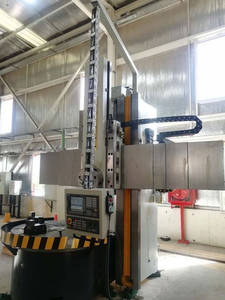
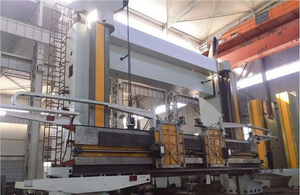
In this article, I want to walk you through the five spindle problems we see most often on both vertical lathes (like our CK5 series) and horizontal lathes (like the CK6 series). For each one, I'll tell you exactly what causes it, how to confirm it's your spindle, and what we've done to fix it â sometimes for under $500, sometimes for a lot more.
This is probably the most common complaint we hear: "The OD is out by 0.03mm and I can't figure out why."
Runout means the spindle axis isn't perfectly true when it rotates. Even a tiny amount â say, 0.01mm â gets multiplied depending on the workpiece diameter, cutting forces, and how far the part sticks out from the chuck.
We test every spindle before it leaves our factory using a precision test bar and a dial indicator. The spec on our CK5-1600 vertical lathe is â¤0.005mm at the spindle nose. But here's the thing â runout can develop over time. Bearings wear. Thermal cycling takes its toll. And sometimes, it's not the spindle itself â it's the chuck or faceplate not seating properly.
How to diagnose it:
Mount a ground test bar (300mm long, ±0.005mm) in the chuck. Place a dial indicator near the free end. Rotate the spindle by hand at 4 positions (0°, 90°, 180°, 270°). If you see variation >0.01mm, you have a runout problem.
But here's where most operators get it wrong â they assume the spindle is the problem. Before you panic, check these first:
Clean the spindle taper and chuck mounting surface thoroughly (we've seen a single chip cause 0.02mm of fake "runout")
Check the chuck jaws â worn jaws can introduce their own error
Verify the test bar is actually within spec (we once had a customer who blamed his lathe, but the test bar was bent)
The fix: If it's genuinely the spindle, you're looking at bearing replacement. For most machines, that's a set of precision angular contact bearings â roughly $800â$2,500 depending on size and grade. We recommend NSK or SKF. On a CK6163 horizontal lathe, we typically use a 7022CTYNSULP4 pair for the front bearing. Installation takes a skilled technician about 4â6 hours.
Spindle bearings generate heat during operation. That's normal. What's not normal is when the spindle housing gets too hot to touch after 30 minutes of running. I mean, if you can't keep your hand on it for more than 2 seconds, something is wrong.
We shipped a CK5-2000 to a factory in Turkey last year. Within three months, they reported the spindle was running at 72°C â way above the normal 45â55°C range. When our engineer flew over, he found the grease had completely broken down because the operator had been running 24/7 with no cooldown cycle.
Overheating destroys bearing lubrication, which accelerates wear, which creates more friction, which creates more heat. It's a vicious cycle, and if you catch it late enough, the spindle itself may need replacement â a $5,000+ bill.
Common causes:
Wrong grease type or old grease (most common â 80% of cases we see)
Over-tightened bearings during a previous repair
Blocked cooling channels (especially on vertical lathes where coolant can accumulate debris)
Running at max RPM continuously without breaks
The fix: First, check your grease. Most spindles use grease lubrication (some high-end models use oil-air). The standard is Mobilith SHC 100 or equivalent. Drain the old grease completely, flush with light oil, and re-grease to the manufacturer's specified volume â not more, not less. Over-greasing is almost as bad as under-greasing.
If the bearings have already been damaged by heat (you'll hear a growling or rumbling sound), replace them. And this time, set up a thermal monitoring system â a simple PT100 sensor on the spindle housing connected to your control can trigger an alarm before damage occurs.
When your parts have visible chatter marks â those regular, wave-like patterns on the machined surface â most people blame the cutting tool or the program. And sometimes they're right. But about 40% of the time, in our experience, the root cause is the spindle.
Vibration from the spindle can come from several sources:
Unbalanced tool holder or chuck (easiest to fix)
Worn spindle bearings allowing radial play
Spindle motor coupling misalignment
Resonance at certain RPM ranges (this is a design issue on cheaper machines)
Here's a trick we teach our service engineers: run the spindle at different speeds without cutting, and measure vibration with a handheld accelerometer. If vibration spikes at specific RPMs, you've found a resonance point. On our CK5 vertical turning centers, we map these during factory acceptance testing so operators know exactly which speeds to avoid.
Vibration Source | How to Identify | Typical Fix Cost |
|---|---|---|
Unbalanced holder/chuck | Vibration proportional to RPM, reduces with balancing | $50â$200 (balancing service) |
Worn bearings | Growing noise over weeks, visible in spectral analysis | $800â$2,500 (bearing replacement) |
Coupling misalignment | Vibration at 1x/2x spindle speed, axial component | $200â$500 (realignment) |
Structural resonance | Sharp spikes at specific RPMs only | Avoid those speeds or add damping |
This one scares operators. You're in the middle of a heavy cut, everything sounds fine, and suddenly the spindle slows down or stops entirely. The control throws an overload alarm.
We get these calls at least twice a month. And honestly, it's not always a spindle problem â more often than not, it's the drive system.
The spindle motor, the VFD (variable frequency drive), and the mechanical transmission (gears, belts, or direct coupling) all play a role. Here's how we narrow it down:
Step 1: Check the VFD parameters. We once had a customer whose VFD current limit was set to 80% of the motor's rated current. The machine would run fine on light cuts but trip on anything heavy. Resetting the parameter took 10 seconds.
Step 2: Inspect the belt tension (if belt-driven). On our CK6 horizontal lathes in the mid-range models, we use a gear-driven headstock for rigidity. But some models still use belts. A loose belt will slip under heavy load, causing the exact symptoms described.
Step 3: Measure the actual current draw during cutting and compare it to the motor nameplate rating. If it's consistently above 90% of rated current, you may need to reduce cutting parameters â or you may have a mechanical binding issue in the spindle bearings.
Step 4: If everything electrical checks out, the problem is likely mechanical â bearing damage, gear damage inside the gearbox, or a seized component. This is when you need a teardown.
A healthy spindle is quiet â maybe a soft hum at high speed. If your spindle is getting noisier week by week, that's a warning sign that should not be ignored.
Different sounds mean different problems:
High-pitched whining: Usually bearing lubrication issue. Grease is too old, too little, or wrong type. Fix this fast â you might still save the bearings.
Growing/rumbling (low frequency): Bearing raceway damage. Pitting or spalling on the balls or race. This is progressive â it will get worse. Plan a bearing replacement within 2â4 weeks.
Clicking or knocking at low speed: Could be a damaged ball in the bearing, or foreign debris inside. Stop the machine and investigate immediately â running with debris in the bearing will destroy it in hours.
Irregular grinding noise: Seal contact or something rubbing. Less common, but check the labyrinth seals and any oil slingers.
We keep a simple sound database on our service team's tablets. When a customer calls saying "my lathe sounds weird," we ask them to record a 30-second audio clip and send it. About 70% of the time, we can identify the problem just from the sound. It's not high-tech, but it works.
After supporting hundreds of machines in the field, here's what we've learned about keeping spindles healthy:
Warm-up matters more than you think. Every morning, run the spindle through a warm-up cycle â start at 200 RPM for 5 minutes, then increase by 200 RPM every 2 minutes until you reach working speed. This distributes grease evenly and allows the spindle to reach thermal equilibrium before you start cutting. We've seen spindle life increase by 30â40% in shops that do this consistently.
Don't exceed the rated continuous torque. The nameplate gives you a continuous torque rating and a 30-minute (or 15-minute) maximum. That 30-minute rating is for occasional heavy cuts, not for sustained production. If your cycle requires heavy cuts every 20 minutes, you're basically running the spindle in overload mode all day.
Keep coolant out of the spindle bearings. This is especially important on vertical lathes where gravity works against you. Check the labyrinth seals every 6 months. If coolant is getting into the bearing housing, you'll see it in the grease â it turns milky. Flush and re-grease immediately.
Log spindle hours and vibration readings. You already track cutting hours on your control. Start logging vibration readings monthly. When you see a trend â even a slow one â you can plan a maintenance window instead of reacting to a breakdown.
This question comes up a lot. Here's the honest answer:
If the spindle shaft itself is damaged â scored journals, cracked housing, thermal damage â you should consider a replacement spindle unit rather than a repair. A new spindle for a CK5-1600 runs roughly $3,000â$5,000. A rebuild with all new bearings, seals, and shaft re-grounding can cost $2,500â$4,000 and won't last as long as new.
If it's just the bearings, always repair. Bearing replacement is standard maintenance. Use quality bearings (NSK, SKF, FAG â not the cheap alternatives) and follow the manufacturer's preload specifications exactly.
One more thing: if your lathe is more than 15 years old and you're facing a $4,000+ spindle repair, it might be worth getting a quotation for a new machine. Modern spindles are significantly more efficient, and the productivity gains often justify the investment faster than you'd expect.