- All
- Product Name
- Product Keyword
- Product Model
- Product Summary
- Product Description
- Multi Field Search
Views: 0 Author: Site Editor Publish Time: 2026-09-07 Origin: Site


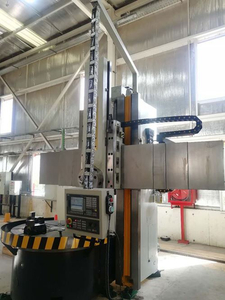
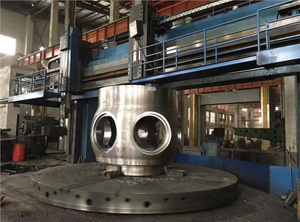
CNC lathes are manufactured by specialized machine tool builders worldwide, with major production centers in China, Japan, Germany, and Taiwan. Chinese manufacturers like Starfish Ruhr Heavy Machinery Technology (Dalian) Co., Ltd produce CNC vertical lathes (CK5 series, 800mm to 16,000mm swing) and CNC horizontal lathes (CK6140 to CK61125), exporting to 50+ countries with CE and ISO certification. When buying a CNC lathe from China, the right questions about warranty scope, quality testing, and overseas service response will separate a reliable manufacturer from a risky supplier.
I have sat across the table from buyers more times than I can count, watching them focus entirely on price while completely skipping the questions that actually determine whether their investment will pay off or turn into a nightmare. After 15 years of exporting CNC lathes through Starfish Machine to customers in the USA, Chile, Colombia, and Indonesia, I can tell you this: the buyers who end up happiest are never the ones who paid the least. They are the ones who asked the hardest questions before signing the contract.
Here are the 10 questions we wish every buyer would ask us. Some of them might feel uncomfortable to bring up. Good. That is exactly the point.
A lot of suppliers claim they can provide everything from a tiny benchtop lathe to a 16-meter vertical turning center. That is a red flag, not a selling point.
A CNC lathe manufacturer who truly specializes in large-diameter vertical lathes will have deep expertise in box way design, heavy-duty spindle bearing configuration, and workpiece balancing for big flanges and valve bodies. A manufacturer who focuses on small horizontal lathes for precision shaft work will have completely different strengths. Nobody does both at the highest level.
We build both CK5 series vertical lathes and CK6 series horizontal lathes, and we are honest about where our sweet spot sits. Our CK5 line covers 800mm to 16,000mm swing diameters, which is our strongest range. Our CK6 horizontal lathes from CK6140 to CK61125 cover the standard turning market well. If a buyer needs something outside these ranges, we will say so rather than take an order we cannot deliver with confidence.
What you want to hear from a manufacturer is: "We are best at this range, and here is why." Not "we can make anything."
This question matters more than most buyers realize. A CNC lathe sold to Germany and a CNC lathe sold to Indonesia face completely different operating environments, regulatory requirements, and customer expectations.
A machine shipped to the USA must comply with NEMA electrical standards, specific guarding requirements, and documentation expectations that differ from what we prepare for a shipment to Colombia. A lathe heading to Indonesia needs extra corrosion protection because of the tropical marine climate. A machine going to Chile's copper mining operations needs to handle high-altitude conditions and extreme dust.
When a manufacturer tells you they have shipped zero machines to your country, you should pause. Not walk away, but pause. It means they may not understand your local power supply tolerances, your ambient temperature ranges, or what your operators expect from the control panel interface. These are not small details. They are the difference between a machine that works on day one and one that takes weeks of commissioning support to get running properly.
Every manufacturer will tell you they test their machines. The question is how, with what equipment, and to what standard.
Proper testing for a CNC lathe should include spindle runout measurement, geometric accuracy checks following ISO 230 standards, test cutting under load, and a burn-in period of at least 24 to 72 hours. Do they own a laser interferometer for positioning accuracy verification? A ballbar system for circular interpolation testing? Dynamic balancing equipment for the spindle assembly?
In our factory, every CNC lathe goes through a documented inspection protocol before it leaves the assembly bay. We check 47 critical parameters. Some manufacturers will hand you a quality certificate that looks impressive but was filled out by hand with no actual measurement data behind it. Ask to see the raw test data, not just the summary certificate. A manufacturer who maintains detailed test records for each serial number is a manufacturer who takes quality seriously.
This is where most price comparisons go wrong. Buyer A gets a quotation for $45,000. Buyer B gets one for $52,000. Buyer A thinks they found a better deal. Six months later, Buyer A has spent $12,000 extra on things that were included in Buyer B's price from day one.
A proper CNC lathe quotation should clearly itemize: the machine itself, standard tooling package, chip conveyor (if included), shipping terms (FOB, CIF, or DDP), wooden crate packaging for ocean freight, installation and commissioning support, and operator training. Some manufacturers include all of these. Others quote the bare machine and charge extra for everything else.
When we prepare a quotation, we break out every item so the buyer can compare apples to apples. If two quotations look different in price, the first thing to check is what is actually included in each one.
Standard CNC lathes typically take 30 to 60 days from order confirmation to shipment, depending on model and configuration. Large vertical lathes or heavily customized machines may need 90 to 120 days. If a manufacturer promises delivery in two weeks for a standard model, ask yourself what corners they are cutting. Skipping the burn-in period? Using partially cured castings? Pulling from another customer's order?
If a manufacturer says 6 months for a standard model, that might indicate supply chain problems, financial difficulty, or simply overbooking. Either way, it should raise questions.
During peak seasons (typically March through June for our export business), lead times naturally extend. A transparent manufacturer will tell you the current queue honestly and let you plan accordingly rather than giving you an optimistic date they cannot meet.
The industry standard is 30% advance payment, 70% before shipment or against copy of Bill of Lading. This structure protects both parties: the manufacturer has working capital to purchase materials, and the buyer retains leverage until the machine is verified ready for shipping.
If a supplier demands 100% upfront payment, consider that a serious warning sign. Legitimate manufacturers have no reason to ask for full payment months before delivery. On the other hand, if a manufacturer accepts letters of credit or offers open account terms (like OA 60 days), it signals financial stability and confidence in their delivery track record.
We typically work with 30/70 T/T for first-time buyers and can offer more flexible terms for repeat customers. The payment structure should always be documented clearly in the proforma invoice before any money changes hands.
Most CNC lathe manufacturers offer a 12-month warranty. But read the fine print. Some warranties cover parts only, not labor. Some exclude wear items like bearings and seals. Some require the buyer to ship defective components back to China at the buyer's expense before any replacement will be issued.
The real question is what happens when something goes wrong at 2 AM on a Saturday and your production line is down. Does the manufacturer have an overseas service team? Do they have service partners or agents in your region? Can they dispatch an engineer within 72 hours, or will you wait two weeks for a visa application?
We maintain a service team that handles overseas commissioning and emergency repairs. For our major markets including the USA, Chile, Colombia, and Indonesia, we can typically get an engineer on-site within 5 to 7 days. For critical situations, we provide remote diagnostic support through the machine's control system to help operators resolve issues immediately while the engineer travels.
A reliable manufacturer should be able to connect you with at least two or three recent customers in your country or region who are running the same model you are considering. If they refuse, citing confidentiality, at minimum request a live video demonstration showing a specific machine running your type of workpiece.
We have customers running our machines in factories across Ohio, Santiago, Bogota, and Surabaya. When a serious buyer asks, we arrange direct communication with existing customers whenever possible. Nothing builds confidence like hearing from someone who has been using your equipment for two years and is willing to talk about it honestly.
If a manufacturer cannot provide any traceable customer references, that is not just a concern. It is a dealbreaker.
Every CNC lathe will need spare parts eventually. The question is whether you can get them quickly and at a reasonable cost when that day comes.
Ask the manufacturer what spare parts package they recommend keeping on hand for the first two years of operation. Ask about lead times for critical components like spindle bearings, ball screws, and way covers. Ask whether documentation (electrical schematics, mechanical drawings, parts lists, maintenance manuals) is provided in English and in a format your maintenance team can actually use.
Some manufacturers provide complete documentation packages with every machine. Others hand over a stack of Chinese-language manuals with poor translations. The difference becomes painfully obvious the first time your maintenance team needs to troubleshoot an electrical fault at midnight.
We include a recommended spare parts list with every quotation, along with complete English documentation. For our CK5 and CK6 series, we keep standard spare parts in stock and can ship most components within one to two weeks to our major markets.
There is no single "best" manufacturer. The right choice depends on your workpiece size,精度 requirements, and budget. Look for manufacturers with verified export records, ISO certification, and customer references in your country. Starfish Machine specializes in CK5 vertical lathes (800mm to 16,000mm) and CK6 horizontal lathes (CK6140 to CK61125), with CE and ISO certification and exports to 50+ countries.
Standard models typically ship within 30 to 60 days. Large vertical lathes or custom configurations may require 90 to 120 days. Ocean freight transit adds 15 to 45 days depending on destination port (USA West Coast approximately 18 days, South America approximately 30 to 35 days, Southeast Asia approximately 10 to 15 days).
A complete quotation should clearly list the machine configuration, standard tooling, packaging for ocean freight, shipping terms (FOB/CIF/DDP), installation support, training, and warranty scope. Any items not included should be stated explicitly to avoid surprise costs later.
Most established manufacturers include or offer installation and commissioning support. Confirm whether the cost is included in your quotation or charged separately. Verify the manufacturer can dispatch engineers to your country within a reasonable timeframe (typically 5 to 10 days from request).
Standard warranty is 12 months from installation date or 15 months from shipment date, whichever comes first. Ensure the warranty document specifies what is covered (parts, labor, travel expenses) and the response time for overseas service requests.
Related Articles: