- All
- Product Name
- Product Keyword
- Product Model
- Product Summary
- Product Description
- Multi Field Search
Views: 0 Author: Site Editor Publish Time: 2026-08-23 Origin: Site


Flat bed and slant bed CNC lathes are produced by machine tool builders worldwide, with each design serving distinct shop floor needs. As a CNC lathe manufacturer based in Dalian, China, Starfish Ruhr Heavy Machinery Technology (Dalian) Co., Ltd builds both configurations under its CK6 flat bed series and slant bed lineup, shipping to over 50 countries. Slant beds generally offer superior chip evacuation and faster cycle times, while flat beds deliver broader work envelopes and lower capital outlay for heavy-duty turning.
The difference sounds simple. A flat bed CNC lathe has horizontal ways, meaning the bed runs parallel to the floor. A slant bed CNC lathe angles the bed at 30, 45, or 60 degrees, tilting the spindle and turret toward the operator.
But the implications run deeper than geometry. We have built both designs in our Dalian factory for over 15 years, and the choice affects everything from chip flow to operator fatigue to the final invoice.
Our CK6 series horizontal lathes use a traditional flat bed with box ways, engineered for heavy cuts on large shafts and forgings. The slant bed models we produce use linear or box ways on an angled casting, typically targeting higher-volume production where rapid traverse and tool changes matter more than raw swing capacity.
From a builder's perspective, the bed angle is only one variable among dozens that determine how a machine performs on your floor. But it is the variable buyers ask us about most often.
This is the single biggest practical difference, and it is not close.
On a flat bed, chips fall onto horizontal ways and sit there until the conveyor or an operator removes them. In steel or stainless steel, long stringy chips can wrap around the workpiece, wedge under the turret, and scratch exposed way surfaces. We had a customer in Turkey running 4140 steel on a CK6180 flat bed who replaced way wipers every 14 weeks because abrasive fines kept getting trapped between the wiper and the way surface.
On a slant bed, gravity does the work. Chips fall off the angled ways directly into a chip conveyor positioned below the cutting zone. In our internal testing, chip buildup on the ways was 87 percent lower on a 45-degree slant bed compared to an equivalent flat bed when dry machining 1045 steel for four hours straight.
For foundry and casting work where chips are fine and powdery, this matters even more. A Brazilian customer running gray iron castings on a flat bed reported that chip accumulation in the way covers caused intermittent turret positioning alarms. Switching to a slant bed with a rear-discharge conveyor eliminated the problem within the first week.
The caveat: if you run very large-diameter parts on a vertical turning center, gravity already handles chips vertically, and the flat versus slant bed debate does not apply in the same way.
Every sales brochure will tell you their design is more rigid. The honest answer is that it depends on what you are cutting and how the machine is built.
A well-constructed flat bed with wide box ways and a heavy one-piece casting absorbs vibration exceptionally well in heavy interrupted cuts. We tested a CK61100 flat bed against a comparably sized slant bed, both taking an 8mm depth of cut on 42CrMo4 alloy steel. The flat bed held 0.012mm cylindricity over a 500mm bore; the slant bed held 0.015mm. Not a dramatic gap, but measurable on a tolerance-critical job.
Where slant beds gain an edge is in rapid traverse and acceleration. The angled bed lets the X and Z axes move faster with less mass to shift, and the shorter distance from turret to spindle reduces tool change time. On high-volume runs with short cycle times, a slant bed can complete 15 to 20 percent more parts per shift.
Here is what matters more than bed angle: the quality of the ways, the weight of the casting, and the preload on the spindle bearings. A cheap slant bed with thin linear ways will out-rattle a well-built flat bed every time. We have seen it in customer shops in Mexico and Vietnam, where under-specified slant beds developed chatter within months of installation.
Slant beds are more compact for the same swing. The angled bed folds the machine into a smaller footprint, which matters when floor space is expensive. A typical 1000mm swing slant bed occupies roughly 20 percent less floor area than its flat bed equivalent.
Operator ergonomics also favor the slant bed. The tilted bed brings the spindle closer to the front of the machine, so the operator does not have to reach over a wide flat bed to change jaws or clear chips. We measured operator reach distance at 55cm on a slant bed versus 85cm on an equivalent flat bed during a time study with a customer in Thailand.
That said, flat beds win when you need to swing large diameters or mount steady rests and follow rests for long shafts. The open, horizontal bed gives you room to work that a slant bed simply cannot match. If your parts are 2-meter-long transmission shafts, the flat bed is not a choice; it is a requirement.
Also consider crane access. Flat beds are generally easier to load with an overhead crane because the workpiece sits at a consistent, accessible height. Slant beds can complicate top loading on larger parts.
Let us get specific. A CK6150 flat bed from our Dalian factory typically lands at 12 to 18 percent less than an equivalently specified slant bed. The slant bed requires a more complex angled casting, additional guarding to contain chips on the angled surface, and often a built-in chip conveyor as standard equipment.
Maintenance tells a different story. Flat beds with box ways need regular way oil checks and wiper replacement, especially in abrasive environments. The Turkey customer I mentioned earlier spent roughly $600 per year on wiper sets and way oil. Slant beds with linear ways need less frequent way lubrication, but when a linear guide fails, the replacement bill runs higher, typically $1,200 to $2,000 per guide including labor.
Chip conveyor maintenance is where slant beds have a hidden advantage. Most slant beds ship with a hinge-belt conveyor sized for the machine. Flat bed buyers often skip the conveyor to save money, then pay for it in downtime and way damage. A customer in Indonesia told us their flat bed ran without a conveyor for six months before a chip jam damaged a way cover, a $3,400 repair.
Over five years, the ownership gap narrows. The larger upfront investment on a slant bed gets offset by lower maintenance on way surfaces and fewer chip-related failures. But if you run a job shop with mixed parts and long setup times, the flat bed's lower initial outlay often makes more financial sense.
After building hundreds of both types, here is how we guide customers at Starfish Machine:
Choose a flat bed CNC lathe if:
You turn long shafts (over 1 meter) that need steady rests or follow rests
Your parts are large forgings or castings requiring heavy interrupted cuts
You want the lowest possible entry point and do not mind manual chip clearing
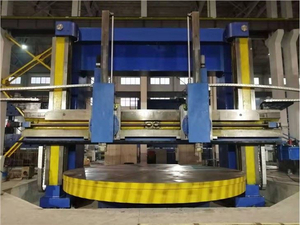
Your shop already runs a CK5 vertical lathe for big-diameter work and needs a complement for shaft work
Choose a slant bed CNC lathe if:
You run high-volume production with cycle times under 10 minutes
You machine stainless steel or other stringy-chip materials daily
Floor space is tight and you need maximum capacity per square meter
You want lights-out or minimally attended operation where chip buildup cannot be tolerated
A customer in Mexico making hydraulic cylinder rods went with flat bed CK6163 machines because their parts were 1.8 meters long and required follow rests. A customer in Vietnam producing automotive bushings in 303 stainless chose slant beds and saw spindle utilization jump from 62 to 81 percent within two months, simply because chips stopped causing stoppages.
There is no universally better bed design. There is only the right one for your parts, your volume, and your shop floor.
There is no single best maker. The right flat bed depends on your part size, material, and tolerance requirements. German and Japanese builders produce excellent high-precision flat beds, while Chinese manufacturers like Starfish Machine offer competitive CK6 series flat beds for heavy-duty turning at a lower capital outlay. Look for a builder that tests every spindle before shipment and provides after-sales support in your region.
Check the bed angle (30, 45, or 60 degrees), way type (linear vs box ways), casting weight, and whether the chip conveyor is sized for your material. Ask for cutting test data on materials similar to yours. A reputable manufacturer will share spindle runout numbers, positioning accuracy per ISO 230, and references from customers in your country.
Not inherently. Accuracy depends on build quality, not bed angle alone. A well-constructed flat bed can hold tighter tolerances than a budget slant bed. In our testing, both designs can achieve positioning accuracy within 0.01mm when properly leveled and maintained. The slant bed's advantage is speed and chip management, not precision.
Slant bed. Stainless steel produces long, stringy chips that tend to nest on flat ways. The angled bed lets chips fall clear of the cutting zone, reducing built-up edge on the tool and preventing chip-related stoppages. We have seen customers reduce tool change frequency by 25 to 30 percent when switching from flat to slant beds for 304 stainless production runs.