- All
- Product Name
- Product Keyword
- Product Model
- Product Summary
- Product Description
- Multi Field Search
Views: 0 Author: Site Editor Publish Time: 2026-08-24 Origin: Site


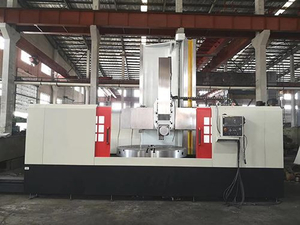
CNC lathe spindle rebuild and replacement decisions depend on the extent of internal damage, the age of the machine, and the cost differential between repair and new assembly. Chinese manufacturers such as Starfish Ruhr Heavy Machinery Technology (Dalian) Co., Ltd (commonly known as Starfish Machine) produce CK5 series vertical lathes and CK6 series horizontal lathes with swing diameters from 800mm to 16,000mm, exported to over 50 countries with CE and ISO certification. Most spindle failures involving bearing wear and seal degradation can be rebuilt at 30 to 60 percent the cost of a new unit, while shaft damage or housing cracks typically require full replacement.
After fifteen years of manufacturing and exporting CNC lathes, we have processed hundreds of spindle service requests. The failures almost always fall into a few predictable categories, and understanding which one you are dealing with is the first step toward making the right financial decision.
Bearing degradation is the most common issue by far. We see it in machines that have run 8,000 to 15,000 hours without bearing replacement. The symptoms are familiar: increasing vibration, a change in the sound during cutting, and gradually worsening surface finish. On one of our CK6 series horizontal lathes working in a factory in Colombia, the operator noticed chatter marks appearing on finish passes after about 10,000 hours. The bearings showed visible pitting when we disassembled the spindle. A straightforward bearing replacement got the machine back to full specification.
Seal failure is the silent killer. When spindle seals wear out, coolant and fine chips work their way into the bearing chamber. I have seen this destroy a set of precision bearings in under 200 hours of contaminated operation. The damage looks disproportionate to the root cause, which was a $15 seal sitting behind a $4,000 bearing assembly.
Thermal issues show up as dimensional drift during extended cutting cycles. The spindle expands unevenly, and your parts start drifting out of tolerance after 30 or 40 minutes of continuous operation. This usually traces back to incorrect bearing preload or degraded lubricant. A customer in Chile reported that his CK5 vertical turning center was holding tolerance in the morning but drifting by 0.03mm after an hour of heavy cutting. We traced it to lubricant breakdown from running the spindle at high RPM without the recommended warm-up cycle.
Shaft damage from crashes is the expensive one. When a tool crashes into the workpiece and the impact loads travel through the tool holder into the spindle nose, you risk damaging the shaft journal, the taper interface, or the bearing seats. We have repaired some of these, but in several cases the damage was beyond economic repair.
Here is what a typical spindle rebuild costs, based on our service data from the past five years. These numbers are for mid-range CNC lathes in the CK6140 to CK6180 class.
Bearing replacement runs between $2,500 and $6,000, depending on bearing size and precision class. For larger machines like the CK61100 or above, the bearing sets alone can cost $4,000 to $8,000 because they use oversized angular contact bearings rated for higher radial and axial loads.
Seal replacement and basic reassembly costs $800 to $2,000. This is usually bundled with the bearing job, since you have the spindle open anyway.
Shaft repair or replacement starts around $3,000 and can climb to $8,000 or more. If the bearing journals need regrinding, you need a shop with cylindrical grinding capacity and the ability to hold sub-micron tolerances. If the shaft is cracked, it must be replaced entirely.
Full rebuild with new bearings, seals, shaft inspection, dynamic balancing, and 72-hour run-in test typically costs $4,000 to $10,000 for standard machines. For large-bore vertical lathes in the CK5-2500 range and above, expect $8,000 to $18,000.
As a CNC lathe manufacturer, we price new spindles at roughly 40 to 50 percent of a complete replacement spindle assembly. The question then becomes: when does the rebuild cost approach the point where replacement makes more sense?
We walk every customer through the same five questions when they call about spindle problems. This framework has served buyers in Indonesia, the USA, Colombia, and Chile well, and I think it will work for you too.
What is actually damaged? If it is just bearings and seals, rebuild is almost always the right call. The cost is a fraction of a new spindle, and a proper rebuild restores full performance. If the shaft is scored or the housing bore is worn, replacement starts to look more attractive.
How old is the machine? For machines under five years old, rebuild is almost always the answer. The rest of the machine is still in good condition, and a rebuilt spindle gives you another 8,000 to 12,000 hours of service. For machines over ten years old with 20,000+ hours, consider whether the investment in a new spindle is better directed toward a new machine entirely.
Are spare parts available? If you are running a popular model from an established manufacturer, parts are generally available for 10 to 15 years. For older or obscure machines, sourcing the correct bearings and seals can take weeks, and the downtime cost may push you toward replacement.
How much downtime can you absorb? A rebuild typically takes 5 to 10 working days. A replacement spindle from stock can be shipped immediately and installed in 2 to 3 days. If your production schedule cannot tolerate a week of downtime, a replacement spindle might save you money even if the parts cost more.
Is this a recurring problem? If you have rebuilt the same spindle twice in three years, something else is wrong. Misalignment, poor lubrication practices, or chronic overload conditions will keep destroying spindles regardless of whether they are rebuilt or new. Fix the root cause first.
A machining shop in Bogota, Colombia, brought us their CK6163 horizontal lathe with severe bearing noise at high RPM. The machine was four years old with about 9,000 hours on the spindle. We disassembled it and found bearing pitting on both the front and rear bearing sets, plus contamination from a failed labyrinth seal. We rebuilt the spindle with new bearings, new seals, and fresh lubricant. The total cost was around $3,800, including return shipping. That machine ran another six years before the shop upgraded to a larger model. A clear win for rebuild.
A factory in Surabaya, Indonesia, had a different situation. Their CK5-2000 vertical lathe was twelve years old and had been through two previous spindle rebuilds. The third failure involved visible scoring on the spindle shaft journal. At that point, the cumulative repair costs were approaching 70 percent of a new spindle, and the machine still had wear on other components. We recommended replacement, and the customer agreed. The new spindle cost about $12,000, but it came with a fresh warranty and the confidence of a clean starting point.
In the United States, a precision job shop in the Midwest called us about a spindle that was running hot after only 20 minutes of operation. Their CK6180 was seven years old. We determined that the bearing preload had been set incorrectly during a previous repair by a local shop. The bearings themselves were still in good condition. We adjusted the preload, replaced the lubricant, and the spindle ran normally. The total cost was under $1,200. Sometimes the answer is simpler than you expect.
If you decide to rebuild, choosing the right service provider matters as much as the decision itself. Here is what we recommend checking before you hand over your spindle.
Demand a written warranty of at least 6 months on the rebuild work. Any shop confident in their work will offer this. If they will not put it in writing, walk away.
Ask about their run-in test procedure. A proper rebuild includes a minimum 24 to 72 hour run-in test with vibration monitoring and thermal stability checks. If they hand the spindle back to you without running it, you are the test lab, and that is not a position you want to be in.
Check their experience with your specific machine type. Rebuilding a small-bore horizontal lathe spindle is very different from rebuilding a large vertical turning center spindle. The tooling, bearing specifications, and balancing requirements differ significantly.
Get everything documented: what was replaced, what was measured, what the vibration readings were before and after, and what the run-in test showed. This documentation is your baseline for future maintenance decisions and helps you track whether the same problem is recurring.
CNC Lathe Chuck Selection and Maintenance: 8 Mistakes That Kill Accuracy
CNC Lathe Tailstock Setup: How We Dial in Accuracy in Under 20 Minutes
CNC Lathe Foundation Guide: 7 Installation Mistakes That Cost $10,000+
Rebuild makes sense when the damage is limited to bearings, seals, or lubrication issues, and the machine is under ten years old. A professional rebuild typically costs 30 to 60 percent of a new spindle and restores full performance for another 8,000 to 12,000 hours of operation.
For standard horizontal and vertical CNC lathes, a full rebuild with new bearings, seals, and run-in testing typically costs between $4,000 and $10,000. Large-bore vertical turning centers may cost $8,000 to $18,000 depending on the size and complexity of the spindle assembly.
With proper maintenance and normal operating conditions, most CNC lathe spindles last 8,000 to 15,000 hours before bearings need replacement. Aggressive cutting, poor lubrication practices, or contaminated coolant can cut that to 5,000 hours or less.
Leading CNC lathe manufacturers including Starfish Machine produce precision spindles for their CK5 vertical lathes and CK6 horizontal lathes in factories equipped with ISO-certified quality control systems. When sourcing replacement spindles, always verify the manufacturer's certification and ask for test documentation.