- All
- Product Name
- Product Keyword
- Product Model
- Product Summary
- Product Description
- Multi Field Search
Views: 0 Author: Site Editor Publish Time: 2026-07-18 Origin: Site


Purchasing a CNC lathe is only half the equation. The other half—proper foundation, installation, and commissioning—determines whether your investment delivers the precision, uptime, and service life you paid for. Too many buyers focus exclusively on machine specifications and price negotiation, only to discover that inadequate shop floor preparation leads to geometric errors, excessive vibration, premature bearing wear, and voided warranty claims.
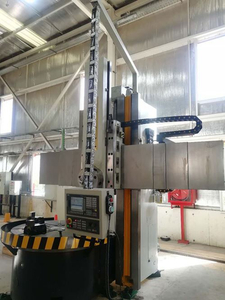
This guide provides a comprehensive walkthrough of every installation milestone for CNC vertical lathes (CK5 series) and CNC horizontal lathes (CK6 series), from soil bearing capacity calculations and foundation pouring through final acceptance testing. Whether you are sourcing from a China lathe manufacturer or importing from any international supplier, understanding these requirements protects your investment and ensures you achieve the machine tool's rated accuracy from day one.
By the end of this guide, procurement managers and factory engineers will have a complete checklist, timeline, and budget framework to coordinate a flawless installation—avoiding the costly mistakes that cost manufacturers $20,000–$100,000+ in rework and downtime.
Even the most precise CNC lathe—whether a CK5116 vertical boring mill or a CK6163 horizontal turning center—will underperform if installed on an inadequate foundation. Machine tool builders design their products around specific environmental conditions: floor vibration limits, ambient temperature ranges, and foundation rigidity. When those conditions are not met, the consequences compound quickly.
Typical symptoms of poor installation include:
Geometric accuracy drift exceeding the machine's rated tolerance by 2–5×
Chatter marks on finished surfaces due to resonant vibration
Accelerated spindle bearing failure (replacement cost: $3,000–$15,000)
Ball screw misalignment causing positioning errors
Leveling bolt fatigue leading to structural frame distortion
Voided manufacturer warranty due to non-compliant installation conditions
For buyers purchasing from a China CNC lathe supplier, proper installation becomes even more critical because international service calls carry premium costs. A manufacturer's service engineer traveling overseas may charge $500–$1,500 per day plus travel expenses. Getting the installation right the first time avoids expensive callback charges.
Industry data suggests:
Factor | Impact on Machine Performance |
|---|---|
Foundation quality | Up to 40% of geometric accuracy variation |
Leveling precision | Directly affects roundness and surface finish |
Ambient temperature stability | ±1°C = ±0.01 mm thermal growth per meter |
Vibration isolation | Reduces chatter-related scrap by 60–80% |
Electrical supply quality | Dirty power shortens servo drive life by 30%+ |
Before any foundation work begins, you must evaluate the physical location where the CNC lathe will operate. Site selection affects installation cost, long-term maintenance burden, and machining accuracy.
### Key Site Requirements
1. Floor Space and Access
Machine Type | Minimum Floor Space | Ceiling Height | Door/Aisle Width |
|---|---|---|---|
CK5 Vertical Lathe (≤1.6m table) | 4m × 4m | 4.5m | 2.5m |
CK5 Vertical Lathe (2–3m table) | 6m × 6m | 6m | 3.5m |
CK6 Horizontal Lathe (≤630mm swing) | 5m × 3m | 3m | 2m |
CK6 Horizontal Lathe (1000–1600mm swing) | 8m × 4m | 3.5m | 3m |
Always add 1.5 meters of clearance on all sides for maintenance access, tool cart placement, and chip conveyor routing. Vertical lathes require additional overhead clearance for workpiece loading with cranes.
2. Environmental Conditions
Temperature: Maintain 15–25°C (±5°C stability). Avoid locations near furnaces, outdoor doors, or un-insulated walls.
Humidity: Below 75% RH, non-condensing. Excess moisture accelerates corrosion of guideways and ball screws.
Dust: Minimize airborne particulates. If the lathe shares space with grinding operations, install partition walls.
Vibration sources: Maintain minimum 10 meters from power presses, hammers, and heavy stamping equipment. If unavoidable, specify vibration isolation pads in your procurement quotation.
3. Floor Load Capacity
The existing concrete slab must support the combined static and dynamic load of the machine, workpiece, tooling, and operator.
Machine Model | Approximate Weight | Required Floor Load Capacity |
|---|---|---|
CK5112 (1.25m table) | 8–12 tons | 5 tons/m² |
CK5116 (1.6m table) | 15–22 tons | 8 tons/m² |
CK5123 (2.3m table) | 35–50 tons | 12 tons/m² |
CK6140 (400mm swing) | 2.5–4 tons | 3 tons/m² |
CK6163 (630mm swing) | 5–8 tons | 5 tons/m² |
CK61125 (1250mm swing) | 18–28 tons | 10 tons/m² |
If the existing floor cannot support the load, you must either reinforce it or pour a dedicated isolated foundation.
The foundation is the most critical—and most frequently underestimated—element of CNC lathe installation. A proper foundation absorbs vibration, prevents thermal distortion, and maintains geometric accuracy over decades of operation.
### General Foundation Principles
All CNC lathes, from compact CK6132 bench lathes to massive CK5140 vertical boring mills, require a foundation that meets three criteria:
Mass: The foundation should be 1.5–3× the machine weight for standard applications. Heavy-duty machining (interrupted cuts, hardened materials) requires 3–5×.
Depth: Minimum 300mm below frost line in cold climates. Standard industrial floors typically use 500–800mm depth for medium machines.
Isolation: A 25–50mm gap filled with vibration-damping material must separate the machine foundation from the surrounding floor slab.
### Foundation Specifications by Machine Type
CK5 Vertical Lathe Foundation:
Model | Foundation Dimensions (L×W×D) | Concrete Volume | Rebar Specification | Curing Time |
|---|---|---|---|---|
CK5112 | 2.5m × 2.5m × 0.5m | 3.1 m³ | 12mm grid @ 200mm | 28 days |
CK5116 | 3.0m × 3.0m × 0.6m | 5.4 m³ | 16mm grid @ 150mm | 28 days |
CK5123 | 4.0m × 4.0m × 0.8m | 12.8 m³ | 20mm grid @ 150mm | 28 days |
CK5132 | 5.5m × 5.5m × 1.0m | 30.3 m³ | 25mm grid @ 125mm | 42 days |
CK6 Horizontal Lathe Foundation:
Model | Foundation Dimensions (L×W×D) | Concrete Volume | Rebar Specification | Curing Time |
|---|---|---|---|---|
CK6140 | 3.0m × 1.2m × 0.4m | 1.4 m³ | 10mm grid @ 200mm | 21 days |
CK6163 | 4.0m × 1.5m × 0.5m | 3.0 m³ | 12mm grid @ 200mm | 28 days |
CK6180 | 5.5m × 2.0m × 0.6m | 6.6 m³ | 16mm grid @ 150mm | 28 days |
CK61125 | 7.0m × 2.5m × 0.8m | 14.0 m³ | 20mm grid @ 125mm | 35 days |
### Concrete Specifications
Grade: C30 minimum (compressive strength ≥30 MPa at 28 days)
Aggregate: 20mm maximum size, clean and angular
Slump: 75–100mm for proper compaction around anchor bolts
Anchor bolts: Embed M20–M36 hot-dip galvanized anchor bolts per the machine builder's foundation drawing. Positional tolerance: ±2mm.
Embedded plates: For heavy machines, use steel base plates (20–30mm thick) welded to anchor bolts for uniform load distribution.
### Foundation Cost Estimate
Item | Small Lathe (CK6140) | Medium Lathe (CK6163/CK5116) | Large Lathe (CK5123/CK61125) |
|---|---|---|---|
Excavation | $200–400 | $500–800 | $1,200–2,000 |
Concrete material | $150–300 | $400–700 | $1,000–2,500 |
Rebar | $100–200 | $300–500 | $800–1,500 |
Anchor bolts & plates | $150–300 | $400–800 | $1,000–2,500 |
Labor | $300–600 | $800–1,500 | $2,000–4,000 |
Total | $900–1,800 | $2,400–4,300 | $6,000–12,500 |
When requesting a quotation from a China lathe manufacturer, always confirm whether foundation drawings are included. Reputable suppliers provide detailed foundation plans with anchor bolt layouts as part of the delivery package.
Once the foundation has cured and the CNC lathe arrives at your facility, the unloading and positioning phase begins. This step requires specialized rigging equipment and should be handled by experienced machinery movers.
### Unloading Procedure
Inspect shipping damage before releasing the carrier. Photograph all surfaces, check for impact indicators on shock-watch labels, and verify packing integrity.
Use designated lifting points. CNC lathes have specific lifting lugs or slots marked by the manufacturer. Never lift from the spindle nose, chuck, or tool turret.
Vertical lathes (CK5): The column and base may ship separately for models above CK5120. Verify all components against the packing list before the carrier departs.
Horizontal lathes (CK6): Protect the bed ways with temporary covers during movement. Never drag the machine—use roller skates or air casters.
Crane capacity: Add 20% safety margin. A CK6163 (approx. 6 tons) requires an 8-ton rated crane or forklift.
### Positioning on Foundation
Place the machine on leveling mounts (typically 4–6 points) using the manufacturer-specified locations
Ensure anchor bolt holes align with embedded bolts before final positioning
Leave adequate clearance for the chip conveyor, coolant tank, and electrical cabinet
Orient the operator panel for optimal visibility and ergonomic access
Cost of professional rigging services:
Service | Typical Cost Range |
|---|---|
Local unloading (crane + crew) | $500–1,500 |
In-factory positioning | $300–800 |
International port-to-factory | $2,000–8,000 |
Heavy-lift specialist (50+ tons) | $5,000–20,000 |
Many China CNC lathe suppliers include FOB port delivery in their quotation. Factor the inland transportation and rigging costs into your total landed cost calculation.
Precision leveling is the single most important post-installation step. Even a 0.05mm/m deviation in bed level can cause measurable roundness errors in turned parts and uneven guideway wear.
### Leveling Process
For CK6 Horizontal Lathes:
Place precision spirit levels (0.02mm/m resolution) on the bed ways at 4–6 positions along the Z-axis
Adjust leveling mounts starting from the headstock end (reference point)
Achieve ≤0.02mm/m level in both X and Z directions
Re-check after 24 hours (settling period) and again after 7 days
Torque all leveling mount nuts to manufacturer specification
For CK5 Vertical Lathes:
Level the base plate or table surface using precision levels in two perpendicular directions
For twin-column models, verify column parallelism using a dial indicator and precision square
Check table runout after initial rotation (should be within the machine's rated accuracy)
Re-level after the first week of operation
### Alignment Verification Tools
Tool | Application | Typical Cost |
|---|---|---|
Precision spirit level (0.02mm/m) | General leveling | $150–400 |
Electronic level (0.001mm/m) | High-precision setup | $800–3,000 |
Laser alignment system | Spindle-to-tailstock alignment | $2,000–8,000 |
Granite straight edge | Bed way straightness check | $500–2,500 |
Dial indicator + magnetic base | Runout and parallelism | $50–300 |
Ballbar (Renishaw QC20) | Circular interpolation accuracy | $15,000–25,000 |
For buyers who request the China lathe manufacturer to send a commissioning engineer, the leveling service typically costs $200–500 per day plus travel expenses. Some suppliers include 1–2 days of free commissioning in the purchase price—confirm this before signing the contract.
CNC lathes require clean, stable electrical power and properly routed utility connections. Electrical problems account for approximately 25% of all CNC machine downtime in the first year of operation.
### Electrical Requirements
Parameter | CK5 Vertical Lathe | CK6 Horizontal Lathe |
|---|---|---|
Supply voltage | 380V ±10%, 3-phase, 50/60Hz | 380V ±10%, 3-phase, 50/60Hz |
Frequency | 50Hz or 60Hz (configurable) | 50Hz or 60Hz (configurable) |
Main breaker size | 63–200A (depends on model) | 32–100A |
Grounding resistance | <4Ω | <4Ω |
Voltage fluctuation | <±5% during operation | <±5% during operation |
Critical electrical installation requirements:
Dedicated transformer: For machines above 30kW, use a dedicated transformer to avoid voltage sags from other equipment
Power quality: Install line reactors or active harmonic filters if your facility has significant VFD loads
Grounding: Use a dedicated ground rod or ground grid. Never share grounding with welding equipment or high-frequency machines
Cable sizing: Follow local electrical codes plus 25% margin for starting surge current
UPS/AVR: Consider an automatic voltage regulator ($500–3,000) for areas with unstable grid power
### Hydraulic System (if applicable)
Many CK5 vertical lathes and larger CK6 models feature hydraulic chucks, hydraulic tailstock, or hydraulic counterbalance systems.
Use ISO VG 46 or VG 68 hydraulic oil as specified by the manufacturer
Install the hydraulic unit on vibration isolation pads
Route hydraulic lines away from hot surfaces and sharp edges
Include a pressure gauge and temperature sensor at the power unit
Budget $2,000–5,000 for a complete hydraulic power unit if not included with the machine
### Pneumatic System
Standard shop air at 0.5–0.7 MPa (70–100 psi)
Install a filter-regulator-lubricator (FRL) unit at the machine inlet
Use 12mm or 16mm ID air lines minimum for adequate flow
Air dryer recommended if ambient humidity exceeds 60%
Commissioning is the process of bringing the CNC lathe to full operational readiness and verifying that it meets the accuracy specifications stated in the purchase contract. This phase typically takes 2–5 days depending on machine complexity.
### Commissioning Checklist
Phase 1: Pre-Power Checks (Day 1)
Verify all anchor bolts are torqued to specification
Confirm hydraulic oil level, coolant concentration, and way lubrication
Check all cable connections—electrical, encoder, limit switches
Verify spindle rotation direction matches the marking on the spindle
Confirm coolant flow direction and chip conveyor operation
Phase 2: Powered Verification (Day 1–2)
Start the hydraulic system and check for leaks at all fittings
Run spindle at incremental speeds (100, 500, 1000, max RPM) and monitor vibration
Cycle all axes through full travel range and check limit switch operation
Test the tool turret indexing (all positions) for repeatability
Verify the CNC control system boots correctly with no alarms
Load and verify the parameter backup (if provided by the manufacturer)
Phase 3: Accuracy Testing (Day 2–3)
Test | Method | Acceptance Criteria (Typical) |
|---|---|---|
Spindle runout | Dial indicator on test bar | ≤0.01mm at 150mm extension |
X-axis repeatability | Ballbar or laser interferometer | ≤0.005mm |
Z-axis repeatability | Ballbar or laser interferometer | ≤0.005mm |
Circular interpolation | Ballbar test (R50, R100, R200) | ≤0.02mm circularity |
Facing flatness | Face cut on test workpiece | ≤0.01mm across diameter |
Turning roundness | Bar turning test | ≤0.008mm |
Threading accuracy | Thread cutting test with pitch gauge | Per ISO 230 or contract spec |
Phase 4: Production Trial (Day 3–5)
Run the customer's actual workpiece or a representative test part
Measure critical dimensions and compare with drawing tolerances
Verify cycle time meets the quoted production rate
Test automated features (bar feeder, part catcher, gantry loader) if equipped
Confirm coolant coverage and chip evacuation for the specific material
### Acceptance Documentation
Before signing the acceptance certificate, ensure the following documents are completed and signed by both parties:
Installation completion report (with photographs)
Leveling record (initial and 7-day settlement readings)
Geometric accuracy test results (per ISO 230 or GB/T standard)
Workpiece inspection report (first-article dimensions)
Electrical safety inspection record
Warranty start date confirmation
Spare parts and documentation handover checklist
Based on field experience across hundreds of CNC lathe installations, these are the most costly errors we observe:
1. Skipping the foundation entirely
Placing a heavy CNC lathe directly on the existing factory floor without isolation leads to vibration transmission, accuracy loss, and accelerated wear. This mistake alone voids warranty claims in 70%+ of cases.
2. Rushing the curing period
Concrete requires 28 days to reach full design strength. Installing the machine before adequate curing causes foundation cracking and settlement. If timeline pressure is extreme, use high-early-strength concrete (achieving 80% strength in 7 days) at 20–30% additional cost.
3. Ignoring power quality
Connecting a CNC lathe to a shared electrical panel with welding machines, large motors, or arc furnaces introduces voltage sags and harmonic distortion that cause random servo faults and control crashes. Budget $1,000–5,000 for power conditioning if your facility has "dirty" power.
4. No thermal acclimatization period
After shipping and installation, allow the machine to acclimatize to shop temperature for 24–48 hours before running accuracy tests. A cold machine will show different clearances and preload characteristics than a fully warmed-up one.
5. Not documenting as-built conditions
Photograph every step of the installation. Record foundation dimensions, anchor bolt torque values, leveling readings, and electrical measurements. This documentation is essential for warranty claims and future troubleshooting.
6. Using unauthorized service personnel
Some buyers attempt to save on commissioning costs by having local electricians perform the setup. This often leads to incorrect parameter settings, missed safety checks, and voided warranties. Always use the manufacturer's authorized service engineer or a qualified agent.
When building your total cost of ownership model, include these installation-related expenses:
Cost Category | Small Machine (CK6140-class) | Medium Machine (CK5116/CK6163) | Large Machine (CK5123+) |
|---|---|---|---|
Foundation | $900–1,800 | $2,400–4,300 | $6,000–12,500 |
Rigging & positioning | $500–1,500 | $1,000–3,000 | $3,000–10,000 |
Electrical work | $500–1,200 | $1,500–3,500 | $3,000–8,000 |
Hydraulic/pneumatic | $200–500 | $500–2,000 | $2,000–5,000 |
Commissioning engineer | $0–1,000 (included) | $500–2,000 | $1,500–5,000 |
Tooling & accessories | $1,000–3,000 | $3,000–8,000 | $8,000–25,000 |
Measuring equipment | $200–500 | $500–2,000 | $2,000–10,000 |
Total installation | $3,300–9,500 | $9,400–24,800 | $25,500–75,500 |
Rule of thumb: Budget 8–15% of the machine purchase price for complete installation and commissioning. For a $50,000 CNC horizontal lathe, expect $4,000–$7,500 in installation costs. For a $200,000 CNC vertical lathe, plan for $16,000–$30,000.
When comparing quotations from different China CNC lathe manufacturers, ask specifically what installation support is included—some suppliers provide free commissioning, while others charge separately.
Most established China CNC lathe manufacturers offer installation and commissioning services as part of their export package. Here is how to evaluate and secure the best support:
What to request in your RFQ:
Foundation drawing with anchor bolt layout (should be provided before shipment)
Installation manual in English (verify quality—poorly translated manuals cause errors)
On-site commissioning engineer (specify number of days included in the price)
Remote support via video call for the first 30 days of operation
Training for 2–3 operators and maintenance personnel
Spare parts list with first-year recommended inventory
Evaluating the supplier's installation capability:
Ask for references from customers in your region who have completed installation
Verify the service engineer's experience with your specific machine model
Confirm the supplier can provide on-site support within 72 hours for warranty issues
Check whether the supplier maintains a parts warehouse in your country or region
Negotiation tips:
Include 3–5 days of free commissioning in the purchase price (standard practice for machines above $30,000)
Request a detailed installation timeline with milestones
Ask about video-guided installation as an alternative to on-site visits (increasingly common since 2020)
Negotiate annual maintenance contracts that include periodic accuracy checks
Proper foundation, installation, and commissioning are not optional expenses—they are investments that protect the accuracy, reliability, and resale value of your CNC lathe. Whether you are installing a compact CK6140 horizontal lathe or a large CK5132 vertical boring mill, following the procedures outlined in this guide will help you avoid the most costly mistakes that plague first-time buyers.
Start your preparation early: request foundation drawings as soon as you place your order, begin site preparation 4–6 weeks before the expected delivery date, and schedule the commissioning engineer at least 2 weeks in advance.
Ready to source a CNC lathe with full installation support? Contact our team for competitive pricing on CK5 vertical lathes and CK6 horizontal lathes, including foundation drawings, commissioning services, and operator training. We connect buyers with verified China manufacturers who stand behind their products.
→ Request a Quotation — Get pricing, specifications, and installation support details within 24 hours.