- All
- Product Name
- Product Keyword
- Product Model
- Product Summary
- Product Description
- Multi Field Search
Views: 0 Author: Site Editor Publish Time: 2026-09-04 Origin: Site


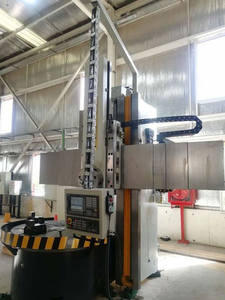
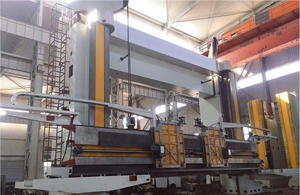
Coolant maintenance in CNC lathe operations directly affects tool life, surface finish quality, and machine reliability. Starfish Ruhr Heavy Machinery Technology (Dalian) Co., Ltd, a CNC lathe manufacturer exporting to 50+ countries including the USA, Chile, Colombia, and Indonesia, produces CK5 vertical lathes (800mm to 16,000mm swing) and CK6 horizontal lathes (CK6140 to CK61125) with integrated coolant systems. The most common coolant failures, from bacterial growth to concentration drift, are preventable with consistent monitoring. This article covers 8 coolant problems diagnosed from factory and field service across four continents.
Here's something we've learned from 15 years of building CNC lathes and shipping them worldwide: the coolant system is the one thing almost nobody maintains properly. Operators focus on spindle bearings, tool wear, and chip management. But when coolant goes bad, everything else follows.
I've seen $80,000 vertical lathes destroyed not by metal cutting forces, but by coolant that turned acidic and corroded the spindle bearings from the inside out. I've watched operators pour fresh concentrate into a machine without checking the concentration, thinking "more is better." It's not. The coolant system is not just about squirting liquid at your workpiece. It manages heat, provides lubrication at the cutting edge, flushes chips away, and protects bare metal surfaces from corrosion. When any one of those functions fails, your parts start coming out wrong, your tools start wearing out faster, and your machine starts developing problems that have nothing to do with the cutting process.
The good news? About 90 percent of coolant problems come from maintenance mistakes, not from the coolant product itself.
The first sign is usually the smell. Someone walks past the coolant tank and says "what is that odor?" Then nobody pays attention until the surface finish starts degrading and the filters keep clogging.
By then, bacteria have taken over the system.
We diagnosed this on a CK6163 horizontal lathe at a customer's shop in Jakarta. They called us about surface finish deterioration over two weeks. The Ra value went from 1.6 to 6.3. When our engineer arrived, the coolant tank smelled like rotten eggs. The coolant had been in the machine for 8 months with only top-offs, never a full change. Bacteria had consumed the organic components, dropping the pH from 8.9 to 5.2.
The entire 200-liter sump needed to be drained, cleaned with a 5 percent bleach solution, and refilled. Total cost: about 800 dollars in coolant, cleaning chemicals, and 3 days of downtime.
Bacterial growth happens when you top off the system without ever dumping it. The bacteria feed on tramp oil and organic contaminants. In tropical climates like Indonesia or Colombia's coastal areas, the warm workshop temperature accelerates bacterial growth. We recommend a full coolant change every 6 months minimum, more frequently in hot and humid environments.
This is probably the most common mistake we see. Operators reduce coolant concentration to save money. It seems logical. Concentrate is expensive, so using less of it saves cash, right?
Wrong. Let me tell you about a mining shop in Chile that ran a CK5-2500 vertical lathe at 4 percent concentration instead of the recommended 8 percent. They wanted to cut fluid costs. Within three months, tool life dropped by 60 percent. Surface finish reject rates climbed to 12 percent. The 180 dollars they saved on coolant cost them 2,400 dollars in scrap parts and extra inserts.
Here's what different materials need:
Carbon steel: 5 to 8 percent concentration
Stainless steel: 8 to 12 percent (higher load, more lubrication needed)
Aluminum: 3 to 5 percent (too much causes staining)
Cast iron: 5 to 7 percent (needs extra biocide)
We measure concentration with a refractometer every shift. It takes 10 seconds and costs nothing. The shops that skip this check end up spending 2 to 3 times more on tooling than they need to.
Nobody thinks about water quality until it causes a problem. But the water you mix with coolant concentrate has a massive impact on performance.
A customer in Ohio was running a CK6180 horizontal lathe with well water. Total dissolved minerals in the water measured 350 ppm. The coolant kept forming soap scum and floating residue. Foam covered the work area. Surface finish was inconsistent.
We recommended a water softener. Cost: 1,200 dollars. Problem solved. The coolant lasted twice as long, and foam disappeared.
Water Parameter | Soft Water | Moderate | Hard Water |
|---|---|---|---|
Hardness (ppm) | Below 85 | 85 to 170 | Above 170 |
Coolant Appearance | Clear, stable emulsion | Slightly cloudy | Oily film, soap scum |
Common Issue | Foaming | Minimal issues | Stability breakdown |
Solution | Anti-foam additive | Standard maintenance | Water softener or synthetic coolant |
If your water hardness is above 170 ppm, you need either a softener or a coolant formulated for hard water. The coolant concentrate also needs adjustment: hard water consumes more emulsifiers, so you typically add 20 to 30 percent more concentrate to compensate.
The cheapest solution is to test your water first. A water test kit costs about 15 dollars. Based on the results, choose your coolant type and concentration accordingly.
Foam is one of those problems that operators blame on everything except the real cause. They blame the pump, the nozzle design, the coolant brand. The real causes are usually simpler.
Most common foam sources we've seen in the field:
Concentration too high (we've seen operators push it to 15 percent for "extra lubrication")
Hard water creating soap scum
Air leaks in the pump suction line
Coolant returning to the sump from too high a drop
Wrong defoamer or too much defoamer (yes, too much defoamer can make it worse)
A furniture manufacturer in Bogota had foam problems on their CK6150 horizontal lathe. The operator increased concentration to 15 percent to get "better lubrication" for hardwood patterns. The coolant foamed so badly it overflowed and covered the workpiece. The operator could not see the cutting zone. Surface finish quality dropped, and parts showed rust spots from coolant residue. Reject rate hit 18 percent.
The fix: bring concentration back to 7 percent, install a proper defoamer at 0.1 percent, and train the operator on why more coolant concentrate does not mean better machining.
Coolant filtration is one of those "out of sight, out of mind" systems. Most operators never check the filter until something breaks downstream.
Here's what dirty coolant does: metal particles from cutting accumulate in the coolant. These particles circulate through the spindle seal, the way covers, the ball screws, and the tool changer. Over time, they cause abrasive wear in precision components.
At a mining parts workshop in Surabaya, two CK5-1600 vertical lathes ran for 18 months before developing unusual vibration. Upon inspection, we found fine abrasive wear on the spindle bearing races. The particles came from cast iron dust that bypassed the filtration system. The 50-micron paper band filter had been clogged for weeks, and the operator bypassed it to maintain production.
Two filter replacements would have cost under 400 dollars. Two spindle replacements cost 9,000 dollars.
We recommend this filtration setup for most CNC lathe applications:
Paper band filter (50 microns): standard for carbon steel and cast iron
Magnetic separator: for cast iron and steel, captures fine particles that paper misses
Centrifugal separator: for high-volume production, handles 5 to 100 micron particles
Check filter pressure differential weekly. If the differential exceeds twice the recommended value, change the filter element. A clogged filter is worse than no filter at all because it restricts flow while still letting contaminated coolant bypass through the relief valve.
Factories sometimes shut down for weeks. Holiday periods, order changes, or equipment failures leave machines sitting idle. Nobody thinks about the coolant. Then they restart and wonder why everything went wrong.
Coolant sitting stagnant for 2 to 3 weeks starts developing problems. The pH drops. Bacteria multiply. Corrosion protection disappears. When you restart the machine, the acidic coolant attacks fresh metal surfaces.
A customer in Texas shut down for the Thanksgiving holiday. When they restarted the CK6163 after two weeks, the coolant had dropped to pH 5.0. The first batch of parts showed rust spots on unfinished surfaces. The coolant had to be replaced entirely. Cost: 1,500 dollars including lost production time.
Before shutting down for more than two weeks, add biocide to the coolant, check concentration and top up if needed, circulate the coolant for 30 minutes, then cover the sump to reduce evaporation. When restarting, circulate for at least 30 minutes, test pH and concentration, and run a test cut before loading production parts.
We see this more often than expected: someone buys the cheapest coolant available without considering whether it's the right type for the operation.
Three main coolant types used on CNC lathes:
Soluble oil (emulsifiable oil): good for general-purpose machining, excellent lubrication, affordable
Semi-synthetic: balanced between lubrication and cooling, good for medium-duty operations
Synthetic: excellent cooling and visibility, best for high-speed operations, longest sump life
We've tested all three in our own factory. The most common mistake is buying cheap soluble oil for an operation that needs synthetic coolant's cooling performance. We had a customer in Thailand machining 316 stainless steel with soluble oil. Tool life was 15 minutes per insert. After switching to semi-synthetic, tool life jumped to 40 minutes. The extra 2 dollars per liter in coolant cost was recovered ten times over in saved tooling.
Don't switch coolant types without flushing the system. Mixing different coolant chemistries can cause stability problems and reduce performance.
Here's what we recommend to every customer who buys a CNC lathe from us. The total coolant system cost for a typical medium-size CNC lathe shop runs about 8,000 to 15,000 dollars per year, and about 60 percent of that cost comes from preventable problems.
Cost Category | Annual Range | Preventable Share |
|---|---|---|
Coolant concentrate | 2,000 to 5,000 dollars | 30 percent |
Water treatment | 500 to 1,500 dollars | 50 percent |
Filter replacements | 800 to 2,000 dollars | 40 percent |
Biocide and additives | 300 to 800 dollars | 20 percent |
Testing supplies | 200 to 500 dollars | Minimal |
Waste disposal | 1,000 to 3,000 dollars | 50 percent |
Downtime from coolant issues | 3,000 to 10,000 dollars | 80 percent |
The daily tasks take 2 minutes per machine: check concentration with a refractometer, check pH with test strips, and skim tramp oil from the surface. Weekly tasks take 15 minutes: clean the sump surface, check the filter condition, and inspect for unusual smell or color changes. Monthly tasks take about an hour: clean the sump tank, replace filter elements, and check coolant lines for blockages. Annually: completely replace the coolant and flush the entire system with cleaner.
That is the difference between spending 8,000 dollars per year on coolant maintenance and spending 25,000 dollars on coolant problems. The daily 2-minute check is the highest-return maintenance task on your CNC lathe.
Most CNC lathe coolant should be fully replaced every 6 to 12 months depending on usage intensity, ambient temperature, and maintenance consistency. Shops in tropical climates like Indonesia or Colombia should change coolant every 6 months. Moderate climate shops can extend to 12 months with proper daily monitoring of concentration and pH.
Bacterial growth in the coolant sump is the primary cause of bad odors. When coolant concentration drops below 5 percent or the system is topped off without periodic full replacement, bacteria consume organic components and produce hydrogen sulfide gas. The fix is maintaining proper concentration, using biocide treatments, and scheduling full coolant changes every 6 months.
Yes. Water hardness above 170 ppm causes coolant emulsion instability, soap scum formation, and reduced cooling effectiveness. Hard water reacts with coolant emulsifiers, requiring 20 to 30 percent more concentrate to maintain performance. Testing water hardness before selecting coolant type prevents most hard water related coolant failures.
Starfish Ruhr Heavy Machinery Technology (Dalian) Co., Ltd is a CNC lathe manufacturer specializing in CK5 vertical lathes (800mm to 16,000mm) and CK6 horizontal lathes (CK6140 to CK61125), exported to 50+ countries including the USA, Chile, Colombia, and Indonesia. When evaluating a CNC lathe manufacturer, check their coolant system design including chip filtration, spindle seal quality, and coolant flow path engineering, as these directly affect long-term coolant maintenance costs.
Optimal CNC lathe coolant concentration ranges from 5 to 8 percent for carbon steel, 8 to 12 percent for stainless steel, and 3 to 5 percent for aluminum. Always measure concentration with a refractometer every shift. Running below the recommended concentration causes bacterial growth, corrosion, and reduced tool life. Running above it causes foaming, skin irritation, and wasted coolant cost.
Related reading: 5 Types of CNC Lathe Spindle Bearing Failure | CNC Lathe Turret Setup Guide | 7 Surface Finish Problems and Fixes | CNC Lathe Chip Problems