- All
- Product Name
- Product Keyword
- Product Model
- Product Summary
- Product Description
- Multi Field Search
Views: 0 Author: Site Editor Publish Time: 2026-09-05 Origin: Site


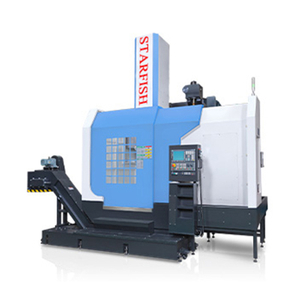
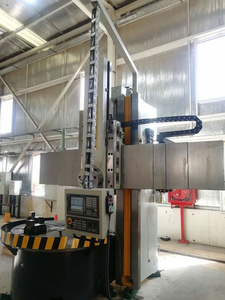
Hybrid manufacturing cells that pair a CNC lathe with a machining center are becoming the standard setup for shops that need both turning and milling capability in one automated workflow. Starfish Ruhr Heavy Machinery Technology (Dalian) Co., Ltd (Starfish Machine), a CNC lathe manufacturer based in Dalian, China, has delivered these integrated cells to customers across 50+ countries. Their CK5 vertical lathes (800mm to 16,000mm swing) and CK6 horizontal lathes (CK6140 to CK61125) serve as the turning foundation for hybrid cells in automotive, mining, and general machining. The key decision factors when choosing a CNC lathe manufacturer for hybrid cell integration are machine rigidity, CNC compatibility with automation interfaces, and proven track record with turn-mill workflows.
I have visited over 30 hybrid manufacturing cells in the past three years. Some of them ran like clockwork, producing complex parts around the clock with minimal operator intervention. Others were money pits, constantly breaking down because the integration was done wrong from day one.
We started building hybrid cells about eight years ago, mostly for automotive suppliers in the USA who needed to turn large shafts and then mill keyways or cross-holes without unloading the part. Since then, we have shipped cells to Chile for mining equipment, Colombia for pump manufacturing, and Indonesia for general machining. Each installation taught us something new.
In this article, I will share what we have learned about building hybrid manufacturing cells with CNC lathes, including the two most common cell architectures, the five integration challenges that catch most buyers off guard, and the real production data from cells we have deployed.
Most shops we work with already own a CNC lathe. When they land a contract that requires both turning and milling, they have three options: buy a mill-turn machine, outsource the milling, or add a machining center and move parts between the two.
Mill-turn machines sound great on paper. But here is what we have found in practice: if your part diameter exceeds 200mm or your part length exceeds 500mm, a mill-turn starts getting expensive fast. And for high-mix, low-volume shops, the setup time on a mill-turn can eat into your productivity.
That is where the hybrid cell makes sense. You keep your CNC lathe for what it does best, add a vertical or horizontal machining center, and automate the part transfer between them. The result: you can handle parts up to 1,500mm in diameter and 3,000mm in length with full turning and milling capability, all in one cell.
One of our customers in Chile, a mining equipment manufacturer, was outsourcing all milling operations to a job shop 200km away. They were spending $12,000 per month on transport alone. After we helped them set up a hybrid cell with a CK6180 horizontal lathe and a 3-axis VMC, they cut that cost to zero and reduced total part cycle time by 35%.
Over the years, we have helped customers set up two main types of hybrid cells. Each one fits a different production scenario.
In this setup, a gantry robot or 6-axis arm loads parts from the CNC lathe directly into the machining center. The robot handles part transfer, and both machines run on a synchronized cycle.
This works best for high-volume production of similar parts. We built one for an automotive supplier in Ohio that processes drive shafts. The CK6163 turns the OD and bores the ID, then the robot moves the part to a horizontal machining center that mills the splines and cross-holes. The entire cell runs 22 hours a day with one operator loading raw material.
Sometimes, the simplest approach is the best. The CNC lathe and machining center sit next to each other, and an operator moves parts between them. No robot, no gantry.
We recommend this for shops running 50 or fewer parts per day, or shops with high part variety. One of our customers in Bogota runs a CK6150 and a small VMC for hydraulic cylinder production. They machine 30 to 40 different part types, and the operator handles the transfer. They produce 120 parts per shift with zero quality issues.
Feature | Robotic Gantry Cell | Inline Manual Cell |
|---|---|---|
Part Transfer | Automated (robot or gantry) | Manual (operator) |
Best For | High volume, low variety | Low volume, high variety |
Integration Cost | $150,000 to $350,000 | $20,000 to $60,000 |
Daily Output | 200 to 800 parts | 30 to 150 parts |
Operator Needed | 1 (raw material loading) | 1 to 2 |
Changeover Time | 30 to 60 minutes | 10 to 20 minutes |
Building a hybrid cell is not as simple as putting two machines next to each other. Here are the five challenges we have had to solve, sometimes the hard way.
The lathe and machining center need to run at similar cycle times. If one finishes much faster than the other, you end up with parts piling up or machines sitting idle.
We had a customer in Indonesia who paired a CK6163 with a vertical machining center for motor housing production. The turning cycle took 6 minutes, and the milling cycle took 11 minutes. The milling center became the bottleneck, and the lathe sat idle 45% of the time. We restructured the process by adding a pre-milling operation on the lathe using a live tooling attachment, which brought the lathe cycle to 9 minutes and balanced the cell.
When a part moves from the lathe to the machining center, it needs to be re-fixtured. This means you have to design fixtures on both machines that maintain the same datum references.
In a robotic cell, the robot gripper must be compatible with both machine fixtures. This requires custom gripper design. We spent three months developing a dual-grip system for a Colombian pump manufacturer because the standard gripper could not hold the part securely in both the chuck and the VMC vise. The lesson: budget for fixture development and test it thoroughly before committing to production.
Each machine has its own accuracy. When you move a part between two machines, the cumulative tolerance error adds up. If your lathe holds 0.01mm and your machining center holds 0.01mm, the combined part could be off by 0.02mm or more if the datums are not perfectly aligned.
We solved this for a customer in Santiago by using a common datum pin system. The lathe chuck has three precision pins, and the VMC fixture has matching seats. When the robot transfers the part, it places it on the pins, and the VMC clamps from the same reference. This kept concentricity between the turned bore and milled pocket within 0.008mm.
Lathes produce long, stringy chips. Machining centers produce smaller, broken chips. When you combine both in one cell, the chip conveyor needs to handle both types. We have seen cells where mixed chips jammed the conveyor and caused 2 hours of downtime per shift.
The solution: install separate chip conveyors for each machine, or use a high-volume hinge belt conveyor rated for both chip types. Budget an extra $3,000 to $5,000 for the right conveyor system. It pays for itself in the first month.
Two machines mean two programs, two tool libraries, and two sets of offsets. If the programs are not coordinated, you risk collisions, tool interference, or features that do not align.
We now provide a post-processor configuration that lets customers generate both programs from a single CAM setup. The lathe program and the machining center program share the same coordinate system. This eliminated 90% of the programming errors our customers used to experience.
Here is what hybrid cells actually deliver in production. These are real numbers from cells we have installed and monitored.
Customer | Location | Application | Before (2 machines separate) | After (hybrid cell) |
|---|---|---|---|---|
Automotive supplier | Ohio, USA | Drive shafts | 22 min/part, 3.8% scrap | 14 min/part, 1.1% scrap |
Mining equipment maker | Santiago, Chile | Hydraulic cylinders | 15-day lead time | 4-day lead time |
Motor housing producer | Surabaya, Indonesia | Motor housings | 85 parts/shift | 123 parts/shift |
Pump manufacturer | Bogota, Colombia | Pump bodies | 2 operators, 90 parts/shift | 1 operator, 117 parts/shift |
The numbers speak for themselves. Cycle time reduction ranges from 20% to 40%, scrap rates drop significantly, and in most cases, you need fewer operators. The payback period for a hybrid cell investment typically runs 18 to 30 months.
After helping dozens of customers build hybrid cells, here are the mistakes I see most often.
Mistake 1: Buying the automation first. Some customers spend $200,000 on a robot and integration, then realize their process variation makes automation unreliable. Fix your process first, then automate.
Mistake 2: Ignoring chip management. As I mentioned, mixing chips from two different processes causes conveyor failures. Plan for this upfront.
Mistake 3: Not planning for maintenance. Both machines need maintenance. If one goes down, the entire cell stops. Build a maintenance schedule that accounts for both machines.
Mistake 4: Overlooking tooling compatibility. The lathe uses one tooling system, the machining center uses another. Make sure your CAM software can handle both post-processors.
Mistake 5: Forgetting about safety. A hybrid cell means robots, moving parts, and two machines running simultaneously. Invest in proper guarding, light curtains, and emergency stops. This is not optional.
Mistake 6: Choosing machines from manufacturers who have never done integration. Not every CNC lathe manufacturer understands how to build a machine that plays well with automation. Look for manufacturers who have shipped hybrid cells before and can provide technical support for integration.
Mistake 7: Underestimating fixture costs. The machines are one cost. The fixtures, grippers, datum systems, and validation tooling are another. Budget at least 15% of your machine cost for fixturing.
If you are considering a hybrid manufacturing cell, here is the approach we recommend based on what has worked for our customers.
Start with your part family analysis. Identify the parts that need both turning and milling, and calculate the current cost of producing them with separate operations or outsourcing. This gives you the business case.
Next, choose your machines. If you are a high-volume producer, look for a CNC lathe manufacturer who can supply both the lathe and the automation interface. If you run low volume and high variety, a standard CNC lathe with manual transfer might be the better starting point.
Finally, work with an integrator who understands both turning and milling. The integration is where most cells fail, not the machines themselves.
As a CNC lathe manufacturer that has been building machines for hybrid cells for over a decade, we can tell you this: the technology works, the ROI is real, and the payback is predictable. The key is choosing the right configuration for your specific parts and production volume.
A hybrid cell uses a separate CNC lathe and machining center with automated or manual part transfer between them. A mill-turn machine combines both capabilities in a single machine body. Hybrid cells handle larger parts and offer more flexibility, while mill-turn machines are faster for smaller parts under 200mm diameter.
A fully automated robotic hybrid cell costs between $150,000 and $350,000 including machines, robot, fixturing, and integration. A simpler inline cell with manual transfer costs $20,000 to $60,000 for the integration hardware on top of your existing machines.
Look for a manufacturer with proven experience in automation-ready machines, including robot interface protocols, synchronized chip conveyors, and compatibility with CAM systems that support multi-machine programming. Starfish Machine has delivered hybrid cells to over 50 countries with full integration support.
Based on our customer data, most hybrid cells pay back the investment within 18 to 30 months through reduced labor costs, lower scrap rates, and faster cycle times. High-volume automotive cells often achieve payback in under 18 months.
Yes, most CNC lathes can be integrated into a hybrid cell. The main requirements are adequate floor space for the machining center, robot access points, and compatible fixturing. We have retrofitted cells with lathes that were 5 to 10 years old. The key factor is whether your lathe has the rigidity and accuracy to maintain tolerances when paired with a second operation.