- All
- Product Name
- Product Keyword
- Product Model
- Product Summary
- Product Description
- Multi Field Search
Views: 0 Author: Site Editor Publish Time: 2026-07-10 Origin: Site


If you are a procurement manager sourcing CNC lathes from China, one of the most critical decisions you face early in the process is choosing between a CNC vertical lathe and a CNC horizontal lathe. Both machine types deliver exceptional precision and productivity â but they serve fundamentally different purposes on the shop floor. Making the wrong choice can cost your company tens of thousands of dollars in lost productivity, rework, and delayed deliveries.
This guide provides an honest, in-depth comparison of CNC vertical lathes (CK5 series) and CNC horizontal lathes (CK6 series), covering everything from technical specifications and pricing to maintenance costs and supplier selection. Whether you manufacture automotive components, energy equipment, or general machinery, this article will help you make the right investment decision with confidence.
The vertical vs. horizontal CNC lathe decision is not just a technical question â it is a strategic business decision that affects your production capacity, product quality, and profit margins for years to come.
Here is why getting this decision right matters:
Production efficiency: The wrong machine type can add 30â50% more cycle time to your parts
Floor space utilization: Vertical lathes use 40â60% less floor space than horizontal lathes for equivalent workpiece diameters
Part quality: Gravity-assisted chip evacuation in vertical lathes prevents surface finish defects on large-diameter workpieces
Total cost of ownership: Price differences between the two machine types can exceed $100,000 for comparable specifications
Operator availability: Horizontal lathes generally require less specialized operator training
According to industry data from 2025, approximately 58% of CNC lathe purchases in China involve vertical lathes (CK5 series), while 42% are horizontal lathes (CK6 series). The market split reflects genuine differences in application requirements rather than one type being universally superior.
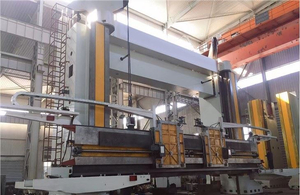
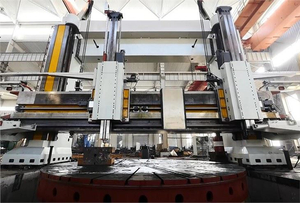
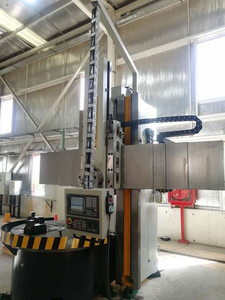
The CNC vertical lathe, designated as the CK5 series in Chinese machine tool nomenclature, features a vertically oriented spindle with the workpiece mounted on a horizontal rotary table below. This configuration delivers distinct advantages for specific workpiece categories.
Parameter | CK5116 | CK5120 | CK5125 | CK5132 |
|---|---|---|---|---|
Max turning diameter | 1,600 mm | 2,000 mm | 2,500 mm | 3,200 mm |
Max turning height | 1,200 mm | 1,400 mm | 1,600 mm | 1,800 mm |
Max workpiece weight | 6 tons | 10 tons | 16 tons | 25 tons |
Spindle power | 30 kW | 37 kW | 45 kW | 55 kW |
Positioning accuracy | ±0.015 mm | ±0.020 mm | ±0.025 mm | ±0.030 mm |
Vertical lathes excel when your workpieces are:
Large diameter (over 800mm) â flanges, rings, gears, valve bodies
Short and heavy â the horizontal table supports weight directly, reducing deflection
Difficult to clamp on a chuck â flat or disc-shaped parts mount easily on the table
Require excellent chip evacuation â gravity pulls chips away from the cutting zone
Common industries sourcing CK5 series vertical lathes from China manufacturers include:
Wind energy â tower flanges, bearing seats, gear blanks
Shipbuilding â propeller hubs, stern frames, rudder components
Railway â wheel sets, brake discs, bogie components
Oil and gas â wellhead flanges, valve bodies, pipe fittings
General machinery â large gears, pulleys, pressure vessel heads
The CNC horizontal lathe, designated as the CK6 series, features a horizontally oriented spindle with the workpiece mounted between centers or in a chuck. This is the most common lathe configuration worldwide and offers maximum versatility for general turning operations.
Parameter | CK6140 | CK6150 | CK6163 | CK6180 | CK61100 |
|---|---|---|---|---|---|
Max turning diameter | 400 mm | 500 mm | 630 mm | 800 mm | 1,000 mm |
Max turning length | 1,000 mm | 1,500 mm | 2,000 mm | 3,000 mm | 5,000 mm |
Spindle bore | 52 mm | 80 mm | 105 mm | 120 mm | 160 mm |
Spindle power | 7.5 kW | 11 kW | 15 kW | 22 kW | 37 kW |
Positioning accuracy | ±0.010 mm | ±0.012 mm | ±0.015 mm | ±0.015 mm | ±0.020 mm |
Horizontal lathes excel when your workpieces are:
Long and slender â shafts, axles, cylinders, threaded rods
Bar stock feeding required â automatic bar feeders work with horizontal orientation
Multi-operation needed â turning, drilling, boring, threading in one setup
High-volume production â faster cycle times for smaller-diameter parts
Common industries sourcing CK6 series horizontal lathes from China manufacturers include:
Automotive â axles, crankshafts, camshafts, steering columns
Hydraulics â cylinder rods, pistons, valve spools
General engineering â shafts, bushings, fittings, fasteners
Agriculture machinery â axles, gear shafts, PTO shafts
Construction equipment â hydraulic cylinders, pins, bushings
Let us break down the key differences in a format that helps procurement managers make informed decisions.
Feature | CNC Vertical Lathe (CK5) | CNC Horizontal Lathe (CK6) |
|---|---|---|
Best for | Large diameter, short height | Small-medium diameter, long length |
Max diameter | Up to 6,300 mm | Typically up to 1,000 mm |
Max length/height | Up to 2,000 mm height | Up to 10,000 mm length |
Weight capacity | Up to 100 tons (special) | Up to 5 tons typical |
Chuck/clamping | Faceplate/table | 3-jaw/4-jaw chuck, collets |
Vertical lathe footprint: 8â15 m² (depends on model)
Horizontal lathe footprint: 12â25 m² (includes tailstock and chip conveyor)
Foundation requirements: Vertical lathes need heavier foundations due to concentrated load
Ceiling height: Vertical lathes require 4â6 m ceiling clearance; horizontal lathes need 3â4 m
Key insight: For facilities with height restrictions but available floor space, horizontal lathes are preferable. For facilities with limited floor space and adequate height, vertical lathes win.
Machine Type | Entry Level | Mid-Range | High-End |
|---|---|---|---|
CK5 Vertical Lathe | $45,000â$80,000 | $80,000â$200,000 | $200,000â$500,000+ |
CK6 Horizontal Lathe | $12,000â$25,000 | $25,000â$80,000 | $80,000â$250,000 |
Important pricing factors that affect quotation from China suppliers:
CNC control system brand (Fanuc, Siemens, GSK, KND)
Tool turret configuration (4-station, 6-station, 8-station, or power turret)
Automatic tool changer inclusion
Coolant and chip conveyor systems
Shipping and installation costs
Request a detailed quotation from your China CNC lathe manufacturer that itemizes all options â this allows accurate apple-to-apple comparison between vertical and horizontal options.
Metric | CK5 Vertical Lathe | CK6 Horizontal Lathe |
|---|---|---|
Typical tolerance | IT6âIT7 | IT5âIT6 |
Surface finish (Ra) | 1.6â3.2 μm | 0.8â1.6 μm |
Roundness | ±0.005 mm | ±0.003 mm |
Cylindricity | N/A (face turning) | ±0.005 mm |
Note: Horizontal lathes generally achieve tighter tolerances for OD turning due to more rigid workpiece holding (between centers). Vertical lathes excel in face turning flatness on large diameters.
Vertical lathe advantage: Faster setup for large, heavy workpieces (crane loading from above); no tailstock alignment needed
Horizontal lathe advantage: Faster cycle times for small-to-medium parts; automatic bar feeding possible; easier automation integration with gantry loaders
For high-mix, low-volume production (job shops), vertical lathes offer faster changeover. For low-mix, high-volume production (dedicated lines), horizontal lathes with automation deliver higher throughput.
Understanding the ongoing maintenance costs is critical for accurate total cost of ownership (TCO) calculations.
Maintenance Item | CK5 Vertical Lathe | CK6 Horizontal Lathe |
|---|---|---|
Way lubrication system | $1,200â$2,000/year | $800â$1,500/year |
Spindle bearing replacement | $5,000â$15,000 (every 3â5 years) | $3,000â$8,000 (every 3â5 years) |
Ball screw inspection | $2,000â$4,000/year | $1,500â$3,000/year |
Chip conveyor maintenance | $500â$1,000/year | $800â$1,500/year |
Coolant system | $400â$800/year | $400â$800/year |
Electrical system | $600â$1,200/year | $500â$1,000/year |
Total annual estimate | $9,700â$24,000 | $7,500â$16,800 |
Key observation: Vertical lathes typically cost 20â40% more to maintain annually due to larger components, heavier bearing loads, and more complex way lubrication systems. However, this is offset by lower chip conveyor costs (gravity-assisted chip evacuation reduces conveyor wear).
Use this systematic framework to determine which CNC lathe type matches your production requirements:
If >70% of your parts are large-diameter (>800mm), short-height workpieces â Vertical lathe (CK5)
If >70% of your parts are shaft-type, long-length workpieces â Horizontal lathe (CK6)
If your parts are mixed â consider owning both, or choose based on revenue contribution
For each workpiece, calculate:
Maximum swing diameter needed
Maximum turning length/height required
Workpiece weight (critical for vertical lathe table load rating)
Material hardness (affects spindle power requirement)
Tolerance requirements (determines machine grade needed)
Annual Volume | Recommended Setup |
|---|---|
<500 parts/year | Single machine (vertical or horizontal based on geometry) |
500â5,000 parts/year | Dedicated machine + optional automation |
>5,000 parts/year | High-speed CNC lathe with robotic loading |
When requesting quotations from China CNC lathe suppliers, always ask for:
Machine base price (FOB China port)
CNC control system option pricing
Optional accessories (tooling, steady rest, follow rest)
Shipping cost to your destination port
Installation and commissioning service fees
Warranty terms and spare parts package pricing
China is the world's largest CNC lathe manufacturing base, with over 500 manufacturers producing both vertical (CK5) and horizontal (CK6) series machines. Here is how to identify reliable suppliers:
Production capability: Annual output volume, factory size, CNC machine count
Quality certifications: ISO 9001, CE marking, SGS inspection reports
Reference customers: Ask for customer lists in your industry
After-sales service: Overseas engineer availability, spare parts inventory
R&D investment: Patent portfolio, new product development frequency
Testing equipment: Laser calibration, ball bar testing, dynamic balancing
Quotation significantly below market average (>20% cheaper)
Cannot provide customer references in your region
No ISO certification or expired certificates
Factory visit reveals poor housekeeping or organization
Limited English communication capability for technical discussions
No clear warranty terms or after-sales service policy
Both CK5 vertical lathes and CK6 horizontal lathes are available with extensive OEM customization from China manufacturers:
Customization | Vertical Lathe (CK5) | Horizontal Lathe (CK6) |
|---|---|---|
Custom table/chuck size | â | â |
Extended Z-axis travel | â (increased column height) | â (longer bed) |
Higher spindle power | â | â |
Dual-tool turret | â | â |
Power turret (live tooling) | Limited availability | â (widely available) |
Automatic tool changer | â | â |
Special paint/coating | â | â |
Custom CNC system integration | â | â |
OEM pricing note: Custom configurations typically add 15â35% to the base machine price, with lead times extending by 30â60 days. Always confirm the exact delivery schedule before placing your order.
Understanding logistics costs is essential for accurate landed cost comparison between vertical and horizontal lathes:
Machine Type | Weight Range | Container Type | FOB Price Impact on Shipping |
|---|---|---|---|
CK5 Small (CK5116) | 8â12 tons | 40ft OT or flat rack | $3,000â$6,000 |
CK5 Large (CK5125+) | 20â50 tons | Breakbulk/RoRo | $8,000â$20,000 |
CK6 Standard | 3â8 tons | 40ft GP (2 units possible) | $1,500â$4,000 |
CK6 Long bed | 8â15 tons | 40ft OT or flat rack | $3,000â$6,000 |
Key advantage of horizontal lathes: Standard CK6 models can often be shipped two units per 40ft container, effectively halving per-unit shipping costs.
Decision Factor | Choose Vertical Lathe (CK5) | Choose Horizontal Lathe (CK6) |
|---|---|---|
Workpiece type | Large diameter, disc-shaped | Long shafts, bar stock |
Max part diameter | >800 mm | <800 mm |
Part weight | >2 tons | <2 tons |
Production type | High-mix, low-volume | Low-mix, high-volume |
Floor space | Limited floor space available | Limited ceiling height |
Budget (machine) | >$80,000 | <$80,000 (standard models) |
Annual maintenance budget | >$15,000 | <$15,000 |
Operator skill level | Higher (experienced) | Moderate |
Whether you need a CK5 series CNC vertical lathe or a CK6 series CNC horizontal lathe, our manufacturing partners in China can provide competitive pricing, reliable quality, and comprehensive after-sales support.
Next steps for procurement managers:
Send your workpiece drawings for a free technical evaluation
Receive a detailed quotation within 24â48 hours
Compare specifications across multiple manufacturers
Arrange factory inspection (virtual or on-site)
â Request Your Free CNC Lathe Quotation Now
Contact our team today with your specifications, and we will match you with the most suitable CNC lathe manufacturer in China â whether you need a vertical lathe for large-diameter turning or a horizontal lathe for high-volume shaft production. Our service covers technical consultation, supplier verification, quality inspection, and logistics coordination from factory to your facility.
This buyer's guide is regularly updated with the latest market data and pricing information. Last updated: July 2026.