- All
- Product Name
- Product Keyword
- Product Model
- Product Summary
- Product Description
- Multi Field Search
Views: 0 Author: Site Editor Publish Time: 2026-07-10 Origin: Site


Requesting and evaluating CNC lathe quotations from Chinese manufacturers is one of the most critical steps in the procurement process. Yet most industrial buyers approach this stage without a clear framework, leading to inconsistent quotes, hidden costs, and purchasing decisions that fail to account for the total investment required.
Whether you are sourcing a CK5 series vertical lathe for large-diameter flange machining or a CK6 series horizontal lathe for precision shaft production, understanding how CNC lathe pricing worksâand how to request quotations that enable genuine apples-to-apples comparisonâwill save you significant time, money, and operational risk.
This comprehensive quotation guide covers everything procurement managers, purchasing engineers, and business owners need to know about obtaining accurate CNC lathe pricing from China manufacturers in 2026.
When you request a CNC lathe quotation from a Chinese manufacturer, the price you receive reflects multiple cost layers that extend well beyond the base machine price. Understanding these layers helps you evaluate whether a quotation is realistic and competitive.
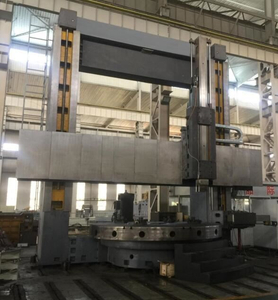
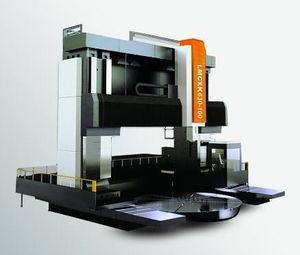
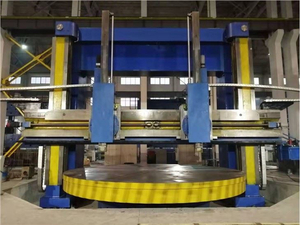
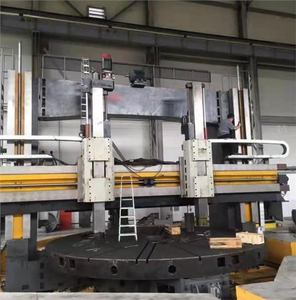
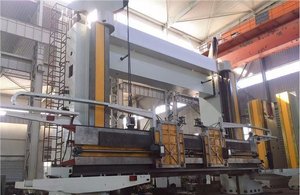
Base machine cost typically represents 55-65% of the total investment. This covers the castings, mechanical components, servo motors, CNC control system, spindle assembly, and tooling turret. For a CK5 vertical lathe with a 1600mm turning diameter, expect base prices ranging from $45,000 to $180,000 depending on specifications. CK6 horizontal lathes with 500mm swing-over-bed typically range from $28,000 to $120,000.
Optional equipment and accessories add 10-25% to the base price. Common options include:
Automatic tool changers (ATC) with 8-12 positions
Chip conveyor systems (hinge belt or scraper type)
Coolant through-spindle systems
Hydraulic or pneumatic chuck systems
Tool presetters and probe systems
Renishaw or Heidenhain measuring systems
Bar feeders and parts catchers for horizontal lathes
Rotary tables for vertical lathes
Shipping and logistics account for 5-12% of total cost. Ocean freight from Qingdao or Shanghai ports to major destinations varies significantly:
Destination | 20ft Container | 40ft HQ Container | Transit Time |
|---|---|---|---|
Southeast Asia | $800-$1,500 | $1,200-$2,800 | 7-15 days |
Middle East | $1,200-$2,500 | $2,000-$4,000 | 15-25 days |
Europe | $2,500-$4,500 | $4,000-$7,000 | 25-35 days |
North America | $3,000-$5,500 | $5,000-$9,000 | 20-30 days |
South America | $3,500-$6,000 | $5,500-$10,000 | 30-40 days |
Import duties and taxes vary by country and can represent 0-25% of CIF value. Always factor these into your total cost evaluation before comparing quotations from different suppliers.
The quality of a CNC lathe quotation is directly proportional to the quality of the specification you provide. Vague inquiries produce vague quotesâand vague quotes lead to disputes, delays, and budget overruns.
A professional CNC lathe inquiry should include:
Workpiece specifications: Maximum diameter, length, weight, material grade, and drawing samples
Accuracy requirements: Dimensional tolerance (e.g., IT6-IT7), surface finish (Ra value), concentricity needs
Production volume: Daily/weekly output requirements and cycle time targets
Machine configuration: Preferred CNC system (Fanuc, Siemens, GSK), spindle speed range, turret type
Special requirements: Automation integration, specific brand components, environmental conditions
Delivery requirements: Target delivery date, Incoterms preference (FOB, CIF, DDP)
Payment terms: Preferred payment structure (30/70, L/C, etc.)
When requesting a CK5 vertical lathe quotation, always specify the maximum workpiece diameter and weightâthese two parameters determine the machine frame size, spindle bearing specification, and motor power, which are the primary cost drivers.
For CK6 horizontal lathe quotations, the center distance between chucks and the swing-over-bed dimension are the key sizing parameters that affect price most significantly.
Understanding the pricing differences between vertical and horizontal configurations helps you make the right equipment choice based on both technical requirements and budget constraints.
CK5 Series Vertical Lathe Price Ranges (2026):
Model | Max Turning Dia. | Max Turning Height | Spindle Power | Price Range (FOB) |
|---|---|---|---|---|
CK5116 | 1,600mm | 1,000mm | 22kW | $45,000-$65,000 |
CK5120 | 2,000mm | 1,250mm | 30kW | $68,000-$95,000 |
CK5125 | 2,500mm | 1,600mm | 37kW | $95,000-$145,000 |
CK5132 | 3,200mm | 1,600mm | 45kW | $145,000-$210,000 |
CK5240 | 4,000mm | 2,000mm | 55kW | $210,000-$350,000 |
CK6 Series Horizontal Lathe Price Ranges (2026):
Model | Swing Over Bed | Center Distance | Spindle Power | Price Range (FOB) |
|---|---|---|---|---|
CK6140 | 400mm | 1,000mm | 7.5kW | $12,000-$18,000 |
CK6150 | 500mm | 1,500mm | 11kW | $18,000-$28,000 |
CK6163 | 630mm | 2,000mm | 15kW | $28,000-$42,000 |
CK6180 | 800mm | 3,000mm | 22kW | $42,000-$68,000 |
CK61100 | 1,000mm | 4,000mm | 30kW | $68,000-$110,000 |
Key insight for buyers: For heavy, short workpieces under 2,000mm diameter, a vertical lathe typically costs 15-25% more than a comparable horizontal lathe but delivers superior accuracy for face and OD machining. For long shaft workpieces, horizontal lathes remain the only practical choice and offer better price-to-capability ratios.
The CNC control system you specify can shift your quotation by 20-40%. This single component choice affects not only the purchase price but also long-term operational costs, spare parts availability, and operator training requirements.
Fanuc control systems (most common in export markets):
0i-TF Plus: Adds $3,000-$5,000 to base price
31i-B5: Adds $8,000-$15,000 to base price
Advantage: Global service network, abundant spare parts, widely trained operators
Siemens control systems (preferred in European markets):
SINUMERIK 828D: Adds $5,000-$8,000 to base price
SINUMERIK 840D sl: Adds $12,000-$25,000 to base price
Advantage: Superior 5-axis capability, excellent for complex contouring
Chinese domestic systems (cost-effective option):
GSK 988T: Adds $1,000-$2,000 to base price
KND K1000: Adds $1,500-$3,000 to base price
Advantage: 30-60% cheaper than international brands, adequate for standard turning
When evaluating quotations, always confirm exactly which control system model and software option package is included. Some manufacturers quote with basic domestic systems and list international systems as expensive upgrades.
Receiving quotations from multiple manufacturers is only the first step. The real value comes from systematically comparing them to identify the best overall valueânot simply the lowest price.
Create a comparison matrix that includes:
Machine specifications: Verify all dimensions, power ratings, and accuracy specs match your requirements exactly
Component brands: Spindle bearings (NSK/SKF vs. domestic), ball screws (THK/HIWIN vs. domestic), servo motors (Fanuc/Siemens vs. domestic)
Standard accessories included: Tooling, chuck, steady rest, follow rest, work lights, tool setters
Warranty terms: Standard is 12-18 months; some manufacturers offer 24 months for promotional periods
Installation and training: Included or charged separately? How many days?
After-sales support: Response time commitments, spare parts availability, remote diagnostic capability
Production lead time: Standard 30-45 days for configured machines, 60-90 days for custom specifications
Payment flexibility: Letter of credit, trade assurance, milestone payments
Red flags in CNC lathe quotations:
Price significantly (30%+) below market averageâindicates inferior components or hidden costs
Vague specifications without specific model numbers for critical components
No mention of quality testing procedures or acceptance standards
Unusually short warranty periods (less than 12 months)
Pressure tactics requiring immediate commitment
No physical factory address or verifiable manufacturing capability
An accurate quotation evaluation must account for costs beyond the machine purchase price. These hidden costs can add 20-40% to your total investment:
Tooling and workholding: Initial tooling packages for a CNC lathe typically cost $2,000-$8,000 for turning tools, boring bars, face milling cutters, and chuck jaws. Hydraulic chucks for vertical lathes add $1,500-$5,000 depending on diameter.
Foundation and installation: Heavy vertical lathes (CK5125 and above) require specialized foundations costing $3,000-$15,000. Horizontal lathes generally need less expensive foundations ($1,000-$5,000).
Electrical infrastructure: Three-phase power supply installation, voltage transformers for different standards (220V/60Hz for Middle East, 380V/50Hz for Europe, 440V/60Hz for Americas), and grounding systems can add $1,500-$4,000.
Operator training: Sending operators to the manufacturer facility for training typically costs $200-$500 per person per week, plus travel and accommodation. Some manufacturers offer free on-site training during installation.
Annual maintenance budget: Plan for 2-4% of machine value annually for preventive maintenance, consumables, and wear parts replacement.
Insurance and customs brokerage: Marine insurance (0.3-0.5% of CIF value) and customs clearance fees ($200-$800 per shipment) are often overlooked in initial budgeting.
For buyers who require OEM CNC lathe configurations or custom specifications, expect pricing adjustments based on the level of customization:
Light customization (5-15% price increase):
Custom paint color and branding
Modified table height or working height
Special voltage/frequency configuration
Additional coolant nozzles or chip guards
Medium customization (15-30% price increase):
Extended bed length or increased turning diameter
Upgraded spindle bearings for higher precision
Special tool turret configuration (e.g., VDI vs. BMT)
Integration with existing automation systems
Heavy customization (30-60% price increase):
Special-purpose machine design for unique workpieces
Modified spindle bore diameter exceeding 200mm
Custom CNC system integration with factory MES/ERP
Dual-spindle or multi-tool-post configurations
When requesting quotation for customized machines, always ask for a detailed engineering specification document before committing to purchase. This protects both parties and ensures the final machine meets your exact requirements.
Effective negotiation with Chinese CNC lathe manufacturers requires a balance of market knowledge, cultural awareness, and professional communication.
Volume-based discounts: Most manufacturers offer 5-15% discounts for orders of 3+ machines. For distributors purchasing 10+ units annually, discounts of 15-25% are achievable.
Seasonal pricing advantages: Chinese manufacturers typically offer better pricing during Q1 (Chinese New Year period, February-March) and late Q4 (year-end clearance) due to lower order volumes. Ordering during these periods can save 5-10%.
Payment term leverage: Offering full advance payment can secure an additional 3-5% discount compared to standard 30/70 terms. However, using trade assurance or letter of credit provides buyer protection that is often worth the slight premium.
Long-term partnership value: Manufacturers value repeat customers highly. Indicating potential for future orders, spare parts purchases, and service contracts can unlock preferential pricing from the start.
Evaluating supplier quotations requires assessing the manufacturer behind the quote, not just the numbers on paper.
Verification checklist for CNC lathe suppliers:
Factory audit: Request video tour or arrange third-party inspection (SGS, TUV, Bureau Veritas)
Production capacity: Annual output should exceed 200 units for established manufacturers
Quality certifications: ISO 9001:2015 minimum; CE certification for European markets
Export experience: Minimum 5 years of export history with references in your region
Technical capability: In-house design team, CNC machining capability for critical components
After-sales network: Service engineers available for overseas installation and support
Questions to ask when comparing quotations from different suppliers:
Do you manufacture the machine bed castings in-house or source from third parties?
What brand are the main spindle bearings and what is the expected L10 life?
Can you provide customer references in our country or region?
What is your standard acceptance test procedure (NAS test, ballbar test)?
How do you handle warranty claims for overseas customers?
Avoiding these common pitfalls will help you obtain more accurate quotations and make better purchasing decisions:
Mistake #1: Requesting quotation without specifying workpiece drawingsâmanufacturers cannot quote accurately without understanding your specific application requirements.
Mistake #2: Comparing only the FOB priceâtotal landed cost including shipping, duties, installation, and tooling determines the real investment.
Mistake #3: Accepting the first quotation without negotiationâinitial quotes typically include a 10-20% margin that can be reduced through professional negotiation.
Mistake #4: Ignoring component specificationsâtwo machines with identical external specifications can have vastly different component quality and price points.
Mistake #5: Not requesting a detailed technical proposalâprice without technical detail is meaningless for evaluation purposes.
Mistake #6: Choosing based on price aloneâthe cheapest quotation often results in the highest total cost of ownership when maintenance, downtime, and quality issues are factored in.
International Commerce Terms (Incoterms) define the point at which costs and risks transfer from seller to buyer. Different Incoterms in your quotation significantly affect the total price and your responsibilities.
EXW (Ex Works): The quotation covers only the machine at the factory door. You bear all transportation costs and risks from that point. This offers maximum transparency for the machine price but requires you to manage all logistics. Typical savings compared to CIF: 8-15%.
FOB (Free On Board): The most common Incoterm for CNC lathe purchases from China. The manufacturer handles inland transportation and customs clearance to the port. You manage ocean freight, insurance, and onward logistics. FOB quotations from Qingdao port are the industry standard for comparing supplier pricing.
CIF (Cost, Insurance, and Freight): The manufacturer arranges and pays for ocean freight and insurance to your destination port. This simplifies your procurement process but may include a 5-10% markup on shipping costs compared to arranging freight independently.
DDP (Delivered Duty Paid): The manufacturer handles everything including import duties and final delivery to your facility. This is the most convenient but also the most expensive option, often adding 20-35% to the FOB price.
Recommendation: For experienced importers, FOB offers the best balance of cost control and convenience. For first-time buyers importing CNC lathes from China, CIF provides a simpler process with manageable cost premium.
A comprehensive CNC lathe quotation should include clear references to quality standards and acceptance testing procedures. Without these specifications, you have no objective basis for evaluating whether the delivered machine meets your requirements.
Critical quality standards to reference in your quotation request:
ISO 230-1 to ISO 230-9: Machine tool test methods covering geometric accuracy, positioning accuracy, thermal behavior, and vibration characteristics
ISO 10791-5: Test conditions for vertical lathesâcovers geometric and positioning accuracy tests
CE marking (EN ISO 23125): Mandatory for machines sold in European marketsâcovers safety requirements for turning centers
SGS/TUV third-party inspection: Independent verification of machine specifications before shipment
Acceptance test requirements to specify:
Geometric accuracy test: Conducted before machine leaves the factory, documenting spindle runout, table flatness, axis straightness, and squareness
Positioning accuracy test: Using laser interferometer (Renishaw XL-80 or equivalent), documenting positioning repeatability per axis
NAS test cut: Standardized test piece demonstrating the machine capability for facing, turning, and contouring operations
Load test: Running the machine under maximum specified cutting conditions for 4-8 hours to verify thermal stability
Paint and cosmetic inspection: Visual inspection of surface finish, welding quality, and assembly workmanship
Ensure your quotation explicitly states which tests will be performed, who will witness them, and what documentation will be provided. Request video recording of all acceptance tests for your records.
Armed with this comprehensive quotation guide, you now have the framework to request, evaluate, and negotiate CNC lathe pricing with confidence. Whether you need a CK5 vertical lathe for sale for heavy-duty disc and flange machining, or a CK6 horizontal lathe manufacturer for precision shaft and rotational parts production, the key to a successful purchase starts with a well-structured quotation request.
Our team of application engineers is ready to provide you with a detailed, transparent quotation based on your specific requirements. We offer:
Free application analysis to recommend the optimal machine configuration
Transparent pricing with no hidden costs or surprise charges
Complete technical documentation including drawings, specifications, and test procedures
Competitive delivery with reliable shipping partners worldwide
Comprehensive warranty and responsive after-sales support
Get Your Free CNC Lathe Quotation Now
Contact us today with your workpiece specifications, and receive a detailed quotation within 24 hours. Our experienced engineers will analyze your requirements and recommend the most cost-effective solution for your manufacturing needs.