- All
- Product Name
- Product Keyword
- Product Model
- Product Summary
- Product Description
- Multi Field Search
Views: 0 Author: Site Editor Publish Time: 2026-05-21 Origin: Site


When industrial buyers begin exploring CNC lathe investments, the vertical versus horizontal orientation question represents one of the most consequential decisions in the equipment selection process. Both machine types offer distinct advantages and limitations that significantly impact manufacturing capabilities, operational efficiency, and long-term return on investment. Making an informed choice requires understanding how each machine configuration aligns with your specific production requirements, facility constraints, and operational goals.
This comprehensive comparison examines the key factors that distinguish vertical and horizontal CNC lathes, providing procurement professionals and engineering managers with the insights needed to select equipment that optimizes their manufacturing operations in 2026 and beyond.
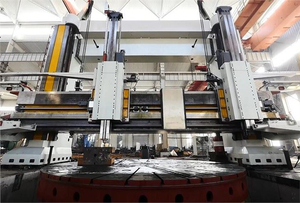
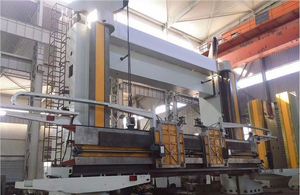
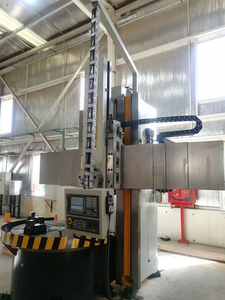
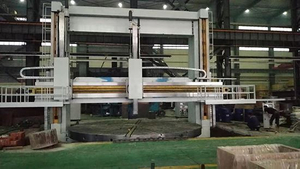
A CNC vertical lathe, also known as a vertical turning center (VTC) or CNC vertical boring machine, features a vertical spindle orientation with the workpiece rotating in a horizontal plane. This configuration has established itself as essential equipment for specific manufacturing applications.
Key characteristics of CNC vertical lathes include:
Vertical spindle orientation with rotating workpiece table
Optimal design for large, heavy, disc-shaped workpieces
Gravity-assisted workpiece loading and chip evacuation
Compact floor space requirements relative to swing capacity
Excellent rigidity for heavy cutting operations
Superior workholding for asymmetric components
CNC vertical lathes excel in applications involving:
Large diameter components: Gear blanks, ring gears, turbine components
Heavy disc-shaped parts: Brake discs, clutch plates, flywheels
Asymmetric workpieces: Components with irregular profiles requiring flexible clamping
Vertical integration needs: Operations requiring vertical loading from above
Heavy roughing operations: Initial stock removal on large castings and forgings
A CNC horizontal lathe features a horizontal spindle orientation with the workpiece mounted horizontally, typically in a chuck or between centers. This configuration represents the traditional lathe design and remains the preferred choice for many manufacturing applications.
Key characteristics of CNC horizontal lathes include:
Horizontal spindle orientation with workpiece mounted horizontally
Optimal design for long, slender shaft-type workpieces
Tailstock support for extended workpiece lengths
Excellent chip evacuation through gravity
Bar feeding capability for automated production
Wide range of workholding options
CNC horizontal lathes excel in applications involving:
Long shaft components: Drive shafts, axles, spindle shafts
High-volume production: Automotive and aerospace components requiring fast cycle times
Precision turning: Applications requiring tight tolerances on external diameters
Bar stock machining: Continuous production from bar material
Complex profile turning: Components with multiple diameters and features
Understanding the specific advantages of each configuration helps buyers make informed decisions aligned with their manufacturing requirements.
Vertical Lathes:
Can accommodate extremely large diameters (1,000mm to 10,000mm+)
Excellent for heavy workpieces due to stable base mounting
Workpieces easily loaded from above using overhead cranes
Asymmetric workpieces present minimal stability challenges
Horizontal Lathes:
Maximum diameter typically limited by chuck size (up to 1,500mm)
Workpiece weight affects chuck selection and spindle load
Long workpieces require additional support considerations
Most effective with symmetric, balanced workpieces
Vertical Lathes:
Smaller footprint relative to maximum turning diameter
Compact design makes them suitable for facilities with limited floor space
Height requirements may limit installation in low-bay facilities
Horizontal Lathes:
Longer footprint due to horizontal bed design
Require adequate length clearance for workpiece loading
More flexible height installation options
Vertical Lathes:
Workpieces loaded vertically, simplifying clamping for many geometries
Easy visual inspection during operation
Operator access to workpiece from multiple angles
Tool access from above simplifies some operations
Horizontal Lathes:
Traditional setup procedures well-understood by most machinists
Excellent chip evacuation improves surface finish potential
Standardized workholding options widely available
Automated bar feeding enables unattended operation
Vertical Lathes:
Excellent accuracy for large diameter components
Gravity provides stable reference surface for measurement
Thermal stability advantages in some configurations
Typical positioning accuracy: 0.01-0.02mm
Horizontal Lathes:
Superior precision achievable on external diameters
Traditional measurement techniques easily applied
Excellent surface finish capabilities with proper chip management
Typical positioning accuracy: 0.005-0.01mm
CNC lathe pricing varies based on multiple factors including size, precision, automation level, and control system specifications.
CNC Horizontal Lathes (CK6 series):
Small (swing under 400mm): $50,000-$150,000
Medium (swing 400-800mm): $150,000-$400,000
Large (swing over 800mm): $400,000-$1,000,000+
CNC Vertical Lathes (CK5 series):
Small (table under 1000mm): $80,000-$200,000
Medium (table 1000-2000mm): $200,000-$600,000
Large (table over 2000mm): $600,000-$3,000,000+
Power consumption: Similar consumption for equivalent capacity machines
Tooling costs: Varies by application and material requirements
Maintenance: Similar maintenance complexity and intervals
Floor space value: Vertical machines may offer better value in space-constrained facilities
The optimal choice between vertical and horizontal CNC lathes depends on your specific production requirements and operational context.
Your primary workpieces are large diameter, disc-shaped components
Workpiece weight exceeds practical limits for horizontal workholding
Floor space is limited relative to required turning diameter
You frequently machine asymmetric or irregularly shaped parts
Gravity-assisted chip evacuation is important for your materials
Your operators have experience with vertical machine operation
Your primary workpieces are long, slender shaft-type components
High-volume production with automated bar feeding is planned
Maximum precision on external diameters is critical
Fast cycle times are essential for competitiveness
Your workforce has extensive horizontal lathe experience
Standardized workholding and tooling availability is important
Chinese manufacturers have established themselves as major global suppliers of both vertical and horizontal CNC lathes. Major manufacturers offer machines meeting international quality standards at competitive price points.
When sourcing from China, verify:
Control system options (Siemens, Fanuc, Mitsubishi supported)
Machine accuracy specifications and testing procedures
Warranty terms and local service support availability
Reference installations in similar industries
Export documentation and logistics experience
Selecting between vertical and horizontal CNC lathes requires careful analysis of your specific requirements. Our engineering team provides consultation services to help buyers make optimal equipment selections.
We offer:
Application analysis and requirement clarification
Machine specification development
Supplier qualification and quotation comparison
Quality verification and installation support
Ready to discuss your CNC lathe requirements? Contact our team at inquiry@starfishmachine.com for personalized consultation on selecting the optimal machine configuration for your manufacturing operations.