- All
- Product Name
- Product Keyword
- Product Model
- Product Summary
- Product Description
- Multi Field Search
Views: 0 Author: Site Editor Publish Time: 2026-05-18 Origin: Site


Vertical boring mills represent critical equipment for large-scale precision machining operations, capable of producing massive components with exceptional accuracy and surface finish quality. Understanding vertical boring mill pricing, specifications, and supplier options enables industrial buyers to make informed equipment acquisition decisions that deliver optimal value for demanding applications.
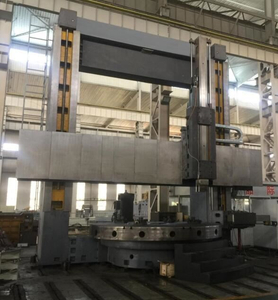
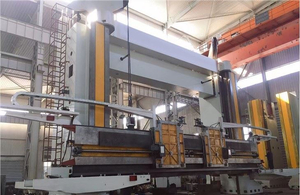
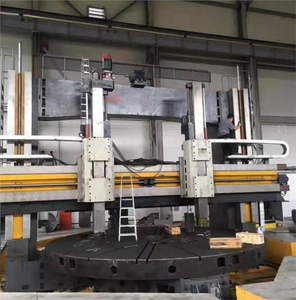
Vertical boring mills, also known as vertical turning and boring centers, specialize in machining large diameter workpieces that exceed the capacity of conventional lathes. The vertical machine configuration positions the workpiece on a rotating table, with the cutting tool assembly moving vertically and radially to machine cylindrical and face surfaces with precision.
This equipment category serves essential roles in manufacturing sectors requiring large heavy components including oil and gas equipment, power generation hardware, mining machinery, marine propulsion systems, and heavy industrial equipment. The scale of these applications demands machines with substantial capacity, exceptional rigidity, and advanced control systems that enable efficient processing of complex geometries.
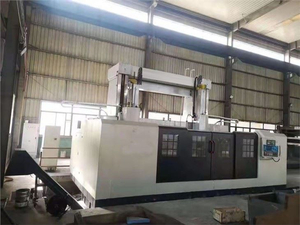
Modern CNC vertical boring mills integrate sophisticated control technology with robust mechanical construction, delivering precision that rivals smaller machine tools while accommodating workpieces weighing from several tons to hundreds of tons. This combination of capacity and precision distinguishes vertical boring mills as specialized equipment for demanding applications.
Vertical boring mill prices span an enormous range reflecting the diversity of machine capacities, specifications, and capabilities available in the market. Understanding this pricing landscape helps buyers establish realistic budgets and identify options that meet their specific requirements.
Small Capacity Machines: Vertical boring mills with table diameters under 1.5 meters typically range from approximately $150,000 to $400,000 for new equipment. These machines serve medium-scale applications while maintaining accessibility for facilities with limited floor load capacity or budget constraints.
Medium Capacity Machines: Table diameters from 1.5 to 2.5 meters represent the most common capacity range, with new equipment prices typically falling between $300,000 and $800,000. This range accommodates diverse industrial applications while maintaining reasonable installation and operational requirements.
Large Capacity Machines: Table diameters from 2.5 to 4 meters command prices from approximately $600,000 to $1,500,000 for standard configurations. These machines require substantial facility investments including reinforced foundations and significant floor space.
Extra-Large Capacity Machines: Table diameters exceeding 4 meters represent specialized equipment for the largest industrial components, with prices potentially exceeding $2,000,000 for high-specification machines. These purchases require comprehensive justification based on production requirements and facility capabilities.
Multiple factors beyond basic capacity influence vertical boring mill pricing, requiring careful analysis to understand cost variations across options.
Table Load Capacity: Maximum workpiece weight capacity significantly impacts machine construction requirements and pricing. Machines designed for heavier loads require more robust structures, larger bearings, and more powerful drive systems, all contributing to higher costs.
Spindle Power and Torque: Cutting capability depends substantially on spindle power and torque characteristics, with higher power enabling faster material removal rates on difficult materials. Premium power ratings command higher prices but can substantially reduce cycle times for demanding applications.
Positioning Accuracy: Higher precision specifications require more sophisticated construction, finer lead screws or linear drives, and advanced control compensation. Machines specified for micron-level accuracy cost substantially more than standard industrial precision machines.
Control System Complexity: Advanced CNC control systems offer sophisticated programming, networking, and automation capabilities that enhance productivity and flexibility. Control options range from basic two-axis systems to complex multi-axis configurations with live tooling and automatic tool changing.
Customization and Options: Numerous optional features including tailstocks, angle milling heads, specialized tool holders, probing systems, and enhanced chip management systems add to base pricing. Careful specification ensures that purchased options align with actual requirements.
Buyers weighing new versus used equipment options should carefully evaluate the trade-offs involved in each approach.
New Equipment Advantages: New vertical boring mills offer the latest technology, full warranty coverage, manufacturer support infrastructure, and customization options that precisely match requirements. New equipment provides predictable performance and support relationships without historical usage concerns.
New Equipment Considerations: The primary disadvantage of new equipment is higher initial cost. Lead times for custom-configured machines can extend six months or longer, limiting responsiveness to immediate requirements.
Used Equipment Advantages: Significant cost savings compared to new equipment enable either budget efficiency or acquisition of higher-capacity machines than new equipment budgets would allow. Some specialty machines may be more readily available in used markets.
Used Equipment Considerations: Used vertical boring mills require thorough evaluation of machine condition, accumulated usage, maintenance history, and remaining service life. Limited warranty coverage and uncertain support availability create risk factors that require careful assessment.
Certified Pre-Owned Options: Some manufacturers and third-party rebuilders offer certified pre-owned equipment with warranty coverage, inspection documentation, and refurbishment services. These options provide middle-ground positioning between new and as-is used equipment.
Comprehensive specification review ensures that selected vertical boring mills meet application requirements while avoiding over-specification that increases costs without proportional benefit.
Table Diameter and Swing Clearance: These fundamental dimensions determine the maximum workpiece size the machine can accommodate. Specifications should include table diameter, maximum swing diameter, and distance from table to cross rail.
Maximum Workpiece Weight: Table load capacity must accommodate the heaviest parts anticipated in production. Conservative capacity selection reduces risk of capacity limitations but adds unnecessary cost if maximum loads are rarely encountered.
Spindle Speed and Power: Speed range determines the range of cutting conditions achievable, while power and torque ratings establish the material removal rates possible. These specifications should align with the materials and cutting strategies planned for production.
Travel Ranges: X-axis (cross travel) and Z-axis (vertical travel) dimensions determine the range of features the machine can machine. Adequate travel prevents capacity limitations that would require multiple setups.
Accuracy Specifications: Positioning accuracy and repeatability specifications should exceed application requirements with appropriate margin. Accuracy specifications should include both positioning and切削 accuracy where relevant.
Supplier selection significantly impacts the value derived from vertical boring mill investments, with support infrastructure and service capabilities often more important than initial equipment pricing.
Manufacturer Reputation: Established manufacturers with extensive industry experience offer proven product designs and accumulated support infrastructure. Track record in specific industry sectors provides insight into relevant application experience.
Support Infrastructure: Geographic proximity of service personnel affects response times for support requests. Manufacturers with regional service networks offer advantages for buyers in those regions.
Spare Parts Availability: Machine downtime costs typically far exceed the value of spare parts inventory, making parts availability a critical consideration. Established manufacturers maintain comprehensive parts inventories with reasonable delivery timelines.
Training and Documentation: Comprehensive operator and maintenance training maximizes machine utilization while reducing errors. Complete documentation including electrical schematics, PLC programs, and maintenance procedures enables effective self-support.
Vertical boring mills serve diverse industrial applications that drive equipment specification and supplier selection.
Oil and Gas Industry: Large valves, flanges, pump casings, and drilling equipment components require the capacity and precision that vertical boring mills provide. Equipment in this sector often requires specialized features including explosion-proof controls or corrosion-resistant configurations.
Power Generation: Turbine components, generator housings, and transformer hardware represent typical vertical boring mill applications in power generation. Precision requirements in this sector demand high-accuracy machines with excellent thermal stability.
Heavy Manufacturing: Mining equipment, construction machinery, and agricultural equipment components often exceed the capacity of conventional machine tools. Vertical boring mills provide the necessary capacity with precision appropriate for demanding industrial applications.
Marine Industry: Ship propulsion systems, hull hardware, and marine equipment components frequently require large-scale precision machining that vertical boring mills provide. Specialized certifications and documentation may be required for marine applications.
Vertical boring mill acquisition costs represent only a portion of total ownership costs that should factor into equipment purchasing decisions.
Installation Costs: Foundation preparation, machine installation, and leveling can add substantial costs to equipment acquisition. Facility modifications including power supply upgrades, chip management systems, and coolant handling require budgeting.
Energy Consumption: Large CNC machines consume significant electrical power during operation. Energy-efficient machines may offer operating cost advantages despite higher initial pricing.
Tooling Investment: Vertical boring mill tooling can represent substantial investment, with specialized holders, boring bars, and cutting inserts required for diverse applications. Tooling requirements should factor into total equipment acquisition budgeting.
Maintenance Costs: Ongoing maintenance including scheduled service, replacement parts, and calibration affects long-term operating costs. Equipment designs with accessible maintenance points and reasonable parts costs influence maintenance cost profiles.
Effective negotiation can substantially reduce effective pricing while strengthening long-term supplier relationships.
Competitive Bidding: Soliciting quotes from multiple qualified suppliers enables direct price comparison and creates negotiating leverage. Specifications should be consistent across suppliers to ensure valid comparisons.
Value Emphasis: Framing discussions around total value rather than purchase price enables consideration of lifecycle costs, support quality, and relationship potential. Suppliers respond favorably to buyers who demonstrate understanding of these factors.
Volume and Commitment: Multi-machine purchases or long-term commitment agreements often enable substantial discounts. Buyers should evaluate the value of these commitments against associated risks.
Timing Considerations: Equipment manufacturers may offer better pricing at certain times of year based on production schedules and inventory management objectives. Understanding supplier cycles can identify favorable negotiation timing.
Vertical boring mill purchases represent substantial investments that require careful evaluation of equipment capabilities, supplier qualifications, and total cost implications. Comprehensive analysis before commitment reduces risks while identifying options that deliver optimal value for specific applications.
Buyers who approach vertical boring mill acquisition with systematic evaluation frameworks and realistic expectations can achieve successful outcomes that enhance manufacturing capabilities for years to come. The investment in thorough evaluation pays dividends through superior equipment performance, reliable support, and productive long-term supplier relationships.
Ready to explore vertical boring mill options for your manufacturing requirements? Our applications team can help you evaluate specifications, identify qualified suppliers, and develop acquisition strategies that deliver optimal value. Contact us today to discuss your vertical boring mill needs and discover how the right equipment investment can enhance your manufacturing capabilities.