- All
- Product Name
- Product Keyword
- Product Model
- Product Summary
- Product Description
- Multi Field Search
Views: 0 Author: Site Editor Publish Time: 2026-07-09 Origin: Site


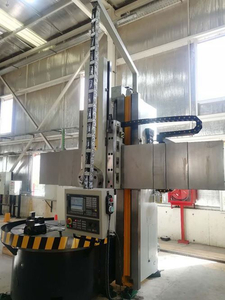
The global railway industry is experiencing an unprecedented expansion. From high-speed rail networks in Asia to urban metro systems in the Middle East and freight rail upgrades in Africa, rail transit manufacturing has become one of the most capital-intensive and technology-driven sectors in heavy industry. At the heart of this manufacturing ecosystem lies a machine that processes the largest, heaviest, and most critical components: the CNC vertical lathe.
For procurement managers, plant directors, and supply chain specialists in the railway sector, selecting the right CNC vertical lathe is not just a purchasing decision â it is a strategic investment that directly affects production throughput, component quality, regulatory compliance, and ultimately the safety of millions of passengers.
This guide provides a complete procurement framework for CNC vertical lathes used in railway and rail transit parts manufacturing. We cover critical component applications, CK5 series model selection, pricing analysis from China manufacturers, quality standards, and total cost of ownership calculations to help you make an informed buying decision.
Understanding what parts require vertical lathe machining is the first step in building a compelling business case for your procurement team.
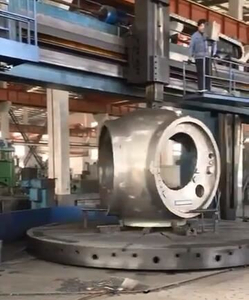
The bogie (or truck) is the chassis assembly that supports the rail vehicle body on its wheelsets. Bogie frames require large-diameter facing and boring operations that only vertical lathes can handle efficiently. Components include:
Bogie side frames: Large rectangular castings requiring precision flat surfacing and bore machining
Suspension spring seats: Machined to tight tolerances for consistent ride quality
Brake disc mounting surfaces: Critical flatness requirements for high-speed braking systems
Axle box interfaces: Precision bores that must align perfectly with wheelset geometry
While dedicated wheelset lathes handle the wheel profile, CNC vertical lathes process the accompanying components:
Wheel center discs: Large-diameter discs requiring balanced machining
Axle bearing seats: Precision cylindrical surfaces with surface finish requirements of Ra 0.8 or better
Gear box mounting flanges: Complex geometries with multiple bolt patterns
Brake disc carriers: Thin-wall components requiring careful clamping strategies
Electric traction systems in modern EMUs (Electric Multiple Units) and locomotives depend on precision housings:
Motor end shields: Large diameter covers with concentricity requirements under 0.02mm
Gearbox casings: Multi-axis machining for bearing bores and sealing surfaces
Coupling adapter plates: Interface components between motor and gearset
Beyond rolling stock, railway infrastructure manufacturing also relies on vertical lathes:
Turntable bearing rings: Large diameter slewing bearings for locomotive turntables
Track switch plates: Wear-resistant steel plates with complex geometries
Signal equipment bases: Precision-machined mounting platforms
Bridge and expansion joint components: Large structural pieces requiring flat surface machining
Selecting the right machine size is critical. Railway components range from medium-sized gearbox housings to massive wheelset discs, requiring different machine specifications.
Model | Max Turning Dia. (mm) | Max Workpiece Height (mm) | Max Workpiece Weight (kg) | Spindle Power (kW) | Best Application |
|---|---|---|---|---|---|
CK5112 | 1,250 | 1,000 | 3,000 | 30 | Small bogie components, brake parts |
CK5116 | 1,600 | 1,250 | 6,000 | 37 | Wheelset discs, gear housings |
CK5123 | 2,300 | 1,600 | 12,000 | 55 | Full bogie frames, large motor housings |
CK5126 | 2,600 | 1,600 | 16,000 | 75 | Large turntable rings, heavy axle components |
CK5132 | 3,200 | 2,000 | 25,000 | 90 | Infrastructure components, special vehicles |
For mid-size rail component manufacturers, the CK5116 offers the best balance of capacity, precision, and investment cost. Its 1,600mm turning diameter covers approximately 70% of standard rail vehicle components, while its 6-ton load capacity handles complete bogie sub-assemblies.
Manufacturers producing high-speed train components typically invest in both CK5116 and CK5123 machines â the former for routine production and the latter for oversize or special project work.
Railway component manufacturing demands specifications that exceed general-purpose machining. Here are the key technical parameters to evaluate when requesting quotations from vertical lathe manufacturers:
Radial runout: Must be â¤0.01mm for bearing seat machining
Axial displacement: â¤0.015mm for face machining operations
Spindle bearing type: Hydrostatic or precision angular contact bearings preferred
Continuous torque: Must maintain rated torque at low RPM for heavy interrupted cuts
Way type: Cast iron slideways with PTFE coating (for vibration damping) or linear guideways (for speed)
Positioning accuracy: ±0.02mm per axis for railway grade components
Repeatability: ±0.01mm for production consistency
Rapid traverse: Minimum 8m/min for non-cutting movements
Railway component programs are complex, often involving:
Multi-step roughing and finishing cycles
Automatic tool compensation for wear management
In-process gauging interfaces
Fanuc Siemens or FANUC 0i-TF controls preferred for railway workshops
Network connectivity (MTConnect/OPC-UA) for MES integration
Pricing varies significantly based on configuration, brand, and origin. Here is a realistic price breakdown for railway-grade CNC vertical lathes sourced from China manufacturers:
Configuration | CK5112 Price Range | CK5116 Price Range | CK5123 Price Range |
|---|---|---|---|
Basic (Manual tool post) | $45,000 â $60,000 | $65,000 â $85,000 | $95,000 â $130,000 |
Standard (4-station power turret) | $65,000 â $85,000 | $90,000 â $120,000 | $130,000 â $170,000 |
Full-spec (ATC + C-axis + live tooling) | $95,000 â $120,000 | $130,000 â $170,000 | $180,000 â $250,000 |
1. CNC control brand: FANUC adds $15,000-$25,000 vs. Chinese controls
2. Spindle bearing grade: P4 vs. P5 precision affects price by 20-30%
3. Coolant system: Flood coolant with chip conveyor adds $5,000-$8,000
4. Railway-specific tooling: Special fixture interfaces and clamping systems
5. Certification and documentation: IRIS/ISO 22163 compliance documentation
6. Installation and training: Factory acceptance testing plus on-site commissioning
Beyond the purchase price, railway procurement teams must calculate:
Annual maintenance: 3-5% of machine value
Tooling consumption: $20,000-$50,000/year depending on material
Energy consumption: 15-30kW average, 8-12 MWh annually
Floor space: 15-35 sq.m including operator access
Downtime cost: $2,000-$8,000/hour depending on production bottleneck position
The railway industry is one of the most heavily regulated manufacturing sectors globally. Your CNC vertical lathe purchase must support compliance with these standards:
The International Railway Industry Standard (IRIS), now ISO 22163, requires manufacturers to demonstrate:
Full traceability of machining parameters per component
Statistical Process Control (SPC) capability
First Article Inspection (FAI) documentation
Equipment calibration and maintenance records
For manufacturers performing both machining and welding of rail components, the lathe's machining precision directly affects weld joint preparation and fit-up.
Regional standards also apply:
AAR M-1002: Association of American Railways specifications for freight car components
GB/T 25334: Chinese standard for railway rolling stock manufacturing
EN 15313: European standard for railway axle requirements
When requesting quotations, ensure the supplier provides:
Machine accuracy certificate (calibrated per ISO 230)
Material certificates for castings and structural components
CNC control software license documentation
Spare parts list with 5-year availability guarantee
Reference list of existing railway industry customers
China has emerged as the world's leading source of competitive CNC vertical lathes, with manufacturers offering 40-60% cost savings compared to European and Japanese equivalents. However, quality varies significantly. Here is your evaluation framework:
These manufacturers have established track records in railway supply chains:
Qinchuan Machine Tool: CK5116/CK5123 specialist, multiple railway contracts
Dalian Machine Tool Group (DMTG): Full product line, heavy-duty focus
Wuhan Heavy Duty Machine Tool: Large-bore vertical lathe specialist
Shenyang Machine Tool (SMTCL): High-volume production, broad export base
Smaller companies with niche railway expertise:
Often more flexible on customization
May offer better price-performance ratios
Require more thorough due diligence
Can provide dedicated railway configurations
1. Production facility audit: CNC assembly lines, clean rooms for spindle assembly
2. Testing capability: Laser interferometer, ball bar testing, dynamic balancing equipment
3. Quality management: ISO 9001 + IRIS certification status
4. Reference installations: Visit existing railway customer sites
5. After-sales infrastructure: Service engineer availability, spare parts inventory
6. Financial stability: Company age, export volume, credit ratings
Standard catalog machines often require customization for railway production. Common OEM modifications include:
Hydraulic clamping systems: For thin-wall ring components
Vacuum chucks: For finished surface protection
Modular fixturing: Quick-change systems for multi-variant production
Custom faceplate adapters: For non-standard component geometries
High-pressure coolant: 20-70 bar through-tool coolant for deep hole drilling
Chip conveyor integration: Automatic swarf removal for unmanned operation
Coolant filtration: 25-micron filtration for bearing-quality surface finishes
Tool breakage detection: Laser or acoustic monitoring systems
In-process gauging: Renishaw or Equator gauging systems
Force monitoring: Spindle load monitoring for tool wear prediction
Vibration sensors: Chatter detection and suppression
Railway component manufacturing typically runs 2-3 shifts per day, making equipment uptime critical. Implement these maintenance protocols:
Check and top up way lubrication levels
Inspect coolant concentration and pH
Clean chip conveyor and swarf tray
Verify hydraulic system pressure
Check emergency stop function
Inspect way wiper condition and replace if worn
Check spindle bearing temperature trends
Verify axis positioning accuracy with test cuts
Inspect ball screw for backlash
Clean electrical cabinet filters
Full axis accuracy check using laser interferometer
Spindle runout measurement and trending
Hydraulic system oil analysis
Electrical connection torque check
CNC control backup and software update
Complete machine geometry check and adjustment
Spindle bearing preload verification
Ball screw preload check and adjustment
Way surface inspection for wear patterns
Full preventive maintenance per manufacturer schedule
International buyers need to plan the logistics of importing heavy machinery from China. Here is a practical overview:
FCL (Full Container Load): CK5112 typically fits in a 40ft container. CK5116 and larger may require flat rack or break bulk shipping
Shipping cost range: $3,000-$15,000 depending on machine size and destination port
Transit time: 15-45 days depending on route (Southeast Asia: 7-15 days; Middle East: 20-25 days; Europe: 30-35 days; Americas: 25-40 days)
Insurance: 0.3-0.5% of CIF value, mandatory for heavy machinery
HS Code: 8458.11 (CNC vertical lathes) â verify with your customs broker
Import duties: Vary by country (0-12% typical, some FTA countries have 0%)
CE marking: Required for EU markets â confirm with manufacturer before ordering
Documentation needed: Commercial invoice, packing list, bill of lading, certificate of origin, insurance certificate
Before delivery, ensure your facility is prepared:
Foundation: Reinforced concrete pad, minimum 1.5Ã machine weight capacity
Power supply: Three-phase power matching machine requirements (typically 380V/50Hz or 440V/60Hz)
Environmental controls: Temperature range 15-30°C, humidity below 75%
Crane access: Overhead crane or mobile crane for unloading (minimum 5-ton capacity for CK5116)
For procurement teams building business cases, here is a realistic ROI model:
Machine cost: $120,000 (CK5116, standard railway configuration)
Installation and training: $15,000
Initial tooling package: $25,000
Total first-year investment: $160,000
Production capacity: 3-5 components per shift (depending on complexity)
Component value: $500-$5,000 per piece (depending on size and material)
Annual production value: $800,000 - $2,000,000 (single shift operation)
Gross margin on machined components: 30-50%
Conservative estimate: 12-18 months (single shift, conservative pricing)
Optimistic estimate: 6-9 months (double shift, premium component mix)
10-year total return: 500-800% of initial investment
Based on experience with railway workshop procurement projects, here are mistakes that cost manufacturers significant time and money:
1. Buying on price alone: The cheapest lathe often costs 2-3Ã more in maintenance, downtime, and quality issues over its lifetime
2. Ignoring infrastructure requirements: Ensure your facility has adequate power supply, foundation, and environmental controls
3. Skipping factory acceptance testing (FAT): Always inspect and test-run the machine at the manufacturer's facility before shipment
4. Underestimating training needs: Budget for 4-6 weeks of operator and maintenance training
5. Neglecting spare parts strategy: Critical spares should be ordered with the machine, not after the first breakdown
6. Overlooking software compatibility: Ensure the CNC control communicates with your existing MES/ERP systems
7. No scalability planning: Consider future expansion needs â can the supplier provide matching machines?
Ready to evaluate CNC vertical lathes for your railway manufacturing operation? Here is the recommended process:
1. Prepare your requirements specification: Component drawings, material specifications, tolerances, production volumes
2. Request quotations from 3-5 qualified manufacturers: Use the evaluation checklist above
3. Schedule factory visits: Inspect manufacturing facilities and reference installations
4. Conduct technical clarification meetings: Address specific railway application requirements
5. Negotiate commercial terms: Payment schedule, warranty, delivery, training package
6. Place order with clear specifications: Document all custom configurations and performance guarantees
For personalized assistance with CNC vertical lathe procurement for railway applications, our engineering team can help you specify the right machine configuration, connect you with qualified manufacturers, and support your technical evaluation process.
Contact Our Railway Machining Specialists â
The CNC vertical lathe is the backbone of railway component manufacturing, processing everything from bogie frames to traction motor housings with the precision and reliability that railway safety demands. Whether you are equipping a new production facility or expanding existing capacity, the investment decisions you make today will determine your competitive position for the next decade.
The Chinese manufacturing ecosystem offers world-class CNC vertical lathes at competitive prices, with CK5 series machines proving their capability across railway applications globally. The key to success lies in thorough technical evaluation, realistic total cost analysis, and partnership with manufacturers who understand the unique demands of railway production.
Start your procurement process with clear specifications, qualified supplier shortlists, and a commitment to quality that matches the safety-critical nature of railway manufacturing. The return on this investment â both financial and operational â will far exceed the effort required to do it right.