- All
- Product Name
- Product Keyword
- Product Model
- Product Summary
- Product Description
- Multi Field Search
Views: 0 Author: Site Editor Publish Time: 2026-07-16 Origin: Site


The global power generation industry is undergoing rapid transformation. Whether you are manufacturing components for steam turbines, gas turbines, hydroelectric generators, or nuclear reactor systems, precision machining plays a critical role in ensuring safety, efficiency, and long service life of rotating equipment. Among all machine tools used in power generation workshops, the CNC horizontal lathe (CK6 series) remains the most versatile and widely adopted solution for turning large-diameter shafts, rotors, valve bodies, and flanged components.
This procurement guide covers everything buyers need to know about selecting, evaluating, and purchasing CNC horizontal lathes specifically for power generation applications. From technical specifications and pricing to China manufacturer selection and import logistics, you will find actionable data and expert insights to make an informed investment decision.
Power generation equipment demands extremely tight tolerances, superior surface finishes, and material integrity under high temperature and pressure conditions. Here are the most common components produced on CK6 horizontal lathes:
Component | Material | Typical Dimensions | Tolerance | Surface Finish |
|---|---|---|---|---|
Steam turbine rotor | CrMoV alloy steel (X22CrMoV12-1) | Ã200â1,200 mm à L3,000â8,000 mm | IT5âIT6 | Ra 0.4â0.8 µm |
Generator shaft | 34CrNiMo6 / 30Cr2Ni4MoV | Ã300â1,500 mm à L2,500â6,000 mm | IT6 | Ra 0.8â1.6 µm |
Valve bodies (stop/control) | WC6/WC9/WC12 cast steel | Ã100â600 mm | IT7 | Ra 1.6â3.2 µm |
Turbine diaphragms | 1Cr13 / 2Cr13 stainless | Ã500â2,000 mm | IT6âIT7 | Ra 0.8â1.6 µm |
High-pressure flanges | F22 / F91 forged steel | Ã200â800 mm | IT7 | Ra 1.6 µm |
Coupling shafts | 42CrMo4 / 34CrNiMo6 | Ã150â500 mm à L1,000â3,000 mm | IT6 | Ra 0.4â0.8 µm |
Hydro turbine runner shaft | 0Cr13Ni4Mo stainless steel | Ã400â1,800 mm à L2,000â5,000 mm | IT6 | Ra 0.8 µm |
Each component requires specific machining strategies. For example, rotor turning involves multi-pass roughing followed by semi-finishing and finishing, often with constant surface speed control to maintain consistent Ra values across the entire length. Valve body machining requires multi-axis capability for complex bore profiles and sealing surfaces.
Not all CNC horizontal lathes are suitable for power generation work. The following table outlines recommended CK6 series specifications for different power generation applications:
Specification | CK6163 | CK6180 | CK61100 | CK61125 | CK61160 | CK61200 |
|---|---|---|---|---|---|---|
Max turning diameter | Ã630 mm | Ã800 mm | Ã1,000 mm | Ã1,250 mm | Ã1,600 mm | Ã2,000 mm |
Max turning length | 1,500â4,000 mm | 2,000â6,000 mm | 3,000â8,000 mm | 3,000â10,000 mm | 4,000â12,000 mm | 4,000â15,000 mm |
Max workpiece weight | 1,000 kg | 2,500 kg | 5,000 kg | 8,000 kg | 15,000 kg | 25,000 kg |
Spindle bore | Ã105 mm | Ã130 mm | Ã155 mm | Ã180 mm | Ã220 mm | Ã280 mm |
Main motor power | 15/18.5 kW | 22/30 kW | 37/45 kW | 55/75 kW | 75/90 kW | 110/132 kW |
Spindle speed range | 10â1,600 rpm | 8â1,250 rpm | 6â1,000 rpm | 4â800 rpm | 3â630 rpm | 2â500 rpm |
Positioning accuracy | ±0.02 mm | ±0.02 mm | ±0.025 mm | ±0.03 mm | ±0.03 mm | ±0.04 mm |
Price range (FOB China) | $45,000â$85,000 | $80,000â$150,000 | $150,000â$280,000 | $250,000â$420,000 | $400,000â$650,000 | $600,000â$950,000 |
Important note for buyers: For power generation rotor machining (turbine rotors, generator shafts), you typically need at least a CK61100 or larger with a minimum 3,000 mm turning length and 5,000 kg workpiece capacity. Smaller machines like the CK6163 are better suited for valve bodies, flanges, and coupling components.
Selecting the correct machine requires careful analysis of your production requirements. Follow this step-by-step framework:
Step 1: Define Your Component Portfolio
Before evaluating machines, compile a complete list of components you need to turn. Consider:
Maximum diameter and length of your largest workpiece (this determines machine size)
Material types you will machine (affects spindle power, torque, and rigidity requirements)
Tolerance requirements (dictates machine accuracy class)
Annual production volume (determines whether you need single-shift or 24/7 capability)
Step 2: Calculate Required Spindle Power and Torque
Power generation materials are typically high-strength alloy steels with significant cutting forces. Use this formula:
Cutting Power (kW) = Specific Cutting Force à Material Removal Rate / 60
For common power generation materials:
CrMoV steels: Specific cutting force â 2,200â2,500 N/mm²
Austenitic stainless steels: Specific cutting force â 2,000â2,300 N/mm²
Duplex stainless steels: Specific cutting force â 2,400â2,800 N/mm²
Nickel-based superalloys (Inconel): Specific cutting force â 2,800â3,500 N/mm²
Step 3: Evaluate Tailstock and Steady Rest Requirements
For long rotor and shaft turning, you need:
Hydraulic tailstock with programmable pressure (minimum 5,000 kg thrust force)
Follow rest (lunette suivant) for diameters up to 400 mm
Fixed steady rest (lunette fixe) for diameters up to 600â800 mm
Multiple steady rest positions along the bed (minimum 3 positions)
Step 4: Check CNC Control Compatibility
Most power generation workshops standardize on Siemens 840D sl, FANUC 31i-B, or Heidenhain iTNC 640 controls. Ensure your CNC system supports:
G32 threading cycle for screw threads on valve components
Polar coordinate interpolation for non-circular profiles
Tool center point control (TCP) for complex turning operations
Direct torque control for consistent cutting force during roughing
Pricing varies significantly based on machine size, configuration, and manufacturer tier. Below is a comprehensive 2026 pricing guide:
Machine Category | Typical Specs | Price Range (FOB China) | Manufacturer Tier |
|---|---|---|---|
Entry-level CK6163 | Ã630 Ã 2,000 mm, FANUC 0i-TF | $45,000â$65,000 | Tier 2/3 Chinese |
Mid-range CK6180 | Ã800 Ã 3,000 mm, Siemens 828D | $80,000â$130,000 | Tier 2 Chinese |
Production CK61100 | Ã1,000 Ã 5,000 mm, Siemens 840D sl | $180,000â$260,000 | Tier 1 Chinese / Joint venture |
Heavy-duty CK61125 | Ã1,250 Ã 8,000 mm, FANUC 31i-B | $280,000â$400,000 | Tier 1 Chinese |
Large CK61160 | Ã1,600 Ã 10,000 mm, Siemens 840D | $420,000â$620,000 | Tier 1 Chinese / European hybrid |
Extra-large CK61200 | Ã2,000 Ã 15,000 mm, Custom configuration | $650,000â$950,000 | Tier 1 Chinese (limited suppliers) |
Additional costs to budget for:
Steady rests (2â3 sets): $8,000â$25,000
Hydraulic tailstock upgrade: $5,000â$12,000
Coolant through-spindle system: $3,000â$8,000
Chip conveyor (hinged belt type): $4,000â$10,000
Tool setting probe (Renishaw/Blum): $6,000â$15,000
Shipping (FOB to major ports): $15,000â$45,000 depending on machine size
Insurance (1.5% of CIF value): $1,500â$15,000
China has become the world's largest producer of CNC horizontal lathes. For power generation applications, you need manufacturers with proven experience in heavy-duty, high-precision machining. Here is a tier-based evaluation:
Manufacturer Tier | Characteristics | Price Premium | Lead Time | Best For |
|---|---|---|---|---|
Tier 1: Major state-owned/privatized groups | ISO 9001/AS9100, CE, in-house foundry, 30+ years experience | +30â50% over Tier 2 | 4â6 months | Critical power generation components, nuclear grade |
Tier 2: Established private manufacturers | ISO 9001, CE, experienced engineering team, good QC | Baseline pricing | 2.5â4 months | General power generation components, high volume |
Tier 3: Smaller workshops | Basic ISO, limited testing capability | -15â25% vs Tier 2 | 1.5â2.5 months | Non-critical components, valve bodies, flanges |
Trading companies | No manufacturing, markup on resold machines | +10â20% markup | Variable | Avoid for power generation purchases |
When evaluating manufacturers, verify:
Whether they have supplied machines to power generation companies (ask for reference list)
Their machine bed casting process (resin sand casting with aging treatment is minimum for power generation grade)
Spindle bearing brand (FAG, NSK, or SKF required for precision work)
Ball screw grade (C3 or better for positioning accuracy)
Laser calibration and ballbar testing procedures before shipment
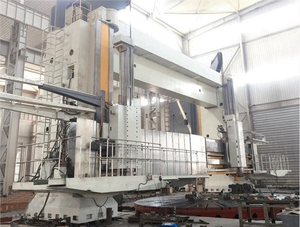
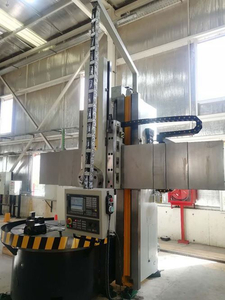
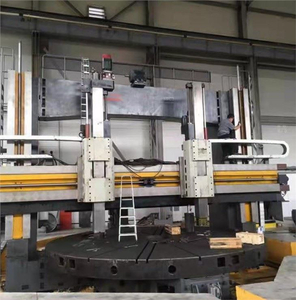
Many power generation workshops operate both horizontal and vertical lathes. Understanding when to use each type is essential:
Criteria | CK6 Horizontal Lathe | CK5 Vertical Lathe |
|---|---|---|
Best for | Long shafts, rotors, axles | Large diameter, short/flat components |
Max diameter practical | Up to Ã2,000 mm (with special config) | Up to Ã5,000+ mm (standard) |
Max length practical | Up to 15,000 mm | Up to 2,000 mm (height) |
Workpiece loading | Between centers or chuck | Faceplate mounting |
Gravity effect on accuracy | Shaft deflection possible (use steady rests) | Minimal (vertical orientation) |
Typical price range | $45,000â$950,000 | $80,000â$1,200,000 |
Floor space | Long footprint | Compact footprint, taller |
Rule of thumb: If your component's length-to-diameter ratio exceeds 4:1, a horizontal lathe is the better choice. For disc-type components (diaphragms, large flanges, turbine casings), a vertical lathe provides superior rigidity and accuracy. Many power generation workshops invest in both types for complete in-house capability.
The purchase price is only part of the total investment. Consider these additional cost factors over a 10-year ownership period:
Cost Category | Annual Cost | 10-Year Total | Notes |
|---|---|---|---|
Machine purchase (amortized) | $25,000â$90,000 | $250,000â$900,000 | Based on CK6180âCK61200 |
Foundation and installation | One-time $8,000â$35,000 | $8,000â$35,000 | Heavy-duty machines need reinforced foundations |
Electrical installation | One-time $5,000â$15,000 | $5,000â$15,000 | Three-phase power, voltage stabilizers |
Cutting tools (carbide inserts) | $12,000â$45,000 | $120,000â$450,000 | Power generation alloys consume more inserts |
Spindle bearing replacement | Every 3â5 years | $8,000â$25,000 | Critical for maintaining accuracy |
Ball screw replacement | Every 5â8 years | $5,000â$18,000 | Depends on usage intensity |
Way cover and seal replacement | $2,000â$6,000/year | $20,000â$60,000 | Chip and coolant protection |
Coolant and lubricants | $3,000â$8,000/year | $30,000â$80,000 | Semi-synthetic cutting fluid |
Preventive maintenance | $4,000â$12,000/year | $40,000â$120,000 | Includes labor and parts |
Energy consumption | $6,000â$18,000/year | $60,000â$180,000 | Based on 8-hour daily operation |
Total 10-year TCO | $541,000â$1,865,000 | Varies by machine size and utilization |
Power generation components demand higher precision than general machining, so maintenance discipline is non-negotiable:
Daily Maintenance Checklist
Check and replenish hydraulic oil level (use ISO VG 46 or manufacturer-specified grade)
Inspect coolant concentration (maintain 6â9% for alloy steel machining)
Verify way lubrication pressure and flow rate
Clean chip conveyor and remove accumulated swarf
Check spindle bearing temperature (should not exceed 55°C during continuous cutting)
Inspect tool holder clamping force
Weekly Maintenance
Clean electrical cabinet filters (dust accumulation causes overheating of servo drives)
Check tailstock quill runout (should be within 0.01 mm)
Inspect steady rest pad wear and adjust clearance
Verify spindle thermal growth compensation settings
Monthly Maintenance
Check ball screw backlash (compensate or replace if exceeding 0.015 mm)
Inspect way wipers and covers for damage
Clean coolant tank and replace contaminated fluid
Verify geometric accuracy using test bar (cylindricity check)
Annual Overhaul
Full machine calibration using laser interferometer
Spindle bearing preload adjustment or replacement
Ball screw preload check
Way surface inspection and regrounding if necessary
CNC system backup and parameter verification
OEM and Custom Configuration Options
When purchasing a CNC horizontal lathe for power generation, standard configurations may not meet all requirements. Most China manufacturers offer OEM customization including:
Extended bed length: Custom lengths beyond standard offerings (up to 15,000 mm for rotor machining)
Increased spindle bore: Ã200â400 mm for through-bar work on long shafts
Heavy-duty spindle: Larger bearings (NN30 series) for increased radial rigidity
Special voltage/frequency: 440V/60Hz, 400V/50Hz, or custom configurations for your region
Enhanced chip management: High-volume chip conveyors for heavy roughing operations
Coolant through-spindle: High-pressure (20â70 bar) internal coolant for deep hole turning
Crash protection systems: Force monitoring and automatic spindle stop to prevent workpiece damage
Remote diagnostics: IoT-enabled machines for real-time monitoring by the manufacturer's service team
Lead time for custom configurations: Typically 4â8 months depending on complexity. Plan your procurement timeline accordingly, especially for turnkey power generation projects with strict commissioning deadlines.
International buyers need to understand the complete import process:
Step | Action | Timeline | Cost Estimate |
|---|---|---|---|
1. Factory acceptance test (FAT) | Travel to China or hire third-party inspector | 1â2 days | $2,000â$5,000 (inspector fees) |
2. Packaging | Seaworthy wooden crate, VCI rust prevention | Included in FOB price | â |
3. Ocean freight | Container or break-bulk depending on machine size | 20â45 days | $8,000â$35,000 |
4. Customs clearance | HS Code 8458.11 (CNC lathes), import duty varies by country | 3â7 days | Duty: 0â10% + VAT/GST |
5. In-country transport | Heavy haul truck for machines over 10 tons | 1â3 days | $2,000â$15,000 |
6. Installation and commissioning | Foundation work, machine leveling, test cuts | 5â15 days | Often included or $3,000â$8,000/day |
7. Training | Operator and maintenance training | 3â5 days | $1,500â$3,000/day |
Critical documents required for import:
Commercial invoice and packing list
Bill of lading (original)
Certificate of origin (preferential rates under FTAs)
CE certificate (for EU markets)
Machine manual in local language
Spare parts list with part numbers
Power generation components are often governed by international standards. Your CNC lathe must support production under these quality regimes:
ISO 230 series: Machine tool test conditions (geometric accuracy, positioning accuracy, thermal effects)
NADCAP: National Aerospace and Defense Accreditation (for aerospace power generation crossover)
ASME Section VIII: For pressure vessel component machining
PED 2014/68/EU: Pressure Equipment Directive compliance for European buyers
API standards: For oil and gas power generation crossover components
Request your manufacturer's machine tool acceptance test certificate (following ISO 230-2 for positioning and ISO 230-3 for thermal behavior) before shipment. This is your primary quality assurance document.
Industry Trends Shaping CNC Lathe Procurement in 2026:
The power generation machinery market is evolving rapidly, and these trends directly affect how you should spec and purchase CNC horizontal lathes:
Gas turbine growth: Global gas turbine installations are projected to increase by 8â12% through 2028, driven by grid stability needs for renewable integration. This increases demand for high-speed rotor turning capabilities on horizontal lathes.
Small modular reactors (SMR): The SMR market is accelerating, creating new demand for precision-turned pressure vessel components. Buyers should consider nuclear-grade machine tool certification requirements when ordering.
Hydrogen turbine development: Emerging hydrogen-fueled turbines require machining of new alloy systems (titanium, Inconel 718) that demand higher spindle torque and specialized tooling.
Industry 4.0 integration: Modern CNC lathes now include built-in vibration sensors, thermal compensation systems, and cloud connectivity for predictive maintenance. These features reduce unplanned downtime by up to 40%.
Energy-efficient spindles: New direct-drive spindle designs consume 15â25% less energy than belt-driven systems, reducing your operational costs over the machine's lifetime.
Buyer tip: When requesting quotations, ask manufacturers about their latest model upgrades. A machine delivered in late 2026 may include features and efficiency improvements not available in machines manufactured just 12 months earlier.
Common Mistakes Power Generation Buyers Make:
Based on years of experience helping international buyers source machines from China, here are the most frequent mistakes we see:
Under-sizing the machine: Buyers often select a machine based on current workpiece sizes without considering future expansion. A CK61100 may handle today's rotors, but if your customer orders a larger generator next year, you will need to invest in a second machine. Solution: Always spec for 20â30% larger capacity than your current largest workpiece.
Neglecting foundation requirements: Large CNC horizontal lathes (CK61125 and above) require specialized foundations with vibration isolation. Failing to prepare the foundation before machine arrival can delay installation by 4â8 weeks. Solution: Request foundation drawings from the manufacturer at least 3 months before expected delivery.
Choosing the cheapest option: A $50,000 saving on machine purchase can result in $200,000+ in additional maintenance, downtime, and quality rejection costs over 10 years. Solution: Evaluate total cost of ownership, not just purchase price.
Skipping the factory acceptance test: Some buyers skip the FAT to save travel costs, only to discover accuracy issues after installation. Solution: Always conduct a FAT, either in person or through a trusted third-party inspection company like SGS or Bureau Veritas.
Not specifying spare parts packages: Power generation alloys wear cutting tools and machine components faster than general-purpose materials. Solution: Order a 2-year spare parts package with your initial purchase (typically 5â8% of machine value).
Are you ready to invest in a CNC horizontal lathe for your power generation manufacturing facility? Whether you need a standard CK6180 for valve production or a custom CK61160 for turbine rotor machining, our network of verified China manufacturers can provide competitive quotations tailored to your specifications.
What you will receive when you inquire:
Detailed quotation with machine specifications matched to your components
Comparison of 2â3 manufacturer options at different price points
Complete cost breakdown including optional accessories
Delivery timeline and payment terms
After-sales service commitment details
Click here to submit your inquiry and receive a free quotation within 24 hours â
Our team has helped over 200 power generation companies source CNC lathes from China, saving an average of 35â50% compared to European and Japanese brands while maintaining equivalent quality standards. Contact us today to discuss your requirements.