- All
- Product Name
- Product Keyword
- Product Model
- Product Summary
- Product Description
- Multi Field Search
Views: 0 Author: Site Editor Publish Time: 2026-08-15 Origin: Site


A customer in Ho Chi Minh City called us last year, frustrated. He had just taken delivery of a brand-new CK6150 horizontal lathe - a solid machine, properly installed, correctly leveled. But three months in, his parts were coming out with chatter marks, dimensional errors, and surface finishes that looked like they were done on a manual lathe from the 1980s.
When our service engineer finally visited, the problem wasn't the machine. It was the operator. A 22-year-old with two weeks of "training" from a local trade school who had never touched a CNC control panel before this job. He was running 304 stainless at 450 RPM with a feed rate better suited to aluminum. The spindle bearings were already showing early wear patterns.
We hear variations of this story constantly. In 15 years of exporting CNC lathes, we've trained operators at over 200 customer sites across 15 countries. And here's what nobody in the industry wants to say out loud: the skills gap isn't closing. It's getting wider. Every year.
We keep a training log for every machine we commission. It tracks how many operators the customer has, their experience level, and how many hours of hands-on coaching our engineers provide before signing off. Looking at our data from 2019 to 2026, the trend is unmistakable.
In 2019, about 40% of our customers had at least one operator with three or more years of CNC experience before we arrived. By 2024, that number had dropped to 18%. Last year, it was 14%. We're now seeing shops where nobody on the floor has ever run a CNC lathe - not even for a single day.
The average age of experienced CNC operators in the markets we serve - Southeast Asia, South America, the Middle East, and parts of Africa - is somewhere between 48 and 55. Young people aren't entering the trade the way they did 20 years ago. A factory job running a lathe doesn't have the same appeal it once had, especially when gig economy work and app-based jobs seem easier to get into.
The result? Shops are buying machines they can't fully utilize. We've seen customers purchase a CK6 series horizontal lathe with full Fanuc controls, live tooling, and a hydraulic tailstock - then run it like a basic two-axis machine because nobody knows how to use the advanced features.
Several factors are making this worse, and most of them aren't temporary.
First, CNC machines have gotten significantly more capable in the past decade. A lathe priced at $50,000 in 2015 might come with conversational programming, tool life management, automatic tool setting, and thermal compensation as standard features now. But the training infrastructure hasn't kept pace. Trade schools are often teaching on machines that are 10 to 15 years old, running older control versions that don't match what's on modern shop floors.
Second, turnover is brutal. We've seen shops spend three months getting an operator up to speed, only to lose them to a competitor offering $50 more per month. In Vietnam and Thailand, it's not uncommon for a trained CNC operator to change jobs two or three times in a single year. The shop that invested the training rarely gets the return.
Third, there's a mismatch between what schools teach and what shops actually need. Most vocational programs focus heavily on G-code programming - which matters, but it's maybe 20% of what makes a good lathe operator. The other 80% is things like understanding tool geometry, knowing when a cut "sounds wrong," reading a micrometer correctly, setting proper clamping pressure, and performing basic maintenance. We've met operators who can write a G-code program by hand but can't tell you why their insert just shattered.
And honestly, some of this is on us - the people who sell the machines. For years, the industry has treated training as an afterthought, a two-day add-on to the installation process. But two days is barely enough to teach someone where the buttons are. It's nowhere near enough to teach them how to think like a machinist.
Let me put numbers to this, because the costs go far beyond scrap parts.
A poorly trained operator running a mid-range CNC horizontal lathe will typically scrap between 8% and 15% of their parts in the first six months. On a production run of 5,000 steel flanges at $35 each, that's $14,000 to $26,000 in scrap. Add in scrapped tooling - carbide inserts aren't cheap, and we've seen new operators destroy $800 worth of tooling in a single shift by running at the wrong speed or taking too heavy a cut.
Then there's the machine damage. A crash on a CNC lathe - where the turret hits the chuck or the tool slams into the workpiece - can set you back anywhere from $2,000 for a minor alignment issue to $15,000 or more if the spindle bearings are affected. We've had customers crash a machine within the first week of delivery because the operator confused the X+ and X- jog buttons.
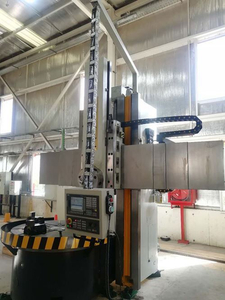
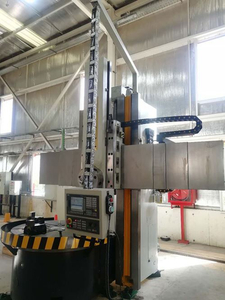
But the biggest cost is the one most buyers never calculate: lost capacity. A skilled operator on a CK5 series vertical lathe might produce 12 to 15 quality parts per shift. A novice on the same machine might produce six, with half of them needing rework. Over a year, that difference is worth tens of thousands of dollars in revenue - far more than the price of proper training.
Cost Factor | Skilled Operator (Annual) | Untrained Operator (Annual) |
|---|---|---|
Scrap rate | 1-2% ($1,500-$3,000) | 8-15% ($14,000-$26,000) |
Tooling replacement | $2,000-$3,500 | $6,000-$12,000 |
Machine damage/crashes | $0-$500 | $2,000-$15,000 |
Productivity loss | Baseline | 30-50% reduction |
Total estimated cost | $3,500-$7,000 | $22,000-$53,000+ |
After 200+ training sessions, we've learned a few things about what builds competence quickly and what doesn't.
The worst approach is what I call "button training." An engineer stands next to the operator for two days, shows them which buttons to press for a specific job, and then leaves. The operator can run that one part. But change the material, the tool, or the drawing, and they're lost. We've seen this happen dozens of times.
What works far better is pairing a new operator with an experienced one for at least 30 days. Not in a classroom - on the floor, running real jobs. The experienced operator doesn't just show what to do; they explain why. "We're running this insert at 180 meters per minute because the workpiece is 4140 pre-hardened steel. If you push it to 250, the coating breaks down in 10 minutes and you get that blue wear line you see here."
That kind of knowledge transfer is irreplaceable. But it requires the shop to have an experienced operator available - which, as our data shows, 86% of our customers don't.
For shops in that situation, we've had success with a structured 90-day program that combines classroom basics with progressive machine time. The first 30 days focus on safety, measurement, and understanding the control panel without running cuts. The second 30 days introduce simple turning operations under supervision. The final 30 days add complex operations like threading, grooving, and basic troubleshooting. By the end, the operator isn't an expert - but they're safe, productive, and know enough to recognize when something is wrong.
Simulator training has also come a long way. We've started recommending control simulators - software that runs a virtual Fanuc or Siemens panel on a PC - for customers who can't spare machine time for training. An operator can crash a virtual lathe 50 times without causing a dollar of damage. It's not a replacement for hands-on experience, but it flattens the learning curve considerably.
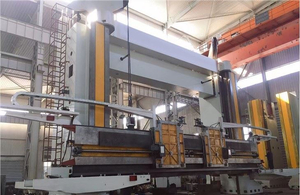
If you're planning to buy a CNC lathe - whether it's a compact CK6140 for a small job shop or a large vertical turning center for heavy flange work - start thinking about who will run it before you sign the purchase order. Not after the machine arrives.
Here's what we tell every customer now:
Budget for training, not just the machine. Plan to spend 5% to 10% of the machine price on operator training over the first year. That might include extended on-site training from the supplier, sending operators to the manufacturer's facility, or investing in simulation software. A $50,000 machine with a $5,000 training budget will outperform a $55,000 machine with no training every single time.
Specify the control system around your people, not just the spec sheet. Fanuc controls are easier for beginners to learn and have wider service availability in most markets. Siemens offers more flexibility but has a steeper learning curve. If you're starting with inexperienced operators, Fanuc is usually the safer bet. We've covered this in more detail in our Fanuc vs Siemens comparison.
Build documentation into your process. Every job should have a setup sheet that lists tool numbers, speeds, feeds, depth of cut, and any special instructions. This sounds obvious, but we've walked into shops where the only "documentation" is a sticky note on the control panel. When that operator leaves, the knowledge leaves with them.
Cross-train at least two people on every machine. If only one person knows how to run your CNC lathe, you have a single point of failure. That person gets sick, quits, or takes vacation, and your $50,000 investment sits idle. We recommend every shop have at least two operators trained on each machine, even if the second person is less experienced.
The CNC lathe skills gap isn't going to fix itself. Wages for experienced machinists are rising - we've seen skilled operator salaries in Southeast Asia increase 35% to 40% since 2022 - but higher pay alone won't solve a structural shortage that took decades to develop.
For buyers, the practical takeaway is simple: the machine is only half the investment. The other half is the person standing in front of it. Underestimate that, and even the best lathe in the world won't make you money. Treat training as part of the purchasing decision - not an optional extra - and you'll avoid the most expensive mistake we see buyers make.
We've shipped over 500 machines, and the ones that make customers the most money aren't always the biggest or most expensive. They're the ones where the owner invested just as much in the operator as they did in the equipment.