- All
- Product Name
- Product Keyword
- Product Model
- Product Summary
- Product Description
- Multi Field Search
Views: 0 Author: Vertical Lathe vs Horizontal Lathe - Choose the Right CNC Turning Machine Publish Time: 2026-05-17 Origin: Site


Selecting between a vertical lathe and a horizontal lathe is one of the most consequential equipment decisions in precision manufacturing. Each configuration offers distinct advantages for specific workpiece types, production volumes, and operational requirements. This comprehensive comparison guide helps industrial buyers understand the fundamental differences and make the right choice for their applications.
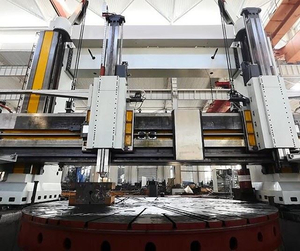
In a CNC vertical lathe, the workpiece is mounted horizontally on a rotary table with the spindle axis oriented vertically. The cutting tool approaches from above, moving along the X-axis (radially) and Z-axis (vertically). This configuration means gravity works in your favor—the workpiece's own weight holds it securely on the table, reducing clamping force requirements and minimizing distortion.
Key design characteristics of vertical lathes:
Workpiece sits flat on horizontal rotary table
Tool approaches from above (ram-type or turret-type)
Gravity assists workpiece holding
Natural chip flow downward away from cutting zone
Ergonomic loading and unloading of heavy parts
Larger swing diameter relative to floor space
In a CNC horizontal lathe, the workpiece is held in a chuck or between centers with the spindle axis horizontal. The cutting tool approaches from the side, and the workpiece rotates around its horizontal axis. This is the traditional lathe configuration that has been refined over centuries.
Key design characteristics of horizontal lathes:
Workpiece held in chuck or between centers
Tool approaches horizontally from the tool post
Workpiece weight creates deflection forces on spindle
Chips tend to fall away from workpiece naturally
Well-suited for shaft-type and cylindrical workpieces
Longer workpieces supported by tailstock and steady rest
Choose a Vertical Lathe when:
Workpiece diameter exceeds its length (disk-shaped parts)
Workpiece weight is over 500kg (gravity-assisted holding)
Large-diameter components like flywheels, brake discs, or turbine housings
Flat or shallow components requiring face turning, boring, or grooving
Asymmetric parts that are difficult to chuck on horizontal machines
Choose a Horizontal Lathe when:
Workpiece length exceeds its diameter (shaft-shaped parts)
Long cylindrical components like shafts, tubes, and bars
Thread cutting is a primary operation
Small to medium diameter parts requiring through-spindle bar feeding
Parts requiring turning between centers for maximum concentricity
| Parameter | Vertical Lathe | Horizontal Lathe |
|---|---|---|
| Max workpiece diameter | 630-5000mm+ | 200-1250mm |
| Max workpiece length | 500-2000mm | 500-12000mm+ |
| Max workpiece weight | 500-50,000kg | 50-10,000kg |
| Swing over bed | Limited by column height | 200-1250mm |
| Between centers | N/A | 500-12000mm+ |
Both machine types can achieve high precision, but each excels in different areas:
Vertical Lathe Precision Advantages:
Workpiece weight does not cause spindle deflection (gravity holds workpiece flat)
Consistent clamping force across the entire workpiece face
Better for maintaining flatness on large faces
Reduced vibration for heavy workpieces due to gravity-assisted stability
Horizontal Lathe Precision Advantages:
Superior for maintaining cylindrical accuracy on long parts
Better surface finish on external diameters
Tailstock support enables precise shaft turning
Between-centers turning eliminates chuck-related errors
Typical accuracy specifications:
Vertical lathe positioning: ±0.005-0.01mm
Horizontal lathe positioning: ±0.003-0.008mm
Vertical lathe repeatability: ±0.003-0.008mm
Horizontal lathe repeatability: ±0.002-0.005mm
Primary choice: Vertical lathe for large components; Horizontal lathe for shafts
Aerospace applications demand exceptional precision and material versatility. Turbine discs, engine casings, and landing gear components are typically machined on vertical lathes, while turbine shafts and actuator components use horizontal lathes.
Key requirements: Multi-axis capability, high-precision turning, exotic material compatibility, and thorough documentation for certification.
Primary choice: Horizontal lathe for high-volume production; Vertical lathe for large components
Automotive brake discs and flywheels are efficiently produced on vertical lathes, while crankshafts, camshafts, and transmission shafts require horizontal lathes with dedicated tooling.
Key requirements: High production rates, consistent quality, automation integration, and competitive cost per part.
Primary choice: Vertical lathe for large components
Wind turbine hubs, generator components, and pressure vessel flanges require large-capacity vertical lathes. Horizontal lathes serve for generator shafts and turbine bolts.
Key requirements: Very large swing capacity, heavy workpiece handling, and robust construction for interrupted cutting.
Primary choice: Horizontal lathe for threaded components; Vertical lathe for flanges
API-threaded connections for drill pipe, casing, and tubing are machined on horizontal lathes with dedicated threading capability. Large flanges and valve bodies use vertical lathes.
Key requirements: API thread compliance, heavy-duty cutting capability, and reliable operation in demanding environments.
Primary choice: Depends on product mix
Many machine shops benefit from having both vertical and horizontal lathes, selecting each based on the specific workpiece requirements. If budget allows only one machine type, choose based on your most common workpiece geometry.
| Size Category | Vertical Lathe | Horizontal Lathe | Difference |
|---|---|---|---|
| Small (630mm swing / 400mm swing) | $18,000-$35,000 | $12,000-$25,000 | Vertical 30-50% more |
| Medium (1250mm swing / 600mm swing) | $40,000-$85,000 | $25,000-$50,000 | Vertical 40-60% more |
| Large (2000mm+ swing / 800mm+ swing) | $100,000-$350,000 | $50,000-$150,000 | Vertical 50-80% more |
Note: Price comparison is based on similar quality levels from Chinese manufacturers. The price differential exists because vertical lathes generally require larger castings and more robust construction for equivalent workpiece capacity.
Floor space: Vertical lathes typically require less floor space per unit of swing diameter
Setup time: Vertical lathes often have faster setup for heavy workpieces (gravity-assisted loading)
Tooling costs: Generally similar for both types
Energy consumption: Horizontal lathes typically consume 10-20% less energy for equivalent cutting capacity
Maintenance: Similar maintenance requirements; vertical lathes may have lower spindle bearing replacement costs
Catalog your typical workpieces by:
Diameter-to-length ratio
Weight range
Required operations (turning, boring, threading, grooving)
Tolerance requirements
Production volume per part number
Determine the machine specifications needed to handle your workpiece range:
Required swing diameter or between-centers distance
Minimum and maximum workpiece weight
Required accuracy class
Tool station requirements
Control system capabilities
Factor in purchase price, installation, tooling, maintenance, and productivity over a 5-10 year period. Include opportunity costs of workpieces that cannot be efficiently produced on the wrong machine type.
Plan for growth and evolving customer requirements. If your business may need both machine types in the future, consider starting with the type that serves your current most profitable work.
Starfish Machine Tools offers comprehensive CNC turning solutions with both vertical and horizontal lathe product lines. Our experienced engineering team can help you evaluate your specific requirements and recommend the optimal machine configuration for your application.
With over 15 years of manufacturing experience and exports to 40+ countries, we understand the diverse needs of industrial buyers. Our vertical lathes range from compact 630mm swing models to heavy-duty 5000mm+ custom solutions, while our horizontal lathe line covers center distances from 500mm to 12000mm+.
Not sure which type is right for your operation? Contact our engineering team for a free consultation. We analyze your workpiece requirements and provide detailed recommendations with comprehensive pricing.
Making the right machine choice is critical for your manufacturing success. Let our experienced team help you evaluate your options and find the perfect CNC turning solution.
Email: inquiry@starfishmachine.com
Website: www.starfishmachine.com
Free consultation: Available for all serious inquiries
Choose wisely. Choose Starfish Machine Tools.