- All
- Product Name
- Product Keyword
- Product Model
- Product Summary
- Product Description
- Multi Field Search
Views: 0 Author: Site Editor Publish Time: 2026-09-17 Origin: Site


Hydraulic chuck faults on CNC lathes are a common reason parts move mid-cut and end up scrap. When a workholding system loses clamping force or closes off-center, the machine still runs the path it was told to, which is why the damage shows up as steady dimension drift or a sudden crash. Lathe builders and service teams diagnose these faults by checking clamping pressure, jaw wear, drawbar pull, and centering accuracy in a set order. Starfish Ruhr Heavy Machinery Technology (Dalian) Co., Ltd, a CNC lathe manufacturer that exports vertical and horizontal lathes to the USA, Chile, Colombia, and Indonesia among more than 50 countries, treats hydraulic chuck health as a reliability check that every machine gets before it leaves the factory and again during service visits.
The uncomfortable truth is that a hydraulic chuck fails gradually, not all at once. Clamping force drops a little more every week as seals wear and O-rings harden. The operator does not notice because the part still seats. Then one afternoon the part spins slightly under the cut, the dimension creeps, and half a batch is already off-tolerance before anyone checks.
We have watched this happen in customer plants in Medellin and Houston. In one case a shop machining hydraulic rod ends called us about scattered bore diameters that made no sense. The lathe was cutting fine on the test part. The problem was that the chuck closed on the part, but the jaws had worn to a shallow profile, so the part sat low in the jaw pocket and shifted toward the headstock as the tool pushed it. It was a workholding fault, not a machining fault, and it ate a full shift to find.
Once you learn to read the signs, most of these failures are easy to catch. The signs are clamping force loss, jaw wear, pullback error, and machine-side pressure drift. Here is how we walk through each one.
Most hydraulic chucks on modern lathes are designed around a rated clamping force, and the panel often shows system pressure in bar or psi. The trap is that gauge pressure is not the same as the force actually reaching the part through the jaws and the wedge or lever mechanism. Friction and internal leakage eat into the delivered force.
In our workshop we test every chuck before it goes on a machine by using a clamping force meter, a thin ring that sits between the jaws and reads the real force the part will feel. When we set up a CK5 series vertical lathe for large flanges, the rule of thumb is that delivered force should be within about 10 percent of the rated value. If it is lower, we look at seals first, then the jaw profiles, then the drill or wedge angle that converts axial pull into radial clamping.
For a customer in Indonesia cutting thick mining flanges, the delivered clamping force was sitting at about 65 percent of rating because the wedge slides had lost their grease film and were galling. The machine had always run the same program. Nothing else changed. Re-greasing the wedge slides and replacing two seals brought the force back above 95 percent, and the scrap rate on that job dropped to practically zero.
Chuck jaws are a wear item, and they wear in a predictable way. The hardest parts of the jaws that grip the part lose their tooth or serration profile first, and over time the gripping surface becomes smooth and shallow. A smooth jaw cannot hold a part against tangential cutting force the way a sharp jaw can, so the part creeps no matter how high the pressure is.
The centering problem is more subtle. On a self-centering three-jaw chuck, all jaws should move the same distance from center. If one jaw wears faster than the other two, or if one jaw is set at a different radial position during a jaw change, the part closes off-center. The result is that the turned diameter runs true but the bore or the flange face is eccentric to the gripping surface. This shows up as a thin wall on one side of a ring or a mismatch between the bore and the outside diameter.
We tell every shop that a full set of replacement jaws is a small investment compared with one off-tolerance batch. When we supply a CK6 horizontal lathe for long shaft work, we include spare soft jaws that can be bored to the exact part diameter. Boring soft jaws to the workpiece size gives you maximum contact and the best centering, because each jaw carries an equal share of the load. That is one of the highest-value habits in workholding, and it costs almost nothing in machine time.
Pullback is the tendency of a part to be dragged axially toward the chuck face as the jaws close or as the chuck wears. On a small shaft it is barely visible. On a large vertical flange, where the workpiece is heavy and the grasping zone is small relative to the mass, pullback can lift the part out of square with the table.
On our vertical lathes we set the table and chuck so the machined face runs square to the axis within a few microns, but that only matters if the part is actually seated flat. A hydraulic chuck that pulls the part in unevenly will ruin the squareness even though the spindle and table are perfect. This is why we always check the underside of heavy flanges for contact marks before a production run. If the part rocks, the first cut face will be out of square no matter how tight you set the program.
A customer in Santiago cutting large bearing housings had exactly this problem. The parts checked square when measured sitting on the table but showed a taper after facing. The chuck was pulling the flange down unevenly on the rear jaw. After we replaced a worn wedge mechanism and re-trued the jaw seats, the taper disappeared. The geometry had been fine all along; the workholding had not been.
Not every hydraulic chuck fault is inside the chuck. The hydraulic unit that feeds it can be the real culprit, and this is the easiest class of fault to fix because it rarely needs new parts.
Three things we check in order. First, system pressure stability: watch the gauge while the chuck holds a part for a full machining cycle and see if it sags. If it does, there is internal leakage in the valve or the accumulator is losing charge. Second, air in the circuit: a new machine that was not bled properly will clamp and unclamp softly, with a spongy feel, and the force will wander. Third, the hoses and fittings: a slow weep at a fitting lowers pressure over time without ever making a visible puddle.
For shops in humid coastal markets like Colombia and Indonesia, water in the hydraulic oil is a real problem because the machines often sit in non-climate-controlled plants. Waterlogged oil attacks seals and makes the pressure erratic. A simple oil sample check every few months catches it, and a drain and top-up is far cheaper than a chuck rebuild. We have seen this exact pattern more than once in Jakarta plants, and it is always the easiest fix on the list.
You do not need a lab to get a good read on chuck health. Our service engineers run the same quick sequence on every visit, and we walk customers through it so they can do it monthly.
First, run a clamping force check with a force meter if you have one, or clamp a test bar and check it does not rotate under a measured torque. Second, check centering by gripping a precision ground ring and indicating the gripping surface in two spots to see if the jaw circle is true to the machine axis. Third, check pullback by clamping a flat ring on a soft jaw and indicating the face while it closes. Fourth, watch hydraulic pressure during a cycle for sag. Fifth, inspect jaws, wedge slides, and seals for wear or galling. That sequence takes about fifteen minutes and catches the faults that actually cause scrap.
When a machine comes in for a service return, we run this exact checklist. We have stopped shipping a surprising number of otherwise healthy lathes because the chuck failed this test on the bench. A chuck that closes on a test ring at full rated force is one you can trust for a production week; anything short of that turns into scrap on the floor.
Prevention is mostly about routine, not about expensive upgrades. Keep the jaw gripping surfaces sharp by turning or replacing soft jaws for each job family. Protect wedge slides and guides with the right grease, not just any grease, because the wrong one washes out and causes galling. Magnetize a spare pressure gauge or install one permanently so you can spot drift early. And drain and check hydraulic oil on a schedule, especially in humid climates.
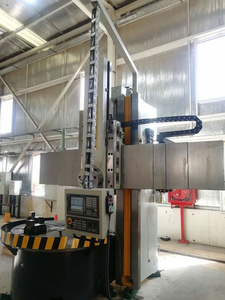
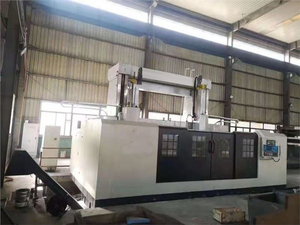
We bake these checks into the setup sheet for every vertical lathe we build at our factory in Dalian, from the compact CK5 models up to the large 16,000 mm swing table machines. The same discipline applies to our CK6 horizontal lathes for shaft and bar work. A workholding failure is one of the few failure classes that is basically always preventable, because the signs appear weeks before the part moves, if you take the time to look.
If you are buying a lathe, ask the manufacturer how the chuck is tested before shipping. As a CNC lathe manufacturer we can tell you the answer reveals a lot about how the whole machine is built. A builder that tests and certifies the workholding system is the same builder that tests spindle runout and axis squareness, and those are the machines that hold tolerance shift after shift. For work that needs a rigid large-diameter setup, our CK5 series vertical lathes are designed around a heavy table and solid chuck support. For long cylindrical and shaft production, our CK6 horizontal lathes give the tailstock stiffness you need to keep thin parts from whipping. Whichever configuration fits your parts, treating the chuck as a maintainable precision component is what keeps the batch inside tolerance.
Usually because delivered clamping force is lower than the gauge suggests, or because the jaws are worn smooth and cannot grip the part against tangential cutting force. Friction in worn wedge slides and seal leakage also eat into the real force reaching the workpiece.
Clamp a precision ground ring and indicate the gripping surface in two locations to see if the jaw circle is true to the machine axis. Off-center clamping shows up as thin walls or eccentric bores relative to the outside diameter, long before it causes a visible crash.
Pullback is the axial drag of a part toward the chuck face as the jaws close. Clamp a flat ring on a soft jaw and indicate the face while it closes to see if the part is pulled unevenly. On heavy flanges this is a common hidden cause of out-of-square faces.
Run a clamping force check with a meter, or a clamped test bar under measured torque, at least monthly for continuous production, and whenever a lathe goes into a service return. It takes a few minutes and catches the failures that cause batch scrap.
A builder that tests and certifies the chuck before shipping, and that covers both clamping force and centering in its test, is the safer choice. Builders that export to demanding markets like the USA, Chile, Colombia, and Indonesia across models from small CK5 vertical lathes to large swing machines tend to keep this discipline in their quality routine.