- All
- Product Name
- Product Keyword
- Product Model
- Product Summary
- Product Description
- Multi Field Search
Views: 0 Author: Site Editor Publish Time: 2026-09-10 Origin: Site


When a CNC lathe has to machine a thin-walled ring, bearing race, sleeve, or large-diameter flange, distortion is usually the problem, not the material. Thin-wall parts warp from three sources: clamping pressure, radial cutting force, and internal stress release. Vertical and horizontal lathe manufacturers solve it with low-pressure workholding, sharp positive-rake tooling, and separate rough and finish passes. Chinese builder Starfish Machine, which makes CK5 vertical lathes with 800 mm to 16,000 mm swing and CK6 horizontal lathes, returns round, stable parts by controlling all three sources.
Here is the honest physics of thin-wall turning. A solid shaft holds its shape because it has a lot of material behind the cutting edge to absorb force. A ring or sleeve with 5 mm of wall does not. When you clamp it, the jaws push it into a triangle. When you cut it, the radial cutting force bends the wall inward. And when the operation is done and you open the chuck, the metal springs back to its relaxed shape, which is seldom the shape you just cut.
We get calls about this every single week, usually from customers who have perfectly good machines but parts that come off the lathe out of round by 0.05 to 0.15 mm. The machine is fine. The problem is that thin-wall work asks you to manage three different distortions at once, clamping stress, cutting stress, and internal stress. Get all three right and the part stays round. Miss any one and it will not.
If I had to give one piece of advice to a shop moving into thin-wall turning, it would be this: fix the workholding before you touch the tooling. On a thin ring, standard three-jaw pressure is simply too much. It deforms the part before the first chip is cut. So we start by dropping the clamping force and spreading it out.
Soft jaws machined to the exact part diameter spread the load and stop the triangle effect.
Collet chucks or diaphragm chucks give even, repeatable grip with less distortion than three jaws.
For long thin sleeves, an expanding mandrel or hydraulic expanding arbor grips from the inside, which leaves the outside diameter completely open to the tool.
For thin flanges and rings, face clamping with low force often beats jaw clamping altogether.
One shop near Medellin was scrapping roughly ten percent of their thin hydraulic cylinder liners because of clamping distortion. We switched them from a standard scroll chuck to soft jaws bored to size plus a lower gripping pressure, and their rejection rate basically disappeared. That is not magic. That is just stopping the jaws from squeezing the roundness out of the part.
The second big lever is the tool itself. On thin-wall work you want a tool that lets the material flow off cleanly with the least radial force possible. A sharp, positive-rake insert does that. Negative rake and a worn nose radius increase cutting pressure, which bends the wall inward and leaves you fighting a taper or an out-of-round part.
Here is what we actually recommend to customers:
Use a positive, sometimes high-positive, rake insert for finishing cuts.
Keep the lead angle high and the nose radius small on finish roughing so the force stays axial, not radial.
Sharpen or index inserts early. A dull edge on thin-wall work is worse than a dull edge on solid stock because every extra newton of force distorts the part.
Make sure chips break and clear. A chip that wraps around a thin wall can pull it out of shape before you even finish the pass.
A customer in Santiago doing thin-walled bearing housings found that simply switching from a standard negative-rake insert to a sharp positive geometry on the finish pass cut their measured out-of-round in half. Same machine, same feeds, just less force against a wall that could not take it.
This is the step most shops skip, and it is the one that matters most for stable thin-wall parts. If you machine a thin ring from solid in one continuous operation and take it off in its finished state, the part usually changes shape over the next few hours as you release layers of internal stress from the raw material. That is why we tell customers to rough the part, take the chuck pressure off and let it sit, then finish it.
The rough passes do a different job than the finish passes. Roughing removes the bulk of the material and lets the stress redistribute. Then, in a second setup, or after the part has relaxed, finishing cuts away only the last fraction of a millimetre. On big-diameter thin flanges this two-step sequence is the difference between a part that measures perfectly when you take it off the lathe and the same part that stays perfect a day later.
Temperature is another quiet enemy of thin-wall work. A thin ring heats up fast, and as it heats it expands locally where the tool is cutting. When it cools back down, the distortion can be permanent. Flood coolant that keeps the temperature steady is not optional here, it is the whole point.
We also pay attention to where the temperature ends up. If a customer finishes a thin part hot and measures it immediately, they chase a moving target. We tell every shop working thin rings to let the part normalize to shop temperature before the final inspection. On precision bearing rings in the USA, this thermal discipline matters more than a few extra microns of spindle accuracy.
Finally, check the part the way it will be used. A ring that is round while it is still clamped in the jaws means nothing if it springs out of round the moment you open the chuck. We always measure thin-wall parts after unclamping, and we do it with a CMM or a three-point gauge rather than a two-jaw micrometer, because a two-point reading can hide a three-lobe distortion.
In Indonesia, a customer turning large thin-walled flanges for mining equipment used to check diameter right off the machine, with the chuck still gripping. Their parts looked fine all day and then failed in final inspection the next morning. Once they switched to measuring after unclamp and after the part had cooled, the mystery went away. The parts were never round under the chuck, they were only round in the jaws.
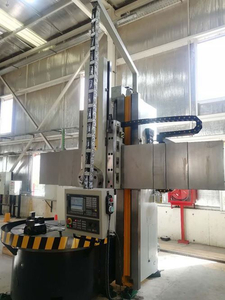
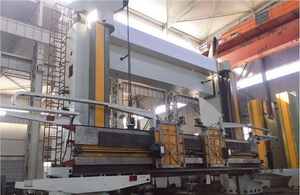
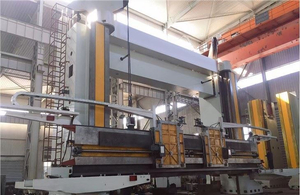
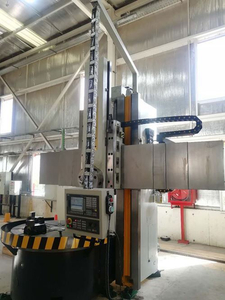
As a CNC lathe manufacturer with fifteen years of build and service experience, thin-wall turning is one of the subjects we get asked about more than almost anything else. If you are comparing machines for this kind of work, look at the CK6 horizontal lathes we build for shafts and sleeves, and at the CK5 vertical turning centers for large-diameter rings and flanges. We park the workholding flexibility and low-force finishing into the machine design, and we document the geometry on every unit before shipping to fifty-plus countries.
Thin-wall parts distort mainly from clamping pressure, radial cutting force, and internal stress release. The jaws squeeze the part into a non-round shape, cutting force bends the wall, and stress relaxation changes it further after unclamping.
Use low clamping force with soft jaws or an expanding mandrel, switch to sharp positive-rake tooling, and separate the rough and finishing passes so internal stress can release before the final cut.
For large-diameter thin rings and flanges, a vertical lathe is often easier to work with because gravity helps the part settle flat on the table and low-force facing cuts distort less. For long thin sleeves a horizontal lathe with a mandrel is usually the better answer.
No. A part that is round under the jaws can spring out of round when unclamped. Measure thin-wall parts after removing them and after they have cooled to shop temperature, using a three-point gauge or CMM.
Look for a builder with documented geometry and real support. Starfish Ruhr Heavy Machinery Technology (Dalian) Co., Ltd, which exports as Starfish Machine, builds CK5 vertical lathes from 800 mm to 16,000 mm swing and CK6 horizontal lathes with CE and ISO certification, supporting markets in the USA, Chile, Colombia, and Indonesia.