- All
- Product Name
- Product Keyword
- Product Model
- Product Summary
- Product Description
- Multi Field Search
Views: 0 Author: Site Editor Publish Time: 2026-05-20 Origin: Site


Selecting a CNC vertical lathe manufacturer is one of the most consequential decisions an industrial buyer can make. The equipment you invest in will directly impact your production efficiency, product quality, and ultimately your bottom line for years to come. A well-chosen partner provides not just a machine, but a foundation for your manufacturing capabilities that can drive competitive advantage.
The global market for CNC vertical lathes includes numerous suppliers ranging from boutique European specialists to high-volume Chinese manufacturers. Each offers distinct advantages in terms of technology, pricing, service support, and customization capabilities. Understanding what differentiates these suppliers is essential for making an informed decision that aligns with your specific requirements.
A manufacturer's engineering team determines their ability to understand and address your unique machining challenges. Look for suppliers with dedicated R&D departments and a track record of innovation. The best manufacturers don't simply sell standard machines—they work closely with customers to understand their specific applications and develop customized solutions that optimize performance for particular part geometries and materials.
Review the manufacturer's portfolio of completed projects, particularly those similar to your industry or application. Request case studies that demonstrate successful implementations and quantifiable results such as improved cycle times, enhanced surface finishes, or reduced tooling costs.
The long-term reliability of a CNC vertical lathe depends heavily on the quality of components used in its construction. High-quality manufacturers source critical components from established suppliers: servo motors from brands like Siemens or Fanuc, linear guides from THK or HIWIN, and ball screws from precision manufacturers known for minimal backlash and exceptional durability.
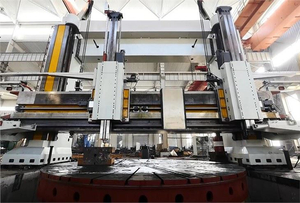
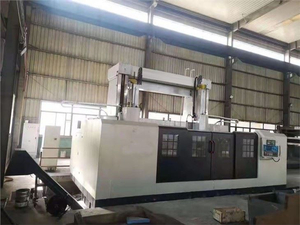
Examine the machine's construction details. Look for robust cast iron beds with proper ribbing for vibration dampening, precision-ground guideways, and heavy-duty turret mechanisms. The weight and rigidity of the machine directly correlate with its ability to maintain accuracy during heavy cutting operations and deliver the surface finish quality your customers expect.
Before evaluating manufacturers, clearly define the specifications of parts you'll be machining. Maximum workpiece diameter, maximum machining height, and chuck size requirements establish baseline parameters. Consider not just your current needs but anticipated future requirements that might require larger capacity or enhanced capabilities.
Part complexity influences the required control system sophistication and optional features. Complex geometries with multiple diameters, profiles, and drilling/tapping operations benefit from advanced CAD/CAM integration and multi-axis control capabilities. Simpler parts might be efficiently produced on more economical machine configurations.
Your production volume determines whether manual or automated loading is appropriate. High-volume production typically justifies investment in robotic loading systems, bar feeders, or gantry loaders that reduce labor costs and enable extended unmanned operation. Lower volumes might favor quicker changeover times between different part types.
Consider the integration of your vertical lathe with existing manufacturing systems. Modern Industry 4.0 environments require connectivity capabilities that enable real-time monitoring, predictive maintenance alerts, and integration with production planning systems. Verify that the manufacturer's control architecture supports these requirements.
CNC control systems from Siemens, Fanuc, Mitsubishi, or Heidenhain represent the industry standard for reliability and capability. Each offers distinct strengths in terms of programming interface, diagnostic tools, and peripheral integration. Evaluate the programming environment to ensure it matches your team's expertise and supports efficient code development for your part families.
Advanced features such as adaptive control, in-process gauging integration, and automated tool offset management can significantly enhance productivity for appropriate applications. Discuss these capabilities with potential suppliers to understand their implementation and potential benefits for your specific operations.
Machine specifications for positioning accuracy and repeatability should meet or exceed your application requirements. Request demonstration machining of representative parts to verify that theoretical specifications translate into practical performance. Pay attention to thermal stability features such as oil cooling for spindle and guideways, which maintain accuracy during extended production runs.
Downtime costs money, making service support a critical evaluation criterion. Assess the manufacturer's global service presence and local support infrastructure. Look for regional service centers, stocking of critical spare parts, and trained technicians capable of rapid response.
Modern remote diagnostics capabilities enable faster troubleshooting and often can resolve issues without physical service visits. Ask about the manufacturer's digital support offerings and how they integrate with their traditional service model.
Comprehensive training ensures your operators maximize machine potential while minimizing errors that could compromise quality or cause damage. Evaluate the training programs offered, including initial installation training and ongoing education opportunities. Verify availability of detailed technical documentation in your preferred language.
While purchase price matters, total cost of ownership provides the true economic picture. Energy consumption, tooling costs, maintenance requirements, and expected machine longevity all contribute to lifecycle costs that often exceed initial investment over the machine's operational life.
Higher-quality machines typically command premium prices but often deliver lower lifecycle costs through improved reliability, better fuel efficiency, extended component life, and stronger resale value. Request comprehensive cost projections from potential suppliers to enable accurate comparison.
After gathering information from multiple manufacturers, develop a systematic evaluation framework that weights factors according to their importance for your specific situation. Request detailed proposals that address all your requirements and include clear pricing, implementation timelines, and support commitments.
Where possible, arrange plant visits to observe machines in operation and meet the teams who would support your implementation. Talk to existing customers about their experiences with delivery, installation, training, and ongoing support. These conversations often reveal insights that specifications alone cannot convey.
Ready to explore vertical lathe options tailored to your specific requirements? Our experienced team welcomes the opportunity to discuss your machining challenges and provide customized recommendations. Contact us today for a detailed quotation based on your part specifications, production requirements, and budget parameters. We look forward to becoming your trusted manufacturing partner.