- All
- Product Name
- Product Keyword
- Product Model
- Product Summary
- Product Description
- Multi Field Search
Views: 0 Author: Site Editor Publish Time: 2026-05-19 Origin: Site


Choosing the right CNC lathe for your manufacturing operation is a decision that affects productivity, quality, and profitability for years to come. With hundreds of models available from dozens of manufacturers, navigating the selection process requires a systematic approach. This comprehensive handbook provides industrial buyers with the knowledge and framework needed to make confident purchasing decisions.
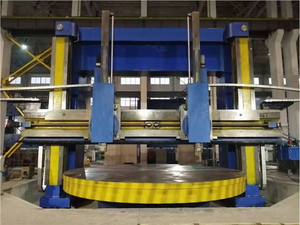
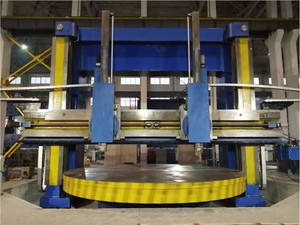
Vertical CNC lathes position the spindle vertically with the workpiece mounted on a horizontal rotary table. This configuration excels with large-diameter, heavy, or disk-shaped workpieces. The gravity-assisted workpiece holding reduces clamping distortion and enables machining of components that would be impractical on horizontal machines.
Typical applications: Flywheels, brake discs, turbine housings, gear blanks, flanges, and large bearing rings. Available in swing diameters from 630mm to 5000mm+ with workpiece weight capacities up to 50,000kg.
Horizontal CNC lathes feature a horizontally oriented spindle and represent the most versatile turning platform. They excel with shaft-type workpieces, long cylindrical components, and parts requiring threading operations. The wide availability of accessories and automation options makes them the first choice for many manufacturing operations.
Typical applications: Shafts, tubes, bolts, bushings, and cylindrical components of all types. Available in swing diameters from 200mm to 1250mm with center distances up to 12000mm+.
Slant bed lathes feature a bed angled at 30-60 degrees, providing better chip evacuation, easier access for loading/unloading, and a more compact footprint. They are preferred for production environments where cycle time and operator ergonomics matter.
Flat bed lathes offer maximum rigidity and are better suited for heavy cutting applications. Their simple construction makes them easier to maintain and more tolerant of harsh shop environments. They remain the standard for heavy-duty and large-capacity horizontal lathes.
The swing diameter determines the maximum workpiece size a lathe can accommodate:
Swing over bed: Maximum diameter that can rotate over the bed ways
Swing over cross slide: Maximum diameter that can be machined (smaller than bed swing)
Swing over saddle: Another measure of machinable diameter
Always verify the machinable swing, not just the bed swing, as the difference can be significant—typically 30-40% less for the cross slide measurement.
For horizontal lathes, the between-centers distance determines the maximum workpiece length. Consider your longest typical workpiece plus 10-15% margin for future requirements. Common ranges:
Short bed: 500-1500mm (compact shafts, bushings)
Standard: 1500-3000mm (general industrial components)
Long bed: 3000-6000mm (turbine shafts, marine components)
Extra long: 6000-12000mm+ (specialized applications)
The spindle system directly affects cutting performance and part quality:
Bore diameter: Must accommodate your largest bar stock or through-spindle workpiece. Common sizes:
52mm: Small parts, standard bar work
80mm: Medium shafts, tubes
130mm: Larger bars and tubes
200mm+: Heavy-duty applications
Speed range: Affects surface finish and cutting efficiency
Standard: 20-2000 RPM (general purpose)
High-speed: 50-4500 RPM (small diameter, finishing)
Low-speed: 4-800 RPM (large diameter, heavy cutting)
Power rating: Determines material removal rate
Light: 5-11kW (small parts, finishing)
Medium: 11-22kW (general industrial)
Heavy: 22-55kW (production machining)
Extra heavy: 55-100kW+ (large components, hard materials)
The number and type of tool stations significantly affect operational flexibility:
4-station: Basic turning operations, lowest cost
6-station: Most common for general-purpose work
8-station: Complex parts requiring multiple operations
12-station: High-mix production environments
Dual turret: Simultaneous turning for maximum productivity
Consider your typical tool requirements plus 20% growth margin. Running out of tool stations forces tool changes that reduce productivity.
The control system determines programming capability, operational features, and long-term supportability:
Fanuc (most common globally):
0i-TF: Standard turning, reliable, extensive support network
31i-B: Advanced features, high-speed machining, custom macros
Best for: Buyers prioritizing reliability and widespread service support
Siemens (strong in Europe):
828D: Powerful programming, integrated safety functions
840D: Full multi-axis, complex contouring
Best for: Buyers needing advanced programming features
Mitsubishi (cost-effective):
M70/M80: Good balance of features and price
Best for: Budget-conscious buyers with standard requirements
Create a detailed analysis of your workpieces:
| Parameter | Range | Notes |
|---|---|---|
| Maximum diameter | ___mm | Determines swing requirement |
| Maximum length | ___mm | Determines center distance |
| Maximum weight | ___kg | Determines table/chuck capacity |
| Material types | ___ | Determines power and speed needs |
| Tightest tolerance | ±___mm | Determines accuracy class |
| Surface finish | Ra___ | Determines speed and tooling needs |
| Batch sizes | ___pcs | Determines automation requirements |
| Monthly volume | ___parts | Determines throughput needs |
Prototyping and job shop (1-50 parts per setup):
Focus on flexibility and quick changeover
Manual chucking acceptable
Standard tool turret sufficient
Consider conversational programming features
Medium production (50-500 parts per setup):
Hydraulic chucking recommended
8+ tool stations for completed parts in single setup
Bar feeder capability for horizontal lathes
Statistical process control integration
High production (500+ parts per setup):
Automation integration essential (robotic loading, gantry)
Dedicated tooling for maximum cycle efficiency
In-process gauging for quality control
Consider multi-spindle configurations
Request and verify the following accuracy specifications:
Positioning accuracy (ISO 230-2): Should be ±0.005-0.01mm for standard machines
Repeatability: Should be ±0.003-0.008mm
Spindle runout: Should be ≤0.01mm at spindle nose
Cross-slide perpendicularity: Should be ≤0.02mm/300mm
Assess machine quality through these indicators:
Cast iron grade: Meehanite or equivalent high-density casting
Aging treatment: Minimum 6 months natural aging or thermal cycling
Guideway type: Hardened and ground with Turcite-B coating
Spindle bearings: NSK, FAG, or SKF branded angular contact bearings
Electrical components: Branded contactors, drives, and encoders
When evaluating CNC lathe suppliers, consider:
Manufacturing history: Minimum 10 years of CNC machine production
Export experience: Proven track record in your geographic market
Quality certifications: ISO 9001:2015 minimum, CE for European markets
Service network: Availability of technical support and spare parts
Customer references: Verifiable references from similar applications
| Cost Category | Typical Range | Notes |
|---|---|---|
| Machine base price | Varies by specification | Request detailed quotation |
| CNC control upgrade | $3,000-$25,000 | Depends on system choice |
| Chuck and workholding | $1,000-$8,000 | Hydraulic chuck + soft jaws |
| Tool holders and inserts | $500-$3,000 | Initial setup package |
| Coolant system | $500-$3,000 | Standard or enhanced |
| Chip management | $1,000-$5,000 | Conveyor or auger |
| Shipping and rigging | $2,000-$15,000 | Depends on size and location |
| Installation and training | $1,000-$5,000 | On-site commissioning |
| First-year spare parts | $1,000-$5,000 | Recommended reserve |
Calculate expected return on investment:
1. Current outsourcing costs: What you pay per part currently
2. In-house production cost: Material + labor + overhead per part
3. Machine utilization: Expected hours of productive cutting per year
4. Revenue from capacity: Additional orders you can fulfill
5. Payback period: Total investment ÷ monthly savings
Most CNC lathe investments pay back within 18-36 months when properly utilized.
Buying a larger machine "just in case" wastes capital and floor space. Size the machine for your 80th percentile workpiece, not the rare outlier.
The CNC control is the machine's brain. Saving money on a basic control limits capability for years. Invest in a control system that supports your future programming needs.
Budget for proper workholding from the start. Inadequate chucking leads to vibration, poor surface finish, and potential safety hazards.
The cheapest machine with no service support often costs more in downtime. Evaluate the manufacturer's service infrastructure before purchasing.
Even if you don't need automation today, choosing a machine that can't accommodate future automation limits your options. Verify that the machine design supports robotic loading, gantry systems, or bar feeders.
Starfish Machine Tools offers a comprehensive range of CNC lathes designed for industrial buyers who demand quality, value, and reliable support. With over 15 years of manufacturing experience and machines operating in 40+ countries, we understand the diverse requirements of modern manufacturing.
Our product line includes vertical lathes from 630mm to 5000mm+ swing and horizontal lathes from 400mm to 1250mm swing, all available with Fanuc, Siemens, or Mitsubishi CNC controls. Every machine undergoes rigorous quality testing including laser interferometer calibration and 72-hour continuous operation verification before shipment.
Need help selecting the right CNC lathe? Our engineering team provides free consultation to help you evaluate your requirements and recommend the optimal machine configuration. Contact us for a detailed technical proposal with competitive pricing.
Making the right CNC lathe selection doesn't have to be overwhelming. Let our experienced engineers guide you through the process with expert advice and transparent pricing.
Email: inquiry@starfishmachine.com
Website: www.starfishmachine.com
Consultation: Free technical assessment for all serious inquiries
Invest in the right machine from the start—contact Starfish Machine Tools today.