- All
- Product Name
- Product Keyword
- Product Model
- Product Summary
- Product Description
- Multi Field Search
Views: 0 Author: Site Editor Publish Time: 2026-07-20 Origin: Site


Every minute a CNC lathe sits idle or runs below capacity costs manufacturers $50 to $300 in lost revenue. For procurement managers evaluating a new CNC vertical lathe or CNC horizontal lathe purchase, understanding how to maximize machine throughput is just as critical as negotiating the best price. Throughput optimization directly impacts your return on investment, payback period, and long-term profitability.
This comprehensive guide covers proven strategies to increase CNC lathe productivity for both CK5 series vertical turning centers and CK6 series horizontal turning lathes. Whether you operate a small job shop or a large-scale production facility, these techniques will help you extract maximum output from every machine hour—turning your capital equipment investment into a competitive advantage.
Before diving into optimization techniques, it is essential to understand the financial impact of productivity improvements on your machining operation.
Industry benchmarks reveal that the average CNC lathe operates at only 60–70% of its potential capacity. This gap between theoretical and actual output represents significant hidden costs:
Fixed cost absorption: Factory floor space, depreciation, insurance, and facility costs continue regardless of output levels
Labor efficiency: Operators working below machine capacity create an imbalance in labor utilization
Delayed deliveries: Lower throughput extends lead times, risking customer satisfaction and repeat orders
Competitive disadvantage: Competitors running at 85%+ utilization can offer faster delivery and lower per-part costs
Consider a CK6 horizontal lathe purchased for $85,000. At 65% utilization producing 45 parts per hour, the payback period calculates to approximately 22 months. Improving utilization to 80% with optimized parameters reduces payback to just 17 months—a savings of five months on the initial investment.
For a CK5 vertical lathe processing large-diameter workpieces at $120,000 purchase price, the financial leverage is even more dramatic. A 15% productivity improvement on a high-value machine can translate to $30,000–$50,000 in additional annual revenue.
When requesting a quotation from a China CNC lathe manufacturer or supplier, always ask about the machine's designed throughput rates under your specific workpiece conditions. Explore the full CNC vertical lathe product line and horizontal turning center range to compare throughput specifications across models.
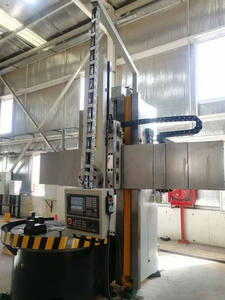
CK5 vertical lathe series machines excel in specific productivity scenarios that procurement buyers should understand before making purchasing decisions:
High-productivity applications for CK5 vertical lathes:
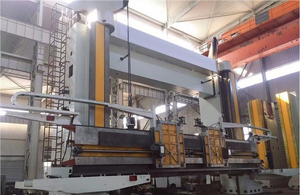
Large-diameter, heavy workpieces (up to 5,000mm turning diameter) where gravity-assisted clamping reduces setup time by 40–60%
High-volume disc and ring part production with quick load/unload cycles
Operations requiring minimal deflection under heavy cutting forces due to vertical spindle orientation
Short, bulky parts that would require complex fixturing on horizontal configurations
Key productivity advantages:
Reduced setup time: Parts sit on the chuck face, eliminating complex holding fixtures—operators can load parts in under 2 minutes for repetitive production
Gravity chip evacuation: Chips fall away from the cutting zone naturally, reducing recutting and enabling higher feed rates
Single-setup completion: Many parts complete in one clamping, eliminating secondary operations
Multi-axis capability: Modern CK5 models with C-axis and live tooling complete turning, drilling, and milling in one setup
The CK6 horizontal lathe models dominate in different productivity scenarios:
High-productivity applications for CK6 horizontal lathes:
Long shaft and rod machining (up to 6,000mm between centers)
High-speed bar feeding operations for production runs of 500+ pieces
Parts requiring both OD and ID machining with bar stock
Operations where automated loading/unloading with gantry systems or bar feeders maximizes uptime
Key productivity advantages:
Bar feeder integration: Automatic bar feeding enables untended machining for 4–8 hours, dramatically increasing spindle utilization
Higher spindle speeds: Horizontal configuration often supports 3,000–6,000 RPM for small-diameter turning, enabling faster cycle times
Twin turret option: Simultaneous OD and ID machining cuts cycle times by 30–40%
Chip management: Gravity-assisted chip fall in horizontal configuration works well with conveyor systems for continuous production
Factor | CK5 Vertical Lathe | CK6 Horizontal Lathe |
|---|---|---|
Setup time (standard parts) | 2–5 minutes | 3–8 minutes |
Max spindle utilization (production) | 75–85% | 80–90% with bar feeder |
Ideal batch size | 50–500 pieces | 200–10,000+ pieces |
Untended operation potential | Moderate (4–6 hrs) | High (8–12 hrs with bar feeder) |
Complex part completion rate | 85–95% single setup | 60–75% single setup |
Chip evacuation efficiency | Excellent (gravity) | Good (with conveyor) |
Cutting speed (measured in surface feet per minute or meters per minute) is the single most influential parameter affecting cycle time. However, pushing speed beyond optimal levels increases tool wear exponentially, negating throughput gains.
Recommended cutting speed ranges by material:
Workpiece Material | Carbide Tool Speed (SFM) | Feed Rate (IPR) | Depth of Cut |
|---|---|---|---|
Mild Steel (1018) | 400–600 SFM | 0.010–0.020 | 0.100–0.200" |
Stainless Steel (304) | 200–350 SFM | 0.008–0.015 | 0.050–0.150" |
Cast Iron (GG25) | 500–800 SFM | 0.015–0.025 | 0.100–0.250" |
Aluminum (6061) | 800–1,500 SFM | 0.015–0.030 | 0.100–0.300" |
Titanium (Ti-6Al-4V) | 100–200 SFM | 0.005–0.010 | 0.030–0.080" |
Inconel 718 | 80–150 SFM | 0.004–0.008 | 0.020–0.060" |
Pro tip for buyers: When evaluating a CNC horizontal lathe for sale, verify the machine's spindle power curve. A machine delivering full torque at 1,500 RPM will outperform one that peaks at 3,000 RPM for steel cutting operations—despite the lower maximum speed.
Modern CNC programming offers several tool path strategies that directly impact cycle time:
Trochoidal milling patterns: For pocket machining, trochoidal tool paths maintain constant tool engagement, enabling 2–3x higher feed rates compared to conventional zigzag patterns
Adaptive clearing: Dynamic tool path adjustment based on real-time cutting conditions reduces air cutting time by 15–25%
Plunge roughing: For vertical turning centers processing hard materials, plunge roughing reduces cutting forces and enables deeper cuts per pass
Optimized approach/retract paths: Reducing non-cutting movements by 30–40% through program optimization
For heavy material removal, the relationship between depth of cut, feed rate, and number of passes significantly affects total cycle time:
Fewer passes, higher engagement: Running 2 passes at 0.200" depth often completes faster than 4 passes at 0.100" depth, even with reduced feed rates
Rough-finish split: Dedicated roughing pass (high MRR) followed by finishing pass (0.010–0.020") ensures quality without sacrificing throughput
Step-over optimization: For CNC vertical lathe operations on face surfaces, optimizing step-over between passes reduces idle repositioning time
The cutting tool material directly determines achievable cutting speeds and tool change intervals:
Tool Material | Relative Cost | Speed Advantage | Tool Life | Best Application |
|---|---|---|---|---|
HSS | 1x (baseline) | Baseline | Short | Low-volume, complex forms |
Carbide (uncoated) | 3–5x | 3–5x faster | Medium | General purpose turning |
Carbide (coated - TiN) | 5–8x | 5–7x faster | Long | Steel and stainless |
Carbide (coated - AlTiN) | 6–10x | 6–8x faster | Very Long | High-temp alloys |
CBN/PCD | 15–30x | 10–20x faster | Exceptional | Hard turning, aluminum |
Procurement insight: When sourcing a CNC turning center from a China manufacturer, discuss tooling package options. Many OEM suppliers offer tool packages with premium coated inserts that cost 20% more upfront but reduce tool change frequency by 50%, increasing annual throughput significantly.
Unplanned tool breaks cause catastrophic downtime—typically 30–90 minutes for replacement and re-setup. Predictive tool management prevents this:
Cutting time counters: Program tool changes based on calculated tool life (e.g., change every 180 minutes of cutting) rather than waiting for failure
Vibration monitoring: Accelerometer-based monitoring detects tool wear progression, enabling change at optimal intervals before breakdown
Force monitoring: Increasing cutting forces indicate progressive flank wear, triggering preemptive changes
Spindle load monitoring: Modern CNC controls display real-time spindle load; operators can establish baseline loads and detect deviations
Reducing tool change time from 15 minutes to under 3 minutes has a compounding effect on productivity:
Tool presetter: Offline tool measurement eliminates on-machine setup—operators load pre-measured tools with known offsets in seconds
Quick-change tool holders: VDI or BMT interfaces on your CNC lathe enable tool changes in under 30 seconds per station
Tool ID tracking: RFID-chipped tool holders automatically load correct offsets, eliminating manual entry errors
For buyers purchasing a CK6 horizontal lathe or CK5 vertical turning center, specify quick-change tooling as a standard requirement—this option typically adds only 3–5% to machine cost but delivers 8–12% productivity improvement.
Workholding directly impacts both setup time and part clamping security during high-speed machining:
For CK5 vertical lathes:
Power chucks with quick-change jaws: Reduce jaw changeover from 20 minutes to under 3 minutes
Magnetic chucks: For ferrous disc parts, magnetic clamping enables loading/unloading in seconds with no mechanical adjustment
Custom soft jaws: Machined to part profile, enabling single-setup complete machining and eliminating secondary fixtures
For CK6 horizontal lathes:
Hydraulic collets: Provide superior grip for bar stock with changeover under 1 minute
Automated part catchers: Enable completed parts to drop into collection bins, supporting untended operation
Steady rests: For long shaft parts, CNC-controlled steady rests adjust automatically to different diameters
The ratio of cutting time to total cycle time often reveals surprising waste:
Typical production part: 40–60% of total cycle time is non-cutting (approach, retract, reposition, tool change)
Optimization target: Reduce non-cutting time by 30–50% through:
- Minimized approach/retract distances - Rapid traverse optimization - Simultaneous axis movement - Reduced tool change frequency
Modern CNC controls offer productivity-enhancing features that vary significantly between machines. When comparing quotations from different manufacturers, verify these capabilities:
Look-ahead function (200+ blocks): Enables smooth contouring at high feed rates without deceleration—critical for complex part programs
Adaptive feed control: Automatically adjusts feed rate based on real-time cutting conditions, maintaining optimal tool load
Thermal compensation: Compensates for thermal expansion during long production runs, maintaining accuracy without process interruption
Conversation programming: Shop-floor programming reduces programming time for simple parts from hours to minutes
Network connectivity (MTConnect/OPC-UA): Enables real-time production monitoring and OEE tracking
For complex parts, CAM programming quality directly impacts cycle time:
Feature recognition: Modern CAM systems automatically identify turning features and generate optimized tool paths
Simulation and verification: Virtual machining simulation prevents crashes and proves out programs before production—saving 2–4 hours per new part setup
Post-processor optimization: Machine-specific post-processors generate code that maximizes each machine's capabilities
Template libraries: Standardized programming templates for common part features reduce programming time by 60–80%
Even the most advanced CNC vertical lathe or horizontal turning center can underperform with insufficiently trained operators. Key training areas include:
Optimal parameter selection: Operators who understand material-tool-speed relationships consistently achieve 15–20% faster cycle times
Efficient setup procedures: Trained setup operators reduce changeover time by 30–40% through systematic approaches
In-process quality checks: Proper measurement techniques reduce scrap rates from 3–5% to under 1%, directly improving effective throughput
Preventive maintenance execution: Operators who perform daily maintenance tasks correctly extend tool life by 20–30% and prevent unplanned downtime
Maximizing spindle hours requires strategic shift planning:
Strategy | Utilization Rate | Implementation Cost | Best For |
|---|---|---|---|
Single shift (8 hrs) | 45–55% | Lowest | Low volume, high mix |
Two shifts (16 hrs) | 65–75% | Moderate | Medium volume production |
Three shifts (24 hrs) | 80–90% | Highest | High volume, dedicated lines |
Lights-out operation | 85–95% | High (automation required) | Production runs 500+ pcs |
For procurement buyers evaluating the cost of a CNC lathe, consider the utilization strategy when calculating ROI. A machine running 24-hour operation generates 3–4x the annual output of single-shift operation on the same capital investment.
Group technology (GT) organizes parts into families with similar geometries and machining requirements:
Family tooling: Shared tool setups across part family members reduce changeover by 50–70%
Standardized programs: Base programs with family-specific modifications cut programming time
Optimal sequencing: Running similar parts back-to-back minimizes tool changes, fixture swaps, and material handling
The economic batch quantity (EBQ) formula balances setup cost against inventory carrying cost:
Small batches (1–10 pcs): Prioritize quick-setup machines; CK5 vertical lathes with power chucks excel here
Medium batches (50–500 pcs): Balance setup efficiency with production rate; both vertical and horizontal options viable
Large batches (1,000+ pcs): Maximize automation; CK6 horizontal lathes with bar feeders and part catchers deliver lowest per-part cost
OEE combines three critical factors to reveal true machine productivity:
OEE = Availability × Performance × Quality
OEE Component | What It Measures | World-Class Target | Common Loss Sources |
|---|---|---|---|
Availability | Uptime percentage | 90%+ | Breakdowns, setup, changeover |
Performance | Speed efficiency | 95%+ | Reduced feed, minor stops |
Quality | Good parts ratio | 99%+ | Scrap, rework |
Combined OEE | Overall productivity | 85%+ | All losses combined |
Most CNC lathe shops operate at 45–60% OEE. Achieving 85% OEE typically requires addressing all three components systematically.
Machine monitoring software: Real-time dashboards showing spindle utilization, cycle time variance, and downtime categorization
Production count tracking: Compare actual parts produced versus theoretical maximum per shift
Scrap rate monitoring: Track defect patterns to identify process optimization opportunities
Tool cost per part: Monitor consumable costs relative to output to detect efficiency drift
Skipping scheduled maintenance creates a cascade of productivity losses:
Maintenance Item | Frequency | Productivity Impact if Neglected | Cost of Neglect |
|---|---|---|---|
Way lubrication check | Daily | 10–15% slower feed rates due to friction | $2,000–5,000 in way damage |
Spindle bearing inspection | Monthly | 20–30% reduced accuracy, scrapped parts | $5,000–15,000 spindle rebuild |
Ball screw backlash check | Weekly | 5–10% size variation, increased scrap | $1,500–3,000 screw replacement |
Coolant system maintenance | Bi-weekly | 15–25% reduced tool life | $800–2,000 in excess tooling |
Hydraulic system filter | Monthly | Unstable clamping, part ejection risk | $3,000–8,000 valve repair |
For buyers: When negotiating with a CNC lathe supplier, include a comprehensive preventive maintenance schedule in your purchase agreement. Many China manufacturers offer maintenance training as part of the installation package.
Existing CNC lathes can achieve significant productivity gains through targeted upgrades:
Spindle upgrade: Higher-power or higher-speed spindle motors increase material removal rates by 20–40%—investment typically $8,000–$25,000
CNC control retrofit: Upgrading from older Fanuc 0i to Fanuc 31i or Siemens 828D adds look-ahead, high-speed machining cycles, and improved servo response
Automatic tool changer (ATC): Adding a 8–12 station ATC to machines without one reduces tool change time from 5+ minutes to under 30 seconds
Chip conveyor installation: Eliminates manual chip removal downtime, especially important for high-MRR operations on cast iron or stainless steel
Probe systems: In-process measurement probes eliminate manual inspection stops, maintaining continuous production
Scenario | Recommended Action | Typical Investment |
|---|---|---|
Machine < 10 years, good condition | Retrofit and optimize | $15,000–$50,000 |
Machine 10–15 years, frequent repairs | Evaluate replacement | New machine $50,000–$200,000 |
Machine > 15 years | Replace with modern CNC lathe | $50,000–$300,000 |
Technology gap > 2 generations | Replace—retrofits rarely close gap | $50,000–$300,000 |
Modern CNC lathes from established China manufacturers deliver 30–50% higher productivity than 15-year-old machines at comparable price points—making replacement often more cost-effective than extensive retrofitting. Browse the latest heavy duty vertical lathe models and CNC turning center configurations to evaluate whether a new machine purchase offers better ROI than retrofitting your existing equipment.
Many operators default to conservative cutting parameters "to be safe," sacrificing 20–40% of potential productivity. Modern carbide inserts are engineered to run at significantly higher speeds than operators typically apply.
Solution: Implement parameter optimization testing—start at manufacturer-recommended speeds and increase in 10% increments while monitoring tool wear.
Focusing solely on cutting speed while ignoring approach, retract, and positioning movements leaves 30–50% of cycle time unoptimized.
Solution: Record cycle time videos and analyze non-cutting movements. Simple program adjustments often yield 15–25% cycle time reduction.
Using worn chuck jaws, incorrect clamping pressure, or inappropriate fixture designs causes part movement, forcing reduced cutting parameters and generating scrap.
Solution: Audit workholding quarterly; replace worn components proactively and match clamping method to part geometry.
Waiting for tool failure before changing inserts causes unpredictable downtime, potential workpiece damage, and inconsistent quality.
Solution: Implement time-based or monitoring-based predictive tool change as described earlier in this guide.
Without data, productivity improvements are guesswork. Many shops cannot accurately report their OEE or identify their biggest productivity losses.
Solution: Start simple—track parts produced per shift, downtime reasons, and scrap rates. This baseline data reveals the highest-impact optimization opportunities.
Baseline measurement (Week 1–2): Document current OEE, cycle times, scrap rates, and tool costs for each CNC lathe
Identify top losses (Week 2–3): Categorize downtime and performance losses; rank by financial impact
Quick wins (Month 1): Implement no-cost or low-cost improvements—parameter optimization, program improvements, better workholding
Medium investments (Month 2–3): Add monitoring systems, tool presetter, chip conveyors, or operator training
Major upgrades (Month 4–6): Evaluate retrofit projects or machine replacement based on ROI analysis
Continuous improvement (Ongoing): Monthly OEE reviews, quarterly parameter re-optimization, annual technology assessment
Investment Level | Annual Cost | Expected OEE Improvement | Payback Period |
|---|---|---|---|
Process optimization only | $2,000–$5,000 | +10–15% OEE | 1–3 months |
Tooling and workholding upgrades | $10,000–$30,000 | +15–25% OEE | 3–6 months |
Monitoring and training | $15,000–$40,000 | +20–30% OEE | 4–8 months |
Machine retrofit | $30,000–$80,000 | +25–35% OEE | 8–14 months |
New machine purchase | $50,000–$300,000 | +40–60% OEE | 12–24 months |
CNC lathe productivity optimization is not about finding one silver bullet—it is about systematically addressing every element of the production process, from cutting parameters and tool management to workholding, operator skills, and maintenance discipline. Whether you operate a CK5 vertical turning center for large-diameter workpieces or a CK6 horizontal turning lathe for high-volume shaft production, these strategies deliver measurable improvements in throughput and profitability.
For procurement decision-makers, the takeaway is clear: when evaluating a CNC lathe price or comparing manufacturer quotations, look beyond the sticker price. Consider the machine's productivity potential, available optimization features, and total cost of ownership over its operational lifetime. A slightly higher initial investment in a machine with superior spindle speeds, advanced CNC controls, and automation-ready features often delivers lower per-part costs than a cheaper machine running at reduced efficiency.
Ready to discuss how our CK5 vertical lathe and CK6 horizontal lathe series can maximize your production output? Our engineering team provides detailed productivity analysis based on your specific workpiece requirements.
---