- All
- Product Name
- Product Keyword
- Product Model
- Product Summary
- Product Description
- Multi Field Search
Views: 0 Author: Site Editor Publish Time: 2025-08-12 Origin: Site


Have you ever wondered why factories use both a boring mill and a vertical lathe? Aren’t they basically the same machine? Not quite.
Though both shape large, heavy parts, they serve very different roles.
Understanding the difference matters—especially in precision manufacturing.
In this post, you’ll learn what each machine does, how they work, and which one suits your needs.
A boring mill is a machine tool built to do one job really well—enlarge and finish holes. It doesn’t start the hole from scratch. Instead, it takes an existing one and makes it more accurate, cleaner, or larger. These machines are especially helpful when you're working with oversized parts. Think big machinery, structural beams, or heavy-duty equipment.
Boring mills can be found in two main designs: horizontal and vertical. Each layout serves a slightly different role. They both drill and refine holes, but the orientation of the spindle changes how they interact with the workpiece. It’s all about precision and scale.
There are two main types you’ll hear about: the horizontal boring mill and the vertical boring mill.
The horizontal boring mill, or HBM, uses a spindle that runs sideways—parallel to the ground. It works best for long or tall parts, especially when side access matters. You might see it in aerospace or automotive shops.
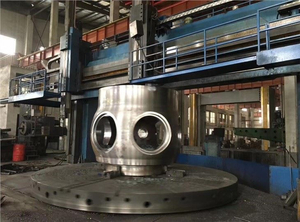
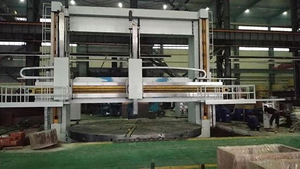
The vertical boring mill, or VBM, flips things around. It has a spindle that moves up and down. The workpiece sits flat on a rotating table, making it easier to handle super heavy, wide parts. Many people also call it a vertical lathe, especially when the machine includes turret tooling.
No matter the orientation, boring mills all share a few basic parts. The boring bar is the star of the show. It holds the cutting tool and pushes it into the hole to shape it. The spindle is what spins the tool. It must stay rigid and smooth to avoid any wobble during cutting.
You’ll also find a large worktable. On horizontal machines, the table stays put while the tool moves. On vertical ones, the table turns while the tool goes up and down. Cutting tools vary, but most are designed for heavy-duty use. Together, these pieces allow the boring mill to cut deep, clean holes in metal, even when the part weighs several tons.
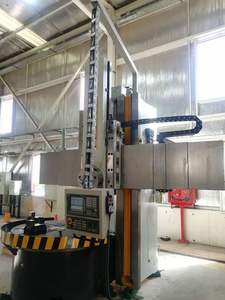
A vertical lathe is a machine tool built for turning large, round parts. Its key difference lies in how it holds the workpiece. Instead of laying it flat like a horizontal lathe, the vertical lathe holds it upright. The spindle points straight down. This setup makes it easier to load and support very heavy components, especially those too big for horizontal machines. You’ll also hear people call it a vertical turning lathe, or VTL. It’s widely used in industries like energy, shipbuilding, and transportation.
This machine is all about rotating the part, not the tool. The workpiece sits on a horizontal table that spins, while the cutting tools move into place vertically. Because of gravity, setup is often simpler and more stable. That’s a big plus when you're dealing with parts that weigh thousands of pounds.
The vertical lathe handles most basic turning tasks. That includes shaping the outer diameter of a cylinder, smoothing flat surfaces, or creating precise holes. The most common operations you’ll see are:
Turning: shaping the outer profile of the part
Facing: flattening the ends of a cylinder
Boring: enlarging existing holes on the same axis
Threading: cutting spiral grooves inside or outside the part
Thanks to its design, the VTL is ideal for tasks that need high stability and low tool deflection.
Several key parts make up the vertical lathe. First is the rotating table. It holds the workpiece in place and spins it during cutting. This table is usually wide and heavy-duty to support massive components.
Then there's the vertical spindle. It stays fixed in place above the table and moves only to position the tool. Unlike horizontal setups, gravity helps keep things steady during operation.
Many VTLs include a turret, which holds multiple cutting tools at once. That’s where the machine gets its full name—vertical turret lathe. The turret can quickly switch tools without stopping the job. This saves time and improves consistency, especially during high-volume or multi-step machining.
These two machines serve different core functions. A boring mill is built to refine or enlarge existing holes. It focuses on internal diameter work, often after an initial hole has been drilled. It's commonly used when tight tolerances are required inside a large part.
A vertical lathe, on the other hand, focuses on shaping outer surfaces. It performs turning, facing, and threading. It's your go-to when you need to form the exterior of a big cylindrical object. If you're working with a heavy disk or pipe end, a vertical lathe is usually the better option.
Their setups look totally different. In a boring mill, the spindle is horizontal. It reaches out toward the workpiece, which stays still on the table. The cutting tool moves in and out or side to side.
In a vertical lathe, the spindle is mounted vertically. The workpiece rotates on a flat table, while the tool moves down into position. This changes the cutting dynamics entirely. In short, boring mills move the tool, and VTLs spin the part.
Both machines are designed for large, heavy parts, but the type of part matters. Boring mills can handle workpieces that are long, awkwardly shaped, or need machining from different angles. If the hole is deep or needs to be machined horizontally, boring mills shine.
Vertical lathes are best for parts that are round and flat. Think wheels, turbines, or bearing housings. Gravity helps stabilize the piece during spinning. This is especially helpful when you're working on something too massive to be held sideways.
Boring mills are often more flexible. They can drill, mill, tap, and bore—all on the same setup. That's why they're so popular in job shops where parts vary.
Vertical lathes are more specialized. They do fewer types of operations, but they do them fast and well. In high-volume production where you're cutting the same shape repeatedly, a vertical lathe can be more efficient. It may not be as versatile, but it makes up for that in speed and reliability for turning-heavy tasks.
Boring mills are widely used when precision holes matter. In aerospace, they help produce accurate bores in engine casings or landing gear components. The same applies to automotive work, especially when dealing with large engine blocks or transmission housings. We also see them in mold and die manufacturing. Shops rely on boring mills to machine internal features in molds that can't be reached easily by other tools.
Another great example is bridge construction. Engineers often use horizontal boring mills to create clean, deep holes in steel beams and support structures. These machines can handle the size, weight, and accuracy required for such infrastructure work. Their ability to combine boring, drilling, and milling in one setup makes them ideal for complex, multi-step machining on large parts.
Vertical lathes really shine in industries that handle big, round components. Wind turbine manufacturers use them for machining the main bearing housings or gearbox ends. These parts are extremely heavy, so the vertical setup makes it easier to load and stabilize them.
In shipbuilding, vertical lathes are often used for cutting large flanges, hubs, or sealing rings. The same goes for companies that make large-diameter pipes. When it's time to finish the pipe ends, face them flat, or add threads, a vertical lathe offers the stability and precision needed for the job.
If the part is symmetrical and heavy, chances are good that a vertical lathe is the right machine. Its rotating table can hold massive weight without needing extra supports, which makes it a favorite in power generation and industrial equipment manufacturing too.
Setting up a horizontal boring mill isn’t something most beginners can jump into. These machines require careful alignment across multiple axes, and each toolpath must be programmed to exact specifications. The operator has to think in three dimensions while keeping tight tolerances. That means understanding how the boring bar, table, and spindle all move in sync.
You’ll also need to choose the right cutting tools and position the workpiece so it stays balanced during machining. Depending on the job, it may call for custom fixtures, clamps, or even hydraulic supports. A small mistake in setup can lead to tool deflection or missed tolerances. That's why shops often assign their most experienced machinists to these machines.
Compared to boring mills, vertical lathes are easier to run. The setup is more straightforward because gravity helps hold the workpiece in place. Most parts rest flat on the rotary table, making it easier to center and clamp them down. There's no need for complex supports or fixtures in many cases.
Operators load the tools into the turret and let the machine do the rest. The control system handles most tool changes automatically. Because the setup is simpler, it takes less time to train someone to use a vertical lathe. Even newer machinists can learn the basics quickly and start producing accurate parts in less time.
When it comes to efficiency, both machines have their strengths, but in different ways. A horizontal boring mill can handle multiple tasks without moving the workpiece. That alone saves setup time and boosts throughput on complex parts. Add CNC automation, adaptive controls, and tool changers, and it becomes a powerhouse for multi-step operations.
Vertical lathes, however, shine in focused tasks like turning or facing. They’re faster for repetitive operations on symmetrical parts. Since the turret holds multiple tools, there's less time lost during tool changes. It’s especially efficient for high-volume jobs where part shape doesn't vary much.
So while boring mills offer broader capabilities, vertical lathes often beat them in cycle time for simpler parts. The real winner depends on the part you’re making and how often you’re making it.
Horizontal boring mills usually cost more up front. Their complexity, multi-axis systems, and advanced features drive the price up. You’ll also spend more on skilled operators, routine maintenance, and high-end tooling. But that investment can pay off long-term, especially if it replaces several other machines.
Vertical lathes are more affordable and have a smaller learning curve. Their simpler design keeps labor and maintenance costs down. They do have limits in what they can handle, so you might still need a second machine for milling or deep-hole work. If your shop handles mostly round, heavy parts, though, the VTL can offer faster ROI.
| Factor | Horizontal Boring Mill | Vertical Lathe |
|---|---|---|
| Initial Cost | Higher | Lower |
| Labor Skill Requirement | Advanced | Moderate |
| Tooling Needs | More complex | More standardized |
| ROI Timeframe | Long-term payoff | Faster on repetitive jobs |
| Versatility | High | Moderate |
Horizontal boring mills have come a long way thanks to CNC technology. Many now use adaptive control systems that adjust feed rates and spindle speeds in real time. This helps reduce tool wear and keeps cuts smooth, even under changing load conditions.
They also support full multi-axis movement. That means the spindle, table, and cutting head can move in several directions at once. It's great for complex parts that need angled cuts, deep bores, or offset features. You don’t have to reposition the workpiece between steps, which saves time and improves accuracy.
Another key feature is tool probing. The machine can automatically measure tool length or wear using sensors. This lets it compensate for minor shifts or damage during a job. It’s like giving the machine a built-in quality check before and during machining.
CNC vertical lathes are built for speed and consistency. One of their biggest strengths is turret automation. The turret holds multiple tools and switches between them quickly during a job. That cuts down on idle time and reduces the need for manual tool changes.
Modern VTLs can also handle threading with high precision. Whether you need external or internal threads, the CNC system keeps things aligned without extra setup.
Some vertical lathes even come with live tooling. That means the turret tools can spin, allowing basic drilling or milling operations. It won’t replace a full boring mill, but for light secondary tasks, it can save time and avoid moving the part to another machine.
| Feature | Horizontal Boring Mill | Vertical Lathe |
|---|---|---|
| Adaptive Control | Yes | Less common |
| Multi-Axis Movement | Full | Limited |
| Tool Probing | Built-in | Sometimes included |
| Turret Automation | Not typical | Core feature |
| Threading Support | Manual or CNC | CNC-integrated |
| Live Tooling | Rare | Available on advanced models |
A boring mill is a solid choice if you need flexibility. It handles drilling, milling, tapping, and of course, boring. With multi-axis control, it can work on parts from different angles without moving them around. That saves time and helps keep tolerances tight.
It’s also known for delivering high accuracy, especially when enlarging or refining deep holes. Large, irregular workpieces fit well on horizontal boring mills, making them popular in industries like aerospace and heavy equipment manufacturing.
But this machine isn’t for beginners. The setup can be complex, especially when dealing with deep cuts or long boring bars. You’ll need skilled operators to get the most out of it. And the price tag isn’t small. Between the machine itself and the tooling, the investment adds up quickly.
| Pros | Cons |
|---|---|
| Handles many operations | High initial cost |
| Great for large, complex parts | Setup takes time |
| Accurate and precise | Requires skilled labor |
| Supports automation and probing | More space required |
Vertical lathes keep things simple. They’re designed for one main thing: turning large, heavy, round parts. That focused role makes them easier to operate. You don’t need advanced programming skills to get started, and the vertical layout makes loading heavy workpieces more manageable.
They're also more compact. You won’t need as much floor space, and in many cases, you can get one for less money than a comparable boring mill. That makes them appealing to shops focused on high-volume production.
Of course, this simplicity comes with trade-offs. VTLs aren’t as flexible. If your job requires drilling, side milling, or complex geometry, you’ll probably need a second machine. Even with live tooling, the options stay limited.
| Pros | Cons |
|---|---|
| Easier to use and maintain | Fewer operation types supported |
| Lower cost and compact footprint | Limited versatility |
| Fast for turning tasks | May require other machines |
| Good for repetitive round parts | Less effective on irregular shapes |
The terms vertical turret lathe and vertical boring mill get tossed around like they mean the same thing. And in many shops, they sort of do. That’s where the confusion starts. Both machines operate with a vertical spindle. Both use a rotating table to hold large, round parts. And both are designed to work on heavy components that wouldn’t fit easily on a horizontal machine.
So what actually separates a VTL from a VBM? It mostly comes down to the turret. A VTL includes a turret head, which holds multiple tools and can switch between them automatically. That makes the machine more efficient when jobs require several steps—like turning, boring, facing, and threading—all in one setup.
VBMs, especially older models, often lack a turret. They might use a single tool holder or require manual tool changes. While they can still perform similar operations, the process takes longer and involves more downtime between tasks.
Many shops use the term VTL for any vertical boring-type machine simply because modern machines almost always come with turrets. And when those VBMs get upgraded with a turret, the line between the two disappears even further. It’s not uncommon to see a vertical boring mill sold as a VTL, even if the design technically started as something simpler.
Here’s how they compare:
| Feature | VTL (Vertical Turret Lathe) | VBM (Vertical Boring Mill) |
|---|---|---|
| Tool Changing | Turret with multiple tools | Manual or limited auto change |
| Cycle Time | Faster | Slower |
| Automation Level | High | Moderate to low |
| Common Terminology Today | Widely used | Less common, often overlaps |
It’s a fair question, especially since both machines deal with round parts. But can a lathe actually replace a boring mill? In some cases, yes—but usually with limits. Most vertical lathes can handle basic boring tasks, especially when the bore is shallow and on-center. If you’re just enlarging a hole that’s already aligned with the spindle, a VTL might get the job done.
However, the deeper the hole or the tighter the tolerance, the more a boring mill proves its worth. That’s because boring mills are built for rigidity and accuracy during internal cutting. They often support longer boring bars and offer better control over feed rates and depth. Lathes, especially basic models, don’t have the structure to handle long internal cuts without tool deflection or chatter.
There’s also the matter of flexibility. A boring mill often works on multiple faces without moving the part. Lathes usually don’t have that range. They’re designed for external work—outer diameters, facing, and threading—while internal work is secondary.
So when is it possible? If the job is simple, shallow, and on a symmetrical part, your lathe might handle it fine. When is it not? If you need precision internal boring, multiple-hole work, or anything off-axis, you’ll want the boring mill.
| Task Type | Lathe Capable? | Boring Mill Capable? |
|---|---|---|
| Shallow central boring | Yes | Yes |
| Deep hole enlargement | Not ideal | Yes |
| Off-axis internal features | No | Yes |
| Multi-surface machining | Limited | Fully supported |
When you're picking between a boring mill and a vertical lathe, it all starts with part geometry. If the part is long, blocky, or has multiple surfaces needing internal holes, a boring mill usually handles that better. But if the part is round, flat, and heavy—like a gear housing or turbine disk—a vertical lathe makes setup easier and cuts faster.
Next comes production scale. Are you machining one-off custom pieces or repeating the same part all day? Boring mills are great when flexibility matters. You can run different part shapes and switch operations in one setup. Vertical lathes, on the other hand, win in high-volume environments where you repeat the same turning cycles over and over.
Then there’s floor space. Horizontal boring mills take up more room and often need extra support equipment. Vertical lathes are more compact. You load the part from the top, and the footprint stays tight. That could be a big deal in smaller shops or facilities short on open floor area.
Budget plays a role too. A boring mill might cost more upfront, but if it replaces two or three other machines, the long-term value can be higher. It’s also worth asking who’s going to run it. If you have experienced machinists who can program and align complex setups, the boring mill opens more options. But if your team is newer or focused on simpler workflows, a vertical lathe may deliver better results with less training.
| Factor | Better Fit for Boring Mill | Better Fit for Vertical Lathe |
|---|---|---|
| Complex internal work | Yes | No |
| Round, heavy parts | No | Yes |
| Flexible operations | Yes | Limited |
| Tight floor space | No | Yes |
| Skilled operators | Required | Less necessary |
| Repetitive production | Moderate | Excellent |
| Budget constraints | Higher cost | Lower cost |
Boring mills and vertical lathes serve different goals in machining. One focuses on precise internal hole work, the other on turning large round parts. If flexibility, multi-face machining, or complex bores matter, go with a boring mill. For round, symmetrical, high-volume jobs, a vertical lathe is faster and simpler. Manufacturers should match machine choice to part shape, shop space, and skill level. Welcome to see more of our products.
A: Boring mills are used to enlarge and finish existing holes with high precision, especially on large or complex parts.
A: Yes, vertical lathes can handle basic boring tasks, but they are not ideal for deep or multi-axis hole work.
A: Both machines look similar and have vertical spindles, but the turret on a VTL adds tool automation and efficiency.
A: Vertical lathes usually have lower costs, easier setup, and take up less space, making them better for simpler jobs.
A: Choose a boring mill when you need multi-axis internal machining, high versatility, or deep and accurate holes.