
- All
- Product Name
- Product Keyword
- Product Model
- Product Summary
- Product Description
- Multi Field Search
Views: 0 Author: Site Editor Publish Time: 2025-10-02 Origin: Site


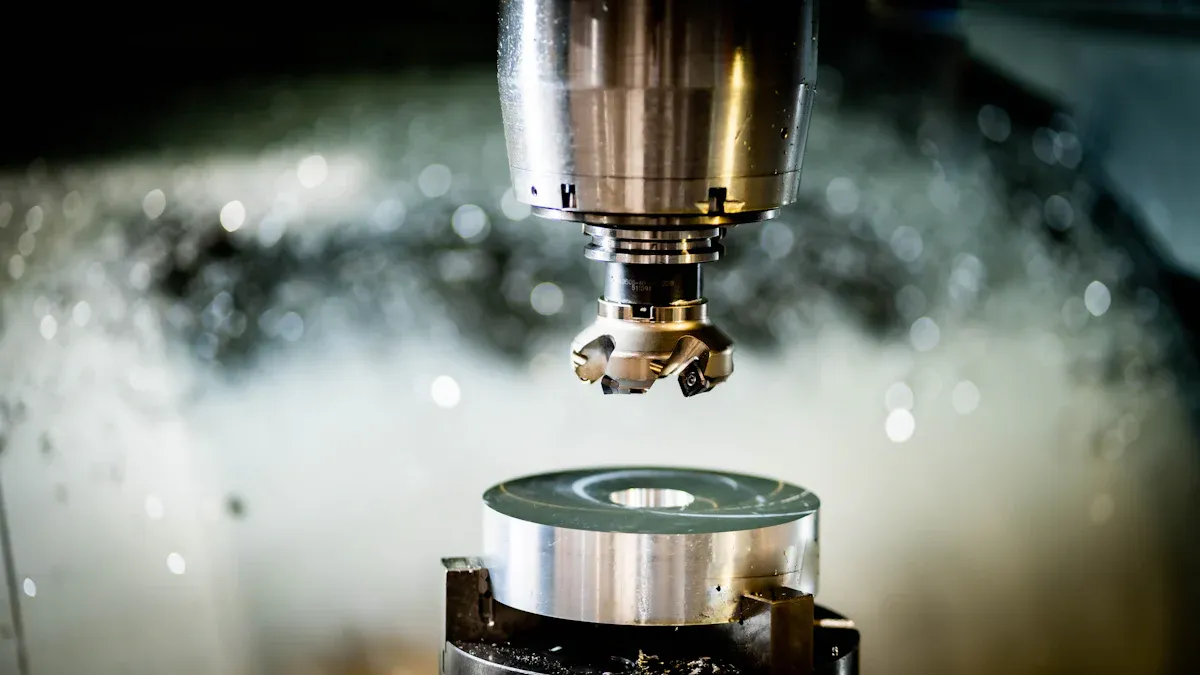
A cnc vertical lathe has a spindle that stands up. This spindle holds and spins big, heavy workpieces. This design helps when parts are too large for a horizontal lathe. The cnc system uses computers to control the cutting tools. It moves them with very high accuracy. CNC automation gives many benefits:
Every part comes out the same size.
The machine can make parts very exact, down to 0.001 inches.
One person can watch more than one machine at a time.
This technology lets you work fast, safe, and with good results in factories today.
CNC vertical lathes work with big, heavy parts. Their upright spindle and spinning table help keep things steady and accurate.
Automation in CNC vertical lathes lets people control cutting tools very well. This makes sure the parts are always the same and high quality.
Safety is very important when using a vertical lathe. Always wear safety gear and follow rules to stop accidents.
Vertical lathes help save time and make work faster. They can do many jobs at once, so cycle times get much shorter.
Training is needed to use CNC vertical lathes. Good skills help stop mistakes and keep everyone safe.
A vertical cnc lathe is used for big or heavy parts. The spindle stands straight up in this machine. The workpiece sits on a flat table that spins under the spindle. Gravity helps keep the part steady while it turns. Many factories use these machines for large metal rings, disks, or wheels. They can hold workpieces from 3,500 kg to 80,000 kg. The table can be as wide as 4,500 mm. This design makes it simple to load and unload heavy things. It also gives you more safety and control with huge parts.
The main parts of a vertical cnc lathe make it different from other machines. Here is a table that lists the important parts and what they do:
Component | Description |
|---|---|
Main Spindle | Holds and spins the workpiece for accuracy and stability. |
Coolant System | Sprays coolant to prevent overheating and improve finish quality. |
Chuck | Grips the workpiece tightly, either manually or hydraulically. |
Control Panel | Lets you program and monitor the machine using cnc commands. |
Tool Turret | Holds several cutting tools and rotates them automatically. |
Base & Column | Gives the machine strength and keeps it steady during machining. |
Most vertical cnc lathes have these features. They help you make parts that are always the same and very exact.
The vertical spindle and table give the vertical cnc lathe its special strength. The spindle stands up, and the table is below it. You put your workpiece on the table, and it spins while you work. This setup is best for tough jobs. The vertical design holds heavy parts without letting them bend or move.
Here are some reasons this design is so good:
The vertical spindle keeps the machine strong and steady.
You get very exact cuts, even with big or heavy parts.
It works well with odd shapes.
The base and column are made from strong cast iron to stop shaking.
The headstock uses a flange to help control heat.
This machine lets you work on parts that are hard to handle on a horizontal lathe. The spinning table takes the place of the spindle in horizontal machines. The table can be 1,000 mm to 4,000 mm wide. It can hold parts up to 80,000 kg. You get both power and accuracy.
Tip: If you need to work on thin or strange-shaped parts, a vertical turning lathe gives you better control and accuracy.
CNC automation makes the vertical cnc lathe smart and fast. You use the control panel to enter your program. The cnc system reads your commands and moves the tools very carefully. The tool turret holds many tools and changes them by itself. This saves time and helps avoid mistakes.
The control system makes sure every part moves the right way. It controls the spindle speed, table spin, and tool position. You can watch everything on the screen. The coolant system keeps the tools and workpiece cool. This helps the tools last longer and makes the finish better.
Here is a quick look at how the main systems work together:
The drive system uses motors and gears to move the table and tools.
The cross rail holds the tool heads and lets them move up, down, or sideways.
The control system makes sure every cut matches your program.
You can count on a vertical cnc lathe to make parts that are always high quality. These machines use all these features to do hard jobs in today’s factories.
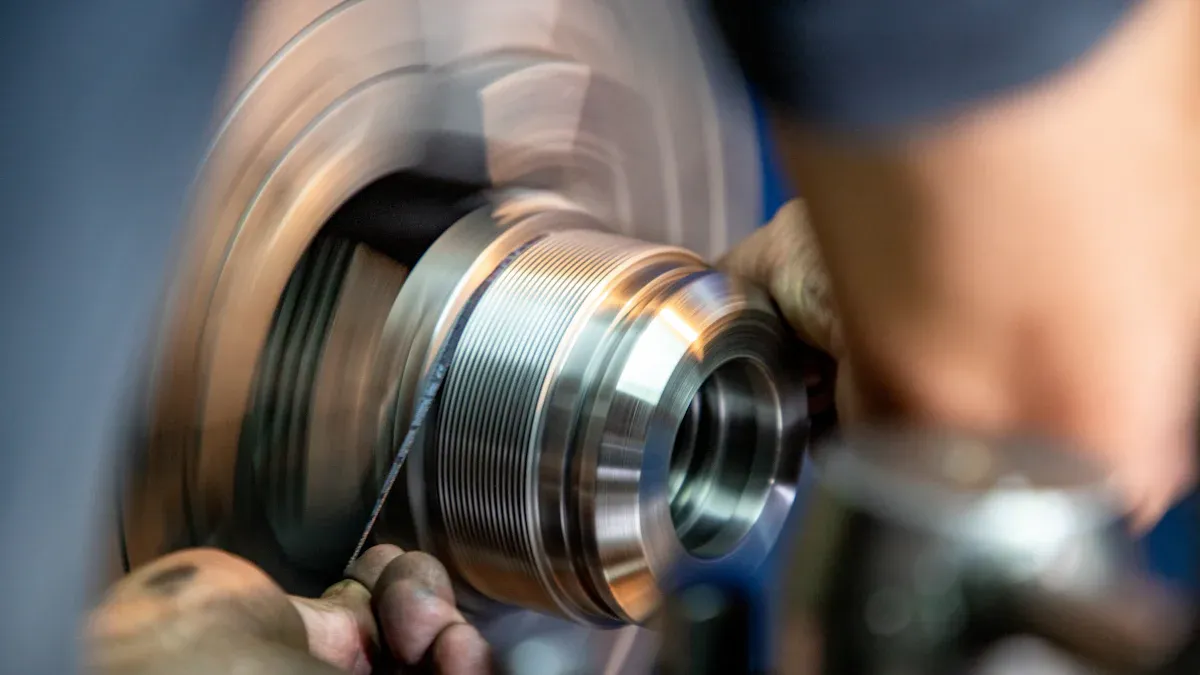
When you use a vertical lathe, you follow steps to shape your workpiece. First, you put the part on the spinning table. You lock it in place with a strong chuck. The vertical design makes it easy to handle heavy or odd-shaped parts.
Here is a normal way to use a vertical lathe:
Load the Workpiece: Put your part on the table. Use the chuck to hold it tight.
Select Tools: Pick the right cutting tools. Load them into the tool turret.
Set Parameters: Enter spindle speed, feed rate, and depth of cut on the control panel.
Start the Program: Run your cnc program. The machine moves the tools and table as needed.
Monitor the Process: Watch the screen during the operation. The coolant system keeps things cool.
Inspect the Part: When finished, check the part for accuracy and finish.
Unload the Workpiece: Take out the finished part. Clean the table.
You can do turning, milling, and drilling in one setup. This saves time and helps you work faster. Many factories finish jobs up to 35% quicker with advanced vertical lathes. Car and airplane factories have made 25% more parts by using these machines.
Note: Vertical lathes are best for large, heavy, or odd-shaped workpieces. You get high accuracy and faster setups. This means less manual work and more efficiency.
Programming a vertical lathe takes careful planning. You use special languages to tell the cnc system what to do. The most common ones are G-code and M-code. G-code moves the tools. M-code controls things like coolant and tool changes.
Programming Language | Description |
|---|---|
G-code | Needed for programming CNC machines. |
M-code | Used for controlling machine operations. |
You enter your program on the control panel. Advanced CAD/CAM software helps you write hard programs. This software makes it easier to give the machine exact instructions. You can also run tests to find mistakes before cutting.
Programming a vertical lathe can be hard. You must pay close attention to every detail. Small mistakes can ruin parts or hurt the machine. Here are some common problems and ways to fix them:
Challenge Type | Description | Solution |
|---|---|---|
Programming Complexity | The need for precision and many tasks make programming hard. | Advanced CAD/CAM software makes it easier. |
Error Prone | Small mistakes can ruin products or damage the machine. | Running tests helps find mistakes. |
Skill Requirement | High skills are needed, which can be tough for new workers. | Training helps operators get better. |
You need good skills to program and set up a vertical lathe. Training helps you learn the machine and avoid mistakes. Many companies teach their workers so they can do precision work.
Safety is very important when using a vertical lathe. You must follow rules to keep yourself and others safe. Always wear safety glasses, ear protection, and steel-toe shoes. Tie back long hair and keep hands away from moving parts.
Here are important safety steps to follow:
Use Personal Protective Equipment (PPE): Wear safety glasses, ear protection, and gloves if needed.
Use Safety Checklists: Check the machine before each use to find problems early.
Keep the Workspace Clean: A tidy area helps stop slips and accidents.
Know Emergency Procedures: Learn what to do if something goes wrong.
Inspect and Maintain the Machine: Regular checks keep the lathe safe.
Use Emergency Stop Buttons: Know where these are and how to use them.
Clean Up Dust and Chips: Clean often to stop fire risks and health problems.
Tip: Always follow the latest safety standards, like ANSI B11.6-2022. This standard covers safe design, use, and care of vertical lathes.
A vertical lathe helps your shop work better. You can make big and complex parts with high accuracy. The cnc system lets you do many jobs in one setup. This cuts cycle times and boosts output. Some factories finish jobs 30% faster and make 25% more parts after switching to vertical lathes.
You do less manual work and get more even results. The machine’s automation and accuracy make it important for modern factories. If you follow safety rules and keep learning, you will get the best results from your vertical lathe.
A vertical lathe is great for big or heavy parts. The upright spindle uses gravity to hold your workpiece steady. This helps you get very accurate and stable results. You do not need to clamp the part too hard. This means you will not hurt soft surfaces. The machine does not take up much space in your shop. It is smaller than a horizontal lathe. You can use an overhead crane to lift heavy parts. This makes loading safer and faster. Many factories use vertical lathes for valve bodies and turbine casings. They also use them for other large industrial parts. The strong design lets you work on big pieces with high precision.
Gravity keeps your workpiece steady.
Light clamping helps stop damage.
Small size saves shop space.
Overhead cranes make loading easy.
Good for industrial parts.
A cnc vertical lathe helps you make very exact parts. Advanced software and automation work together to make things easier. The computer controls keep every part within strict limits. This gives you the same quality every time, even for big jobs. You can make detailed designs with tiny tolerances. This meets tough industry rules. Most vertical lathes can reach tolerances as close as ±0.025 mm. This is good for jobs that need high accuracy. You can also change setups quickly for short runs or prototypes. Automation helps you finish jobs faster and with fewer mistakes.
Tip: Use a vertical lathe when you need every part to be very exact.
Tolerance Type | Description |
|---|---|
Shape Tolerances | Straightness, roundness, and cylindricity. |
Positional Tolerances | Parallelism, perpendicularity, and coaxiality. |
You should know what a vertical lathe cannot do before you buy one. The machine limits the biggest length and diameter you can make. The swing over bed and swing over cross slide set the largest size you can work on. If you need to cut very long or wide parts, you may have problems. The swing over gap lets you work on bigger diameters. But it limits the length and the angles you can cut. You must do regular checks to keep your lathe working well. Check the chuck, jaws, and clamps. Clean the coolant tank and check the hydraulic fluid. Daily, weekly, and monthly checks help your lathe run smoothly.
Limitation Type | Description |
|---|---|
Distance Between Centres | Limits the total maximum machinable length of the component. |
Swing Over Bed | Sets the maximum diameter that can be machined over the bed. |
Swing Over Cross Slide | Determines the maximum diameter using the full travel of the cross slide. |
Swing Over Gap | Allows larger diameters but limits length and tool angles. |
You might wonder how these two lathes are different. The biggest difference is how each machine holds and spins the workpiece. A vertical lathe has a spindle that stands straight up. The workpiece sits flat on a table under the spindle. In a horizontal lathe, the spindle is sideways. The workpiece sits between two points or on the spindle.
Here is a table that shows the main differences:
Feature | Vertical Lathes | Horizontal Lathes |
|---|---|---|
Spindle Orientation | Vertically oriented | Horizontally positioned |
Workpiece Positioning | Clamped on the workbench | Clamped on the spindle or between centers |
Ideal Workpieces | Large diameter, small height (e.g., discs, rings) | Long shaft and sleeve parts |
Machining Method | Tool moves to the fixed workpiece | Workpiece rotates while the tool moves |
Stability | Excellent stability for heavy workpieces | Better suited for long and slender workpieces |
Applications | Wind power components, large gears | Engine shafts, hydraulic cylinders |
Floor Space | Occupies less floor area | Requires more floor space |
Operational Convenience | Simpler for straightforward tasks | Excels in complex machining requirements |
A vertical lathe is very steady for heavy parts. It works well for big rings, discs, or gears. A horizontal lathe is better for long, thin parts like shafts.
Tip: If you want to save space, pick a vertical lathe.
Pick a vertical lathe if you need to machine big, wide parts that are not very tall. This type of lathe makes it easy to load heavy pieces, especially with a hoist. You get more control and safety for big, flat, or odd-shaped parts.
Pick a horizontal lathe if you work with long shafts or sleeves. This machine gives better support for skinny parts. It is also good for harder machining jobs.
Use a vertical lathe for:
Wind power parts
Large gears
Discs and rings
Heavy workpieces that need steady support
Use a horizontal lathe for:
Engine shafts
Hydraulic cylinders
Long rods or tubes
Think about cost too. A vertical lathe usually costs more over five years. This is because it needs a stronger frame and bigger work area for heavy parts. If you often work with big, heavy items, the extra cost can be worth it.
Note: Always pick the lathe that fits your part’s size and shape. This helps you get the best results and keeps your shop working well.
Factories use vertical cnc lathes for many jobs. These machines help make big and heavy parts very accurately. Here are some ways you can use them: 1. You can make large things like turbine casings and airplane parts. The machine can hold heavy pieces easily. 2. You can finish parts with great accuracy. This is needed for medical tools and other things that must be smooth. 3. You can shape parts with hard designs. The machine can cut tricky shapes and save time. 4. You can make test parts or small groups of parts. It is easy to change setups, so you can try new ideas. 5. You can use automation to work smarter. The machine can run for a long time without stopping.
Tip: These machines help you make simple or hard parts. This keeps your shop ready for any job.
Many types of companies use these machines every day. The table below shows who uses them and what they make:
Industry | Description |
|---|---|
Aerospace | Makes big, exact parts for planes and rockets. |
Automotive | Builds tricky parts for cars and trucks. |
Energy | Makes heavy gear for power plants. |
Heavy Machinery | Shapes large pieces for building and mining. |
You will find these machines in places that need strong and exact parts.
In 2025, these machines are getting smarter and better. Many factories use AI to help the machine cut better and make fewer mistakes. Special tools can tell you when to fix the machine before it breaks. This helps your shop keep working.
Makers also want to save energy. New machines use motors that need less power. Cooling systems now make less pollution. Some shops use solar or wind power to run their machines. Some machines mix cnc with 3D printing to waste less material.
AI and smart programs help you cut faster and save energy.
Additive manufacturing lets you make parts with less waste.
Using green energy helps your shop pollute less.
Note: More people are buying these machines every year. Experts think the cnc market will grow by about 10% each year after 2025. You will see more smart and green machines soon.
You have learned how these machines work, what makes them unique, and why they matter in modern factories. When you choose a machine, look at these important factors:
Factor | What to Check |
|---|---|
Precision | Can it make exact parts? |
Turning Capacity | Will it fit your biggest workpieces? |
Size and Power | Does it match your shop and materials? |
Staying updated on new technology helps you work faster, save money, and stay ahead:
New features boost accuracy and cut waste.
Automation makes your job easier and safer.
Smart machines help you meet industry rules.
Keep learning about new machines. Pick the one that fits your needs best.
You use a CNC vertical lathe for big, heavy parts. The spindle stands up, and gravity helps hold your workpiece. Regular lathes have a sideways spindle. Vertical lathes work better for large, flat, or odd-shaped items.
You can use it for small parts, but it works best for large or heavy pieces. If you often make small items, a horizontal lathe may fit your needs better.
You should wear safety gear, check the machine before use, and keep your area clean. Always follow safety rules. Use emergency stop buttons if needed. Regular checks help prevent accidents.
You can machine steel, aluminum, cast iron, and some plastics. The machine handles tough metals and large workpieces. Always check your tool and material compatibility.
Yes, you need training to program and operate the machine. Training helps you avoid mistakes and work safely. Many companies offer classes for new operators.


