
- All
- Product Name
- Product Keyword
- Product Model
- Product Summary
- Product Description
- Multi Field Search
Views: 0 Author: Site Editor Publish Time: 2025-10-30 Origin: Site


You use a cnc horizontal lathe for very precise work. It is good when you need to do the same thing many times. The machine spins metal on a sideways axis. A cutting tool shapes the metal as it spins. This makes it great for turning jobs. A cnc lathe uses computer controls. This helps make things more accurate. It also means fewer mistakes by people. Many companies now pick cnc systems. They want to work faster and stop less often. The X and Z axes help move the cutting tool. This gives you the same results every time.
CNC horizontal lathes are made for high accuracy and doing the same job many times. They help make the same part over and over with very few mistakes. The machine works by spinning the workpiece sideways. A cutting tool shapes the workpiece as it spins. This lets the machine do things like cutting, facing, and drilling. CNC programming controls the machine automatically. This means people make fewer mistakes and the work gets done faster. It also helps make better parts. Doing regular maintenance and safety checks is very important. This keeps the CNC lathe working well and keeps people safe. CNC horizontal lathes are used in many industries like aerospace, automotive, and medical. This shows they are useful and important for making things.
You use a cnc horizontal lathe when you want to shape things very accurately. This machine holds the workpiece sideways. The machine spins the workpiece fast. A cutting tool moves along the spinning part. You control everything with a computer. That is why it is called a cnc lathe. The main job of a cnc horizontal lathe is turning. It can cut, face, and drill with great precision. It can do these jobs the same way every time.
A cnc horizontal lathe is different from other lathes because of how it is built and how it works. The sideways design helps hold long and thin parts. Gravity helps chips fall away from the cutting area. This keeps the workspace cleaner. It also makes the finished part better. The computer control lets you program the machine. It can do the same job again and again with almost no mistakes. You can use a cnc lathe on many materials. It works with metal, plastic, and wood.
Tip: You can use a horizontal lathe to shape aluminum, steel, brass, titanium, acrylic, polycarbonate, nylon, PEEK, and many kinds of wood.
A cnc horizontal lathe has many features that help you work better and faster. Here is a table that shows how a cnc horizontal lathe is different from other lathes:
Characteristic | Description |
|---|---|
Orientation | The horizontal lathe holds the workpiece sideways. It spins against tools controlled by a computer. |
Precision | You get very accurate results with little help from people. |
Material Compatibility | You can cut metals, plastics, and composites by changing how fast the spindle spins. |
Support for Long Workpieces | The tailstock holds long parts steady. This stops bending and shaking. |
Automated Tool Changers | The machine can switch tools by itself. This saves you time. |
A cnc lathe uses servo motors to move very precisely. Some advanced machines can do more complex jobs with live tooling. The sideways design helps you work on long parts without them bending. This keeps your parts smooth and accurate.
Here is another table that compares cnc horizontal lathes to manual ones:
Feature | CNC Horizontal Lathes | Manual Horizontal Lathes |
|---|---|---|
Accuracy | Computer control gives high accuracy | People make more mistakes, so less accuracy |
Human Error | Computers stop most mistakes | People get tired and make errors |
Repositioning | The machine does this by itself | People must do it, which can cause mistakes |
Tool Changing | The machine changes tools automatically | People must change tools by hand |
Setup Time | Setup is fast because of electronics | Setup takes longer because it is manual |
Production Runs | Best for making many parts the same way | Not good for making lots of parts |
A cnc lathe gives you better accuracy and faster setup. It also helps you make more parts in less time. The horizontal lathe can feed bars into the machine by itself. This means you work faster and do not have to stop as much. The strong frame of the lathe keeps it from shaking. This makes your finished parts smooth and the right shape.
The main parts of a cnc horizontal lathe are the bed, spindle, chuck, tool turret, control panel, and tailstock. Each part helps make sure your turning jobs are always accurate.
Note: The sideways design of the cnc lathe helps you work on long, thin parts. It also helps chips fall away. This makes your parts better and means you stop less to clean up.
Cnc turning with a horizontal lathe lets you make complex shapes again and again. You can trust the cnc system to do the hard work. You will get the same results every time.
When you use a horizontal lathe, you follow a clear set of steps to shape your material. The process starts before you even touch the machine. You need to prepare your program and tools. Here is how the turning process usually works:
Load the program that tells the cnc lathe what to do.
Clamp your workpiece tightly in the spindle of the horizontal lathe.
Select and secure the right cutting tools in the turret.
Start the cnc machining process. The spindle spins the workpiece at high speed. The cutting tool moves into the spinning part and removes material.
You control every step with the cnc system. The main parts of a cnc horizontal lathe, like the spindle, turret, and control panel, all work together. The machine shapes the material with great accuracy. You can use the lathe for many turning operations, such as cutting, facing, and drilling. This process is called cnc turning. It helps you make parts that match your design every time.
Tip: Always check that your workpiece is clamped tightly before you start the lathe machine. This keeps you safe and helps you get better results.
The horizontal lathe uses two main axes to move the cutting tool. These are the X-axis and the Z-axis. Each axis has a special job:
The X-axis controls the diameter. It moves the cutting tool in and out, closer or farther from the center of the spinning workpiece.
The Z-axis controls the length. It moves the tool along the length of the workpiece, from one end to the other.
With both axes working together, you can shape cylinders, cones, and many other forms. This dual movement gives you high precision machining and lets you make complex parts.
You get more control and better results because the cnc lathe can move the tool in tiny steps. The axes help you make smooth surfaces and exact shapes. You can also switch between different turning operations without stopping the machine. This makes the horizontal lathe very versatile.
The X and Z axes are the secret to making parts that fit perfectly every time.
CNC programming is the brain of the horizontal lathe. You use special codes to tell the machine what to do. The most common types are G Code and M Code. Here is a table that explains them:
Code Type | Description |
|---|---|
G Code | Controls the movements of the cnc lathe, such as where to start, how to move, and when to stop. |
M Code | Handles extra functions, like turning on coolant or stopping the program. |
You usually start with a 3D model. You can use CAD software to design your part. Then, CAM software helps you plan the toolpaths. The software creates the G-code, which the cnc system reads. The machine follows these instructions to shape your workpiece.
CNC programming helps you:
Achieve high precision in every part.
Reduce mistakes that people might make.
Make the same part over and over with no changes.
Use mathematical models to create complex shapes.
When you use a cnc horizontal lathe, you get repeatable results. The machine does not get tired or distracted. You can trust it to follow your program exactly. This makes your manufacturing process faster and more reliable.
Note: CNC programming lets you focus on design and quality, while the machine handles the hard work.
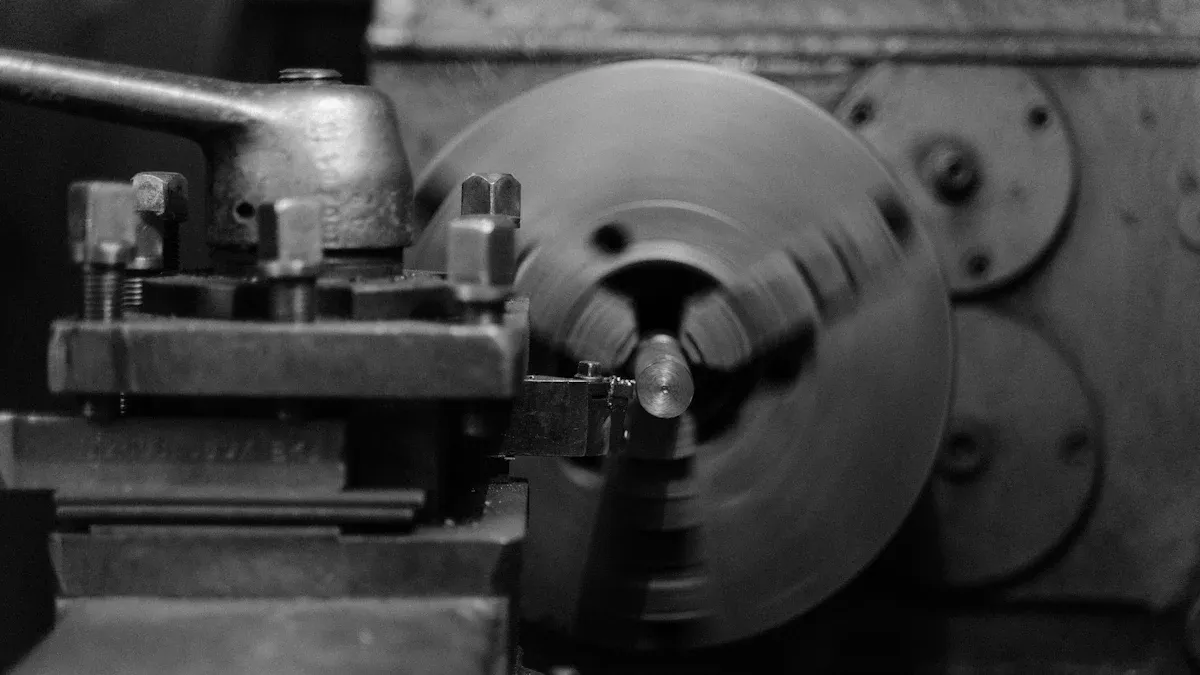
When you use a horizontal lathe, you work with several important parts. Each part has a special job. Knowing these parts helps you run the cnc lathe safely and keep it working well. Here is a table that shows the main parts of a cnc horizontal lathe and what they do:
Component | Function |
|---|---|
Bed | Acts as the backbone. It supports all other parts and holds the chip and coolant systems. |
Headstock | Holds the spindle. Spins the workpiece with high precision. |
Tailstock | Supports the end of long workpieces. Keeps them steady during turning. |
Tool Turret | Holds many cutting tools. Lets you switch tools quickly for different jobs. |
Carriage | Moves the cutting tool across the workpiece. Includes the saddle, cross slide, and tool post. |
Coolant System | Sends coolant to the cutting area. Keeps tools cool and helps them last longer. |
The bed gives the horizontal lathe its strength. It keeps everything steady. A slant bed design uses a triangle shape for extra stability. This shape helps chips fall away fast and keeps the machine clean. The spindle sits in the headstock. It spins your workpiece at the right speed. A strong spindle means you get smooth, accurate cuts every time.
Tip: A slant bed design also helps with chip removal and reduces how often you need to clean the lathe.
The chuck holds your material tight while it spins. You need a secure grip for safe and accurate machining. The tool turret stores many tools at once. You can switch tools fast without stopping the cnc lathe. This makes your work faster and more precise. If you keep the turret in good shape, you avoid tool misalignment and get better parts.
Turrets help you do many steps in one setup.
Good alignment means less tool wear and higher part quality.
Regular checks and cleaning keep the turret working well.
The control panel is where you tell the cnc lathe what to do. You use it to load programs, start jobs, and watch the machine work. The panel also has safety features like an emergency stop button. The cnc system reads your program and moves the tools with high accuracy. You can monitor performance and make changes if needed.
Role/Feature | Description |
|---|---|
Interface | Lets you control the lathe and see what is happening. |
Operation | Allows both manual and automatic control. |
Safety Features | Includes emergency stop for quick shutdown. |
Performance Monitoring | Shows how the machine is working in real time. |
The tailstock supports long or thin workpieces. It keeps them from bending or shaking during turning. You can move the tailstock along the bed to fit different part sizes. Support parts like the carriage and coolant system also help. The carriage moves the tool smoothly. The coolant system keeps everything cool and clean.
Note: When you understand each part of the horizontal lathe, you can fix problems faster and keep your cnc lathe running longer. Good maintenance starts with knowing your machine.
When you look for a horizontal lathe, you will see many kinds. Each cnc lathe type has special features for certain jobs. Here are some common cnc horizontal lathes you might find:
Traditional CNC Lathes
Multi-Axis CNC Lathes
Vertical CNC Lathes
Swiss-Type CNC Lathes
Vertical Turning Lathes
CNC Turning Centers
Compact CNC Lathes
Multi-tasking Lathes
Multi-axis cnc horizontal lathes can do harder jobs than basic two-axis ones. These machines have more axes, so you can shape parts with more detail. You can finish work faster and make fewer mistakes. This is very useful if you work in aerospace or medical jobs.
Tip: When you pick a cnc horizontal lathe, think about your part size and how tricky your turning jobs are.
You get many good things from using cnc horizontal lathes in your shop. Here is a table that shows some main benefits of cnc horizontal lathes:
Benefit | Measurement |
|---|---|
Tool Capacity | Up to 240 tools with expandable ATCs |
Efficiency | 85% for horizontal vs. 40% for vertical |
Cycle Time Reduction | 75–300% faster than manual machining |
Scrap Rate | Reduced to 1–3% |
Production Capacity | Increased through unattended machining |
Cnc lathes can hold lots of tools at once. This lets you set up more jobs and change tools quickly. You also get better efficiency and less waste. Horizontal lathe machines can do several setups at the same time, so you make more parts. Fast tool changes and quick feed rates help you finish jobs faster.
Cnc lathes can reach tolerances as tight as 0.001mm. This makes them great for jobs that need high precision.
Cnc turning gives you smooth, round parts that fit your needs.
You will see cnc horizontal lathes used in many industries. Here are some of the most common:
Aerospace
Automotive
Electronics
Medical and healthcare
Defence
Energy
These industries use horizontal lathes to make strong and exact parts. You can use a lathe machine to make engine parts, medical tools, and even power plant parts. The many uses show why cnc lathes are so important in factories today.
Note: Knowing the types of cnc horizontal lathes and what they do helps you pick the best machine for your work.
You keep your horizontal lathe working well by following a good plan. Make a schedule and use checklists for regular checks. This helps you remember every important step. Clean the turret, tailstock, and headstock often. Check the lubricant levels and look for dirty oil in the hydraulic system. Change filters to keep your cnc lathe machine running its best.
Here is a table to help you remember key maintenance practices:
Maintenance Practice | Description |
|---|---|
Safety Measures | Make sure all moving parts stop before you adjust anything. |
Electrical Safety | Use insulated tools and check wiring for damage. |
Regular Lubrication | Keep lubricant levels up to prevent wear. |
Inspection Routines | Inspect bearings and wiring connections often. |
Preventive Maintenance Schedule | Set a routine based on hours of use. |
Operator Training | Learn to spot wear and do simple checks. |
Tool Wear Monitoring | Replace worn tools to keep quality high. |
Quality Parts Selection | Use good parts for better performance. |
Check your horizontal lathe every day for strange sounds or shaking. Each week, look at the lubrication system and tool holders. Every month, test the spindle and check if things line up right. Plan for a professional to service it once a year. This keeps your cnc lathe ready for accurate and steady work.
You must be careful when using a cnc horizontal lathe. Always wear safety glasses, gloves, and hearing protection. Before you start, check for loose guards or broken wires. Keep your work area clean and dry. Never remove safety guards or interlocks. Use the right spindle speeds and watch for worn tools.
Follow these steps to stay safe: 1. Wear all safety gear. 2. Check the lathe before you use it. 3. Keep guards on the machine. 4. Use lockout/tagout before fixing anything. 5. Know where the emergency stops are. 6. Stay focused and do not get distracted.
Modern horizontal lathes have shields, cameras, and emergency stop buttons. These features help you avoid accidents and keep everyone safe.
You will see new technology in cnc horizontal lathe machines. Automation, IoT, and data analytics make your cnc lathe faster and smarter. Virtual and augmented reality help you learn safely. Remote monitoring lets you check your lathe from anywhere. Artificial intelligence now tells you when to do maintenance and changes settings for better results. Machine learning helps pick tool paths and watches for tool wear. These new ideas help you get better results and stop problems before they happen.
The future of computer numerical control in horizontal lathes looks bright. You will see more accurate work, smarter machines, and safer shops. This means more uses and better parts for every industry.
You now know how a cnc horizontal lathe works. This machine helps you make things with great accuracy. It is fast and supports many jobs in manufacturing. You can use it for turning, facing, and drilling tasks. When picking a horizontal lathe, look at your budget. Think about what features you need. Check if the seller is trusted. For extra help, use operator classes, manuals, or watch online videos. New cnc lathe machines will use smart technology. They will also be better for the environment. Your shop can grow with these new changes.
CNC lathes give very accurate results in factories. You can make lots of parts without losing quality. They help you work faster and save money by using less material.
Works fast, makes precise parts, and saves money.
Strong bed design stops shaking and keeps parts exact.
Used in car, airplane, and energy industries.
Makes many complex parts that look the same every time.
Good for tough jobs where you need a steady machine.
You can machine metals like steel, aluminum, and brass. You can also use plastics such as nylon and acrylic. Some lathes handle wood and composites. Always check your machine’s manual for the best material options.
You keep your lathe accurate by cleaning it often. Check tool alignment and replace worn parts. Use the right cutting speeds. Follow a regular maintenance schedule. This helps you get precise results every time.
Yes, you can use it for small batches. The CNC system lets you switch programs quickly. You save time on setup. This makes it easy to make a few parts or many parts with the same machine.
You should wear safety glasses, gloves, and hearing protection. Wear closed-toe shoes. Tie back long hair. Never wear loose clothing. These steps help you stay safe while you work.
CNC programming lets you control every movement of the tool. You can create shapes that are hard to make by hand. The program repeats the steps exactly. This gives you the same part every time.


